 By
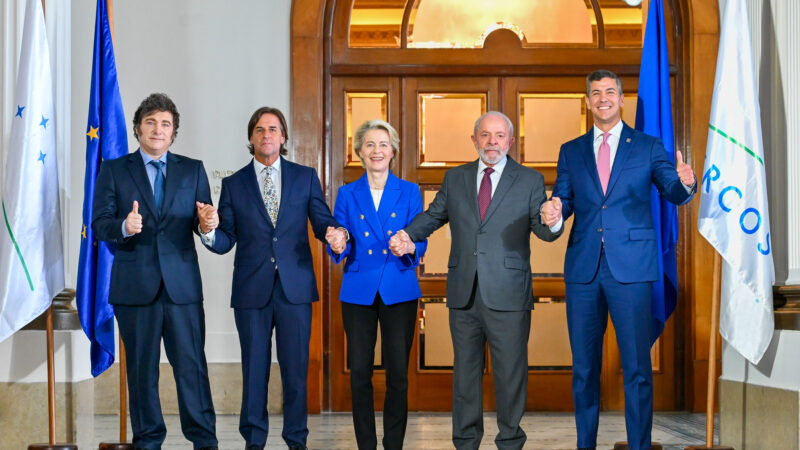
By The agreement between the European Union and the South American trade bloc Mercosur (or the Southern Common Market) has been in the political arena for years, with uncertainty surrounding whether it would ever come to fruition, but at the end of 2025, it seemed almost certain that it would be finalized.
However, just when everything seemed to be going well and the agreement was about to be finalized, the European Parliament voted against it due to alleged uncertainties, unfair competition, and other issues, so now everything remains under negotiation to see how the matter progresses.
On 21 January 2026, the European Parliament decided to ask the EU Court of Justice to review the agreements’ compatibility with EU Treaties. Parliament will have to wait for the Court of Justice’s decision before taking a final vote on the agreements. The Court of Justice could take over a year to deliver an opinion.
The initiative to block it was mainly promoted by the Greens/European Free Alliance and the Left Group, and was also supported by PfE. The Renew Group, which brings together liberal-progressive parties, was divided. There were also isolated defections in the EPP Group and the S&D Group, while the ECR granted freedom of vote.
This is the first time that a majority of Parliament has agreed to consult the Court of Justice of the European Union on the compatibility of an international agreement with the Treaties, pursuant to Article 218.11 of the Treaty on the Functioning of the European Union. This obliged the President of Parliament, Roberta Metsola, to formally refer the consultation to the Court in Luxembourg.
Mercosur: European Economic Integration Goes to South America
The Southern Common Market (Mercosur) is an economic and trade integration mechanism created with the signing of the Treaty of Asunción in 1991, which was amended and updated in 1994 by the Protocol of Ouro Preto. This process of economic integration promotes the free movement of goods, services, and productive factors among its members, as well as the establishment of a common external tariff and the development of a common policy toward third parties.
The EU-Mercosur Agreement: A Step Forward in Agri-Food and Other Sectors
With regard to the agri-food sector, Mercosur will eliminate tariffs on 93 percent of EU exports, meaning that the agreement will open up this huge market to sectors that are very important for Spain, such as olive oil, wine, cheese, fruit and vegetables, and pork. In return, the EU will liberalize 82 percent of agri-food imports from the Mercosur bloc and impose tariff quotas on the most sensitive products. In addition, the agreement establishes the possibility of applying bilateral safeguard measures, if necessary.
A Stakeholder in European Competitiveness
Therefore, it is foreseeable that these savings will translate into improved competitiveness for European businesses. Furthermore, the European Union estimates that exports of European products to the four countries in the bloc will increase by between 39 percent and 40 percent (around €49 billion), with a positive impact on job creation of 440 000 new jobs.
Risks and Side Effects
One of the main criticisms of the agreement, and the reason why groups such as PfE and some MEPs from the ECR and EPP voted against it, was precisely because the agreement could be interpreted as unfair competition towards farmers.
Many farmers in different European cities protested against the agreement, as they believed that the sudden entry into the market of all foreign products subject to other duties, taxes, rules, and regulations could prevent European agriculture from competing fairly.
Many economic liberals blame the rejection on nationalism and protectionism, saying that these farmers want to keep domestic products and be able to vote. However, that is not what many want; rather, they want everyone to have the same regulations so that farmers can compete on equal terms.
Likewise, many of the parties that rejected this agreement have elections coming up soon, and the primary sector may be key in many of them, especially in Central and Eastern Europe.
The Greens and the left did not agree on the environmental issue, as they said that the agreement should strictly comply with environmental, social, and public health standards.
They argue that it could stimulate deforestation and carbon emissions, especially due to the expansion of agriculture and livestock farming in Mercosur countries, which would have a global environmental impact.
Conclusion
Although there are very good reasons to close the deal, there are others that could be a severe blow to the European primary sector, causing many to lose their jobs and be unable to survive what they claim would be unfair competition.
The agreement should address all complaints and try to do as much as possible to ensure that most parties are more or less satisfied and that it can be concluded.
This would enable the EU to open up a large market and not have to depend so much on the United States and other powers, consolidating a large market for the present and the future.