
 By
In public debate and media coverage, the protests that erupted in France in the autumn of 2026 – and mirrored across Italian streets and squares – are often reduced to a simplistic binary framing: either a cyclical wave of student unrest or a short-term backlash against budget cuts and specific economic policies. However, analyzing this youth anger solely through the lens of immediate circumstance is a fundamental perspective error, as what has manifested in high school blockades and urban unrest is not mere sectoral discontent, but the symptom of a long-term politico-structural crisis.
It represents the response of a generation that perceives political institutions as incapable of guaranteeing social mobility or offering future prospects, operating within an educational system that ultimately institutionalizes social inequalities rather than mending them.
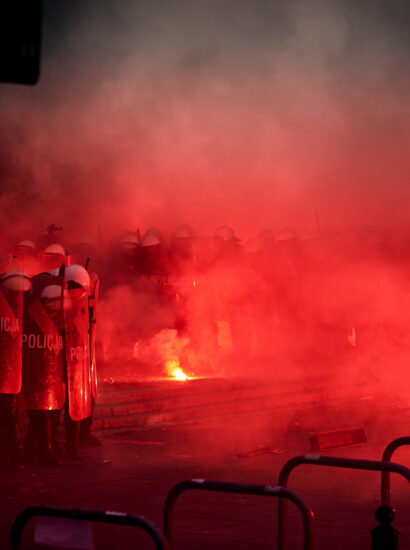
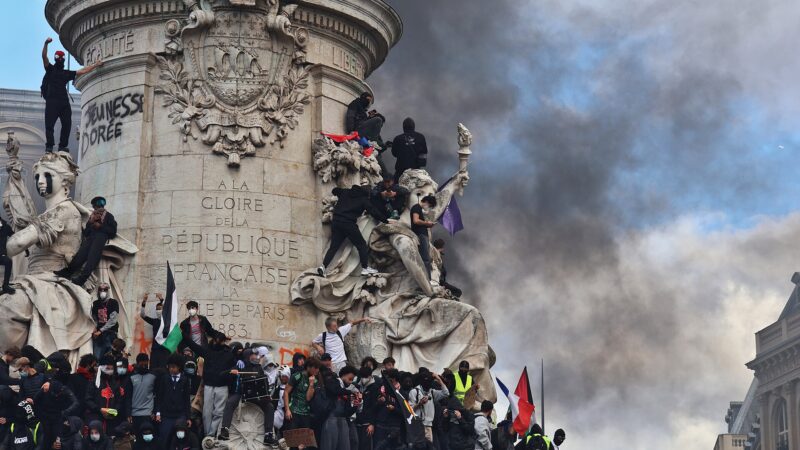
The crisis began in mid-September 2026 in Paris’ suburbs, where a school blockade against overcrowded classrooms, teacher shortages, and the inequities of the Parcoursup platform for university admissions, criticized for its opaque functioning and perceived as a discriminatory filter, triggered a rapid chain reaction, spreading to over 1000 high schools across France and reaching the critical turning point on October 17, when student demonstrators converged with trade unions and the Yellow Vests around the pressing issues of inflation and the cost of living. The infiltration of violent rioters into the marches led to severe unrest and widespread looting, to which the state responded with maximum firmness: the deployment of military forces and over 7900 police detentions – the vast majority involving minors.
The Mechanics of School Segregation in France
While news reports record the physical clashes, the deeper causes must be sought also, but not only in the structural and sociological mechanisms of the French educational system.
The Republic has traditionally entrusted public instruction with the mission of leveling differences of birth; empirical reality, however, demonstrates that secondary education has largely transformed into an engine of social segregation.
A decisive role is played by the foundational mechanism of the French school assignment system, the Carte Scolaire (“school catchment system”), under which every student is required to attend the public middle and high school within their designated residential catchment area. As highlighted in the French journal La Vie des idees, in major urban centers the Carte Scolaire directly mirrors residential segregation, effectively locking working-class children into chronically under-resourced schools. Compounding this dynamic is evitement scolaire (“school avoidance”), through which wealthier families bypass public assignments for private schools.
Separate findings in the same journal show adjacent middle schools with diametrically opposed Social Position Index (IPS, measuring students’ socio-economic background) scores. The impact of this structural fragmentation is profound. INSEE and PISA assessment data, the OECD programme for International Student Assessment, which measures 15-year-old students’ skills in reading, mathematics, and science, reveal that France ranks among the OECD countries where social origin exerts the strongest influence on academic achievement, marked by a 113-point gap in mathematics performance between the most advantaged and most disadvantaged socio-economic quartiles, compared to the OECD average gap of 94 points.
The intense political anger generated by this systemic disparity stems from what sociologists Francois Dubet and Marie Duru-Bellat term the emprise du diplome (“the grip of educational credentials”), detailed in their study “Disillusions and Paradoxes of the Massification of Education in France.”
In France, a rigid link connects early credentials to adult social position and career trajectory.
When an initial educational degree acts as an unappealable verdict determining long-term status, school segregation is experienced by working-class youth as a form of preventive social sentencing, revealing the illusory character of Republican meritocracy and converting the educational system into an incubator of generational frustration. In this sense, the complaints regarding dilapidated classrooms represent only the surface of an existential condition marked by what sociologists term the “societe bloquee” (“blocked society”), a rigid, top-down social structure governed by techno-bureaucratic elites.
High school students find themselves caught in a vice: grappling with acute anxiety over climate change, AI, and economic insecurity while completely disconnected from traditional politics, with the UDES/Viavoice 2025 survey revealing that over 70 percent of young people express explicit distrust toward political figures and institutional governance.
The Political Dimension
To explain the youth revolt merely as a demand for budget allocations is to overlook the deeply political nature of this generational discontent. Properly understanding this political vacuum requires dismantling two prevailing mainstream narratives through empirical research. First, framing the unrest as an “assimilation breakdown” fails to recognize that most youth in the banlieues are French citizens who face structural discrimination despite cultural integration, as sociologists Dominique Meurs, Ariane Pailhe, and Patrick Simon document in “Discrimination Despite Integration.” The same La Vie des idees study mentioned before confirms that their grievances stem from spatial isolation and school catchment inequality, not an “ethnic” rejection of Republican values.
Second, interpreting the political crisis as a sudden electoral surge of the extremes misreads public sentiment; polling data from French research institutes Odoxa and Ipsos indicate that support for Marine Le Pen and Jean-Luc Melenchon’s parties reflects a consolidation of pre-existing polarization. This dynamic is catalyzed not by a sudden radical shift among high schoolers, but by a systemic collapse of trust in the governing center and traditional political leadership.
The Italian Mirror: Similarities in the Streets and Socio-Economic Divergences
The French explosion rapidly spread to Italy, where student marches adopted slogans like “The school is ours,” “If things don’t change, we’ll do as in France,” “More classrooms, not more bombs”, and “If you take away our future, we will block your present.”
Beyond shared demands against dilapidated infrastructure, inflation, and military spending at the expense of public education, the catalyst for Italian emulation lies in a shared existential condition: a profound frustration over a “denied future” and the breakdown of meritocratic promises.
However, the OECD “Education at a Glance 2026” report reveals a fundamental structural difference in how social mobility is blocked in the two countries. While France’s trap operates inside the school system through the rigid emprise du diplome and catchment segregation that sort and tier students early in life, Italy’s trap operates after school and within the labor market. Institutional mechanisms like the Carte Scolaire do not exist in Italy, but higher education yields a modest wage premium of just 35 percent over a secondary diploma compared to the OECD average of 54 percent, with social mobility constrained by family background and severe regional disparities.
Thus, while French youth revolt against a school system that pre-determines their social exclusion, Italian youth revolt because even educational achievement fails to protect them from economic insecurity and stagnant mobility.
A fundamental point of convergence between France and Italy lies in governmental responses and resulting public sentiment. Just as French authorities met high school blockades with military deployments and mass arrests, the Meloni government responded to street clashes by enacting the Security Decree (Decreto Sicurezza), introducing the new criminal offense of “violent participation in a demonstration” punishable by up to five years imprisonment, 24-hour preventive detention for minors, and administrative fines imposed on parents under the principle of “who breaks, pays.”
In both nations, the state chose to frame a systemic socio-economic crisis primarily as a public order problem. Consequently, public sentiment in Italy directly mirrors the French dynamic: while opinion is divided over protest tactics, YouTrend polling for Sky TG24, published on October 30, shows that 76 percent of Italians approve of financial liability for parents, yet 58 percent recognize that hardline penal measures cannot curb demonstration violence without addressing its root causes. Above all, 77 percent of citizens express solidarity with the underlying anger over inflation and the cost of living, with 59 percent of those aged 18 to 34 prioritizing social investments in schools, employment, and suburban neighborhoods over penal hardlines.

Arrival of military vehicles from the 186th Paratroopers Regiment “Folgore” in Milan, during the 2026 Italian unrest (Photo: Lingfing / Wikimedia Commons)
The Challenge of Representation and the Future
While respecting their distinct institutional frameworks, this comparative analysis between France and Italy attempts to demonstrate that the unrest of autumn 2026 represents neither sporadic acts of vandalism nor simple economic protests as both nations are witnessing what can be interpreted as the explosion of a profound generational and political rift. As sociologist Francois Dubet observes in his work “L’ecole des chances” (2004), when education fails to function as a social equalizer and transforms into a mechanism of segregation, the school system betrays its core democratic promise, converting meritocracy into a source of democratic disillusionment.
Arguably, responding to this discontent solely through penal enforcement or urban militarization amounts to treating immediate symptoms while ignoring the underlying structural disease.
Without structural interventions in education, housing, and employment, and most of all, real avenues for political agency for young citizens, youth anger will remain a subterranean force, destined to periodically re-emerge.