
 By
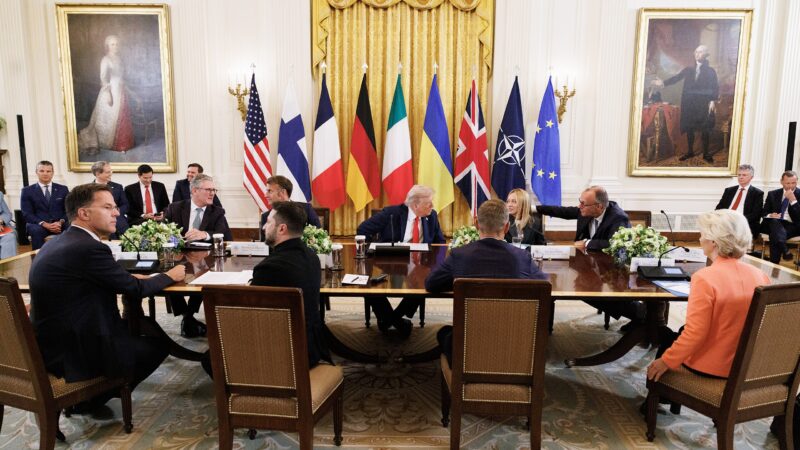
By Tumultuous days are behind the international community as only days after U.S. President Donald Trump received his Russian colleague Vladimir Putin in Alaska he welcomed European leaders alongside Ukraine premier Volodymyr Zelensky at a White House meeting for another push to carve out – more on-brand, “pursue” – a way to peace. There are important reassuring, completely indifferent and a bit gloomier takeaways after the meetings.
The Good
It seemed like a landmark in the whole process that this time apparently all of the leaders affected by the war in Ukraine were on the same page about having to do… something. Naturally according to national interests this can mean different things but the fact that all of them, even Putin insisted that some sort of progress can be made is rather remarkable.
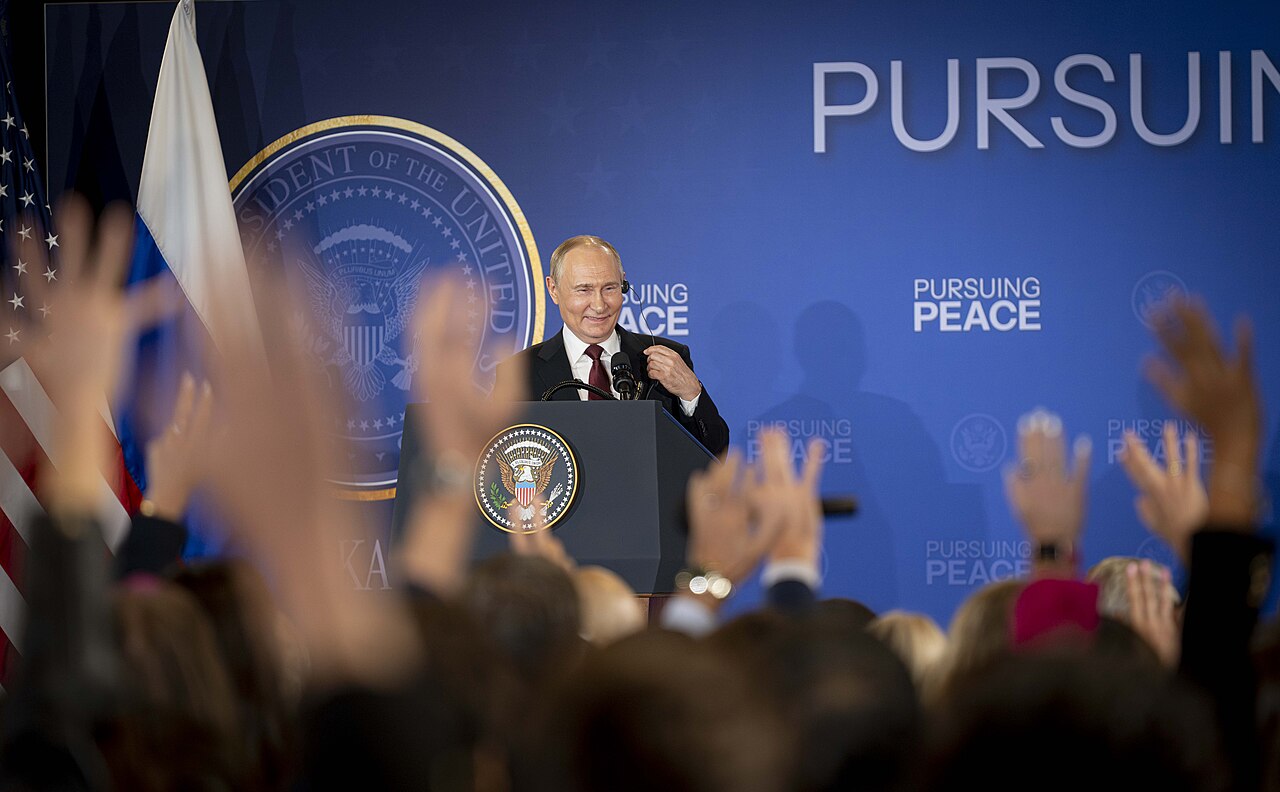
President Donald J. Trump and Russian President Vladimir Putin hold a press conference at Joint Base Elmendorf-Richardson, Anchorage, Alaska, August 15, 2025 (DoD photo by Benjamin Applebaum)
Another beneficial aspect for old-fashioned followers of international developments – like yours truly – is that the United States has stepped out of the isolationist tendencies Trump was poised to continue rigorously and decided to take on a role of not world police like we used to know it but rather a “world super.” During the last days, the U.S. was the one in the block of flats of international order who knew all the information – somewhat – and could issue warnings and arrange meetings to resolve the conflict. At the same time, Trump was always quick to add that the U.S. will not be playing an active role during possible peace negotiations. Just like a super with residents.
Whether this was done because Trump is very intrigued about a certain Nobel Peace Prize, because of genuine concern or because of certain business opportunities – Russian business representatives swarming the Alaskan venue might be a clue for this –, we do not know.
The best of all was – as many other commentators have also pointed out – the fact that this was the first time when security guarantees were mentioned concerning Ukraine. Never during the modern existence of the country has anybody guaranteed Ukraine’s security. Even in the Budapest Memorandum – a somber reminder of Hungary’s past diplomatic capabilities – the U.S. insisted only on security assurances. This latter word could be considered the time bomb that went off in 2014 and 2022.
The Bad
What gave this “peace pursuit” rather grim optics was who met whom first. Let’s put it bluntly: the Alaska meeting was another nail in the coffin of multilateralism. Putin is wanted by the International Criminal Court. He was received by one of the superpowers, another permanent member of the United Nations Security Council that never ratified the Statute of the organ. Getting justice concerning what happened on the battlefield and far from it during the Ukraine war will be extremely difficult if not impossible for Kyiv.
Thus, the only credible and really viable way of handling disputes and maintaining relations seems to be direct negotiations which resemble plain business meetings instead of classic diplomacy. This is clearly Trump’s influence, and it is to be seen which states can efficiently adopt their negotiations to this new way of working.
The Ugly
The most sobering realisation was how out-of-touch the European Union has been during the process. Commission President Ursula von der Leyen represented the bloc – alongside leaders of Member States – and there was virtually no input she gave. And while it is progressively less suprising that von der Leyen considers herself a de facto leader of the EU, the most disheartening illustration of what a freerider the EU is in the question is High Representative for Foreign and Security Affairs Kaja Kallas’s X.com profile where there is not a single word about the White House meeting.
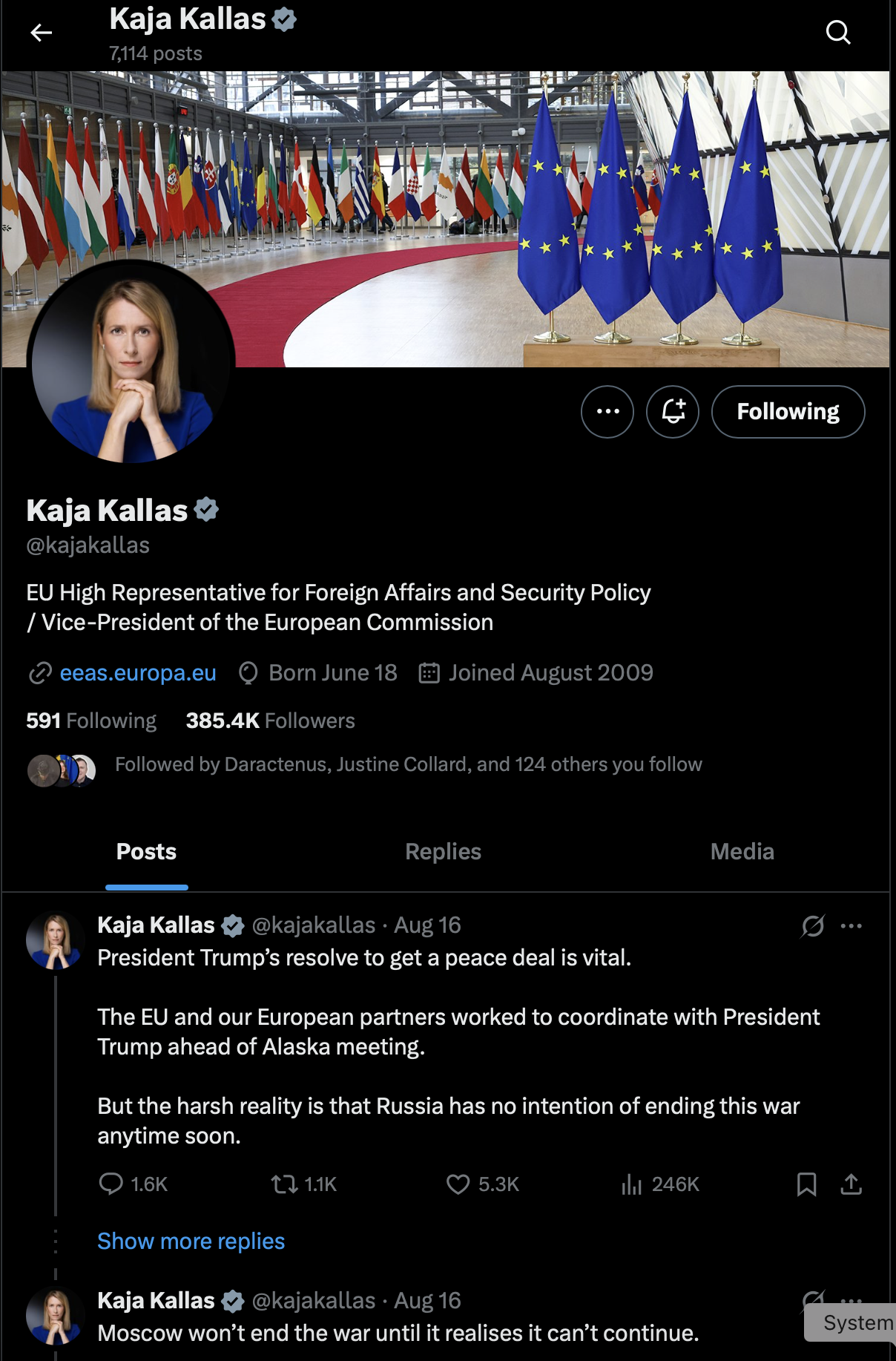
X.com profile of EU High Representative of Foreign Affairs Kaja Kallas on August 19, 2025 at 8:21am CEST
Turning to the future and last point in the not-so-upbeat column is the reaction from Russia. Naturally, Moscow has hit a resigned and very serious tone when it came to communicating about the developments but Putin’s jovial gestures and metacommunication in Alaska is somewhat in contrast with how the Russian side reacted to the Washington meeting. Kremlin aide Yuri Ushakov only said that it was “worthwhile” to “explore the possibility of raising the level of representatives” for a Russia-Ukraine meeting. Hopefully it will be more than just a formality.