
 By
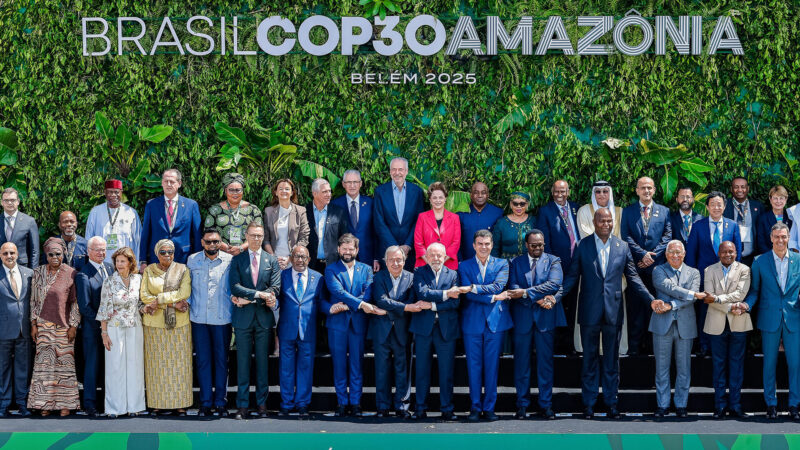
By Nations have come together once again, this time in Belém, Brazil, to discuss climate goals to avert the devastation of climate change at COP30.
But this year, the most major players are missing: Trump has made it clear that he would not attend; Xi Jinping, though taking part in preparatory meetings, is not representing China; and Modi skipped the meeting despite positioning India as the protector of the developing world last year.
Without the most major influencers of climate politics and the leaders of an additional 160 countries, COP is losing its relevance in global diplomacy, focusing on a field that has always been the first to get sidelined.
“The golden era for multilateral diplomacy is over,” says Joss Garman, former climate activist and head of the Loom think tank. “Climate politics is now more than ever about who captures and controls the economic benefits of new energy industries.”
Climate change itself, however, is undeniable: extreme weather conditions and consistent global warming affect countries in most policy areas, while the negotiations around climate change tackle longstanding diplomatic tensions that should matter to developed states as well.
Climate Influences Most Policies
Climate politics is an intricate field with many influencing factors and mostly restrictive outcomes.
But it’s also an arena of blame: developing countries of the Global South, who are especially vulnerable to climate change, call for changes to keep themselves alive.
The world is interconnected, making this issue a long-term problem for others as well, as its impacts reach farther each year.
“It cuts across security, health, food, education, economics, and finance…” an expert told DW News. “Having presidents and prime ministers who send the right signals that this is something we consider being a priority at the level of the heads of state is fundamental.”
As such, climate is a major obstacle for development, and its ramifications can destroy a country so much that it doesn’t just collapse but ceases to exist.
Disasters’ Direct Consequences: Food Shortage and Migration
Extreme weather is just the most devastating and direct effect of climate change. But this has far-reaching consequences on its own.
Somalia, for instance, is already struggling: consequent droughts and flooding aren’t just one-off disasters but regular disruptions. “For us, climate crisis is a reality. It is the mother who has to walk 10km to get water. It is the pastoralist who is losing his herds. It is the children who end up in a camp suffering hunger and disease,” Deputy Prime Minister Salah Ahmed Jama said, urging nations to create climate funding for nations like Somalia after humanitarian aid has been cut.
Kenya’ Deputy President Kithure Kindiki echoed the plea, emphasizing that poor nations like his are responsible for very little pollution: Somalia is causing only 0.01% of global greenhouse gas emissions, while Kenya produces 93% of its electricity from clean energy. Meanwhile, in his home country, a landslide caused by heavy rains killed 21 people as he spoke in Brazil.

Building resilience against hunger and malnutrition in Burkina Faso. Photo: EU Civil Protection and Humanitarian Aid / EC / ECHO / Anouk Delafortrie / Flickr. CC BY-NC-ND 2.0
Nigeria, once an agricultural hub, has seen flooding destroy its fields and output, causing a food crisis so acute that malnutrition contributed to 45% of deaths of children under five. Farmers and herders have been locked in violent conflict for the land that is left, leaving many to flee into displacement camps.
Crises like this one become a regional issue when the population is forced to move away from the area struck continuously by various disasters.
In the Pacific, island nations are under continuous threat of submerging as sea levels rise: Palau, for example, is home to 20,000 people who will soon become refugees without a home state above the water to return to.
Tuvalu, another Pacific island nation struggling with rising sea levels, has seen 80% of its population apply for specialized Australian climate visas, which were offered due to the islands already sinking.
Arrangements like the one between Tuvalu and Australia may not become commonplace, but people fleeing natural disaster-struck lands will soon be, and no continent can expect to be safe from its effects.
Long-Term Issues: Health
Climate change changes biodiversity, leading to changes in health concerns as well. Iceland reported discovering mosquitos for the first time this year, signaling that long-term effects are happening in the present.
Last year was the warmest on record, with a significant jump in CO₂ levels as well. Due to this, the average person experienced an additional 16 health-threatening hot days.
According to the medical journal Lancet’s Countdown Report, heat-related deaths also surged by 23% since the 1990s. In the US, extreme heat cost more than $1 trillion in 2024 due to labour losses from illness and other absences. This accounts for about 1% of the global economic output.
Mosquitos, ticks, and sand flies can transmit deadly infectious diseases and are now spreading to more areas, in part thanks to rising heat. Dengue, for example, hit a record of 7.6 million cases last year; its potential transmission has risen by 49% since the 1950s.
The lack of food and clean water also causes severe malnutrition across the globe, as well as contributing to infections. Smoke from wildfires, which harms internal organs and even babies in the womb, was linked to 154,000 deaths in 2024.
Where the Ripples End: Economic Shifts
Climate pledges made at COPs have drastically changed economic country profiles. The most emphasis has been put on emissions and energy sources, but through these transitions, other sectors changed as well.
China, which relied on coal, for example, has shown that economies can drastically change. Focusing on exports, the Chinese economy is greatly influenced by international demand, and thus, when faced with the recognition that the world will switch to renewables, they took the initiative.
Currently, China is producing over 80% of the world’s solar panels, 70% of EVs, and more than 60% of wind turbines. Meanwhile, it is also focusing on changing its ways domestically, with solar power alone expected to become the primary energy source in the country, surpassing coal, by 2026.
China has become so influential in clean technology that the President of the European Commission, Ursula von der Leyen, called the defeat of European solar manufacturing by cheaper Chinese companies “a cautionary tale we must not forget.”
However, economies also pay for the disasters caused by climate change: China, to keep with the same example, reported that natural disasters in the first three quarters of 2025 affected 530,000 hectares of crops and led to the direct economic loss of 217 billion yuan ($30.47 billion).
It is also important that other sectors make room for climate awareness: the study in the Lancet advised policymakers to make housing climate-proof for extreme heat and that healthcare systems should also be adapted. Previously, it has been proven that trying to meet the goals of the Paris Agreement has been effective in protecting health.
Climate Politics to Change
Even if a leader questions the existence of climate change, as Trump did at the recent UNGA, the effects will reach their country nonetheless, forcing them do adapt policies.
As such, the question is no longer preventing or slowing down the change but acknowledging it and dealing with climate breakdown.
As COP30 begins in the Amazonas, the lungs of the world, decision-makers must recognize the far-reaching ramifications of climate change, and though COP is not expected to serve its purpose as participation dwindles, it can prove to be an excellent platform for continued diplomatic pressure and a new beginning for international relations.