
 By
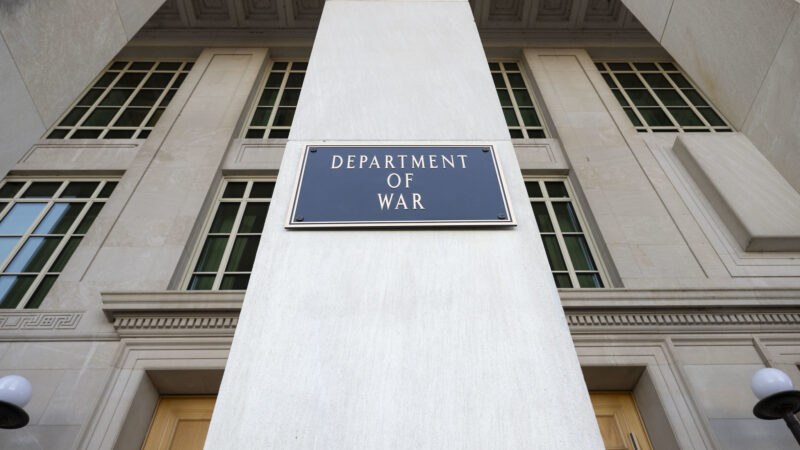
By Language is powerful, especially in politics. This is what US President Donald Trump counted on when deciding to rename the Department of Defense to the Department of War.
Since the name was last changed after World War II, with the National Security Act of 1947, the message does not exactly align with Trump’s self-claimed title of ‘Peace President.’ It evokes provocative language that assumes a war is already ongoing or is about to start, while the President chases Nobel Peace Prizes for ending them.
Trump, however, sees no problem with this contradiction.
“We could have won every war, but we really chose to be very politically correct or woke-y. And we just fight forever (…) We never wanted to win – wars that, every one of them, we would’ve won easily with just a couple of little changes.”
This little change, he says, will herald a new era of US military supremacy and victories. This suggests that to him, the only way to peace is through victory and hegemony after all.
“The War Department is going to fight decisively, not endless conflicts. It’s going to fight to win, not not to lose,” Pentagon Chief and now Secretary of War Pete Hegseth said. “We’re going to go on offence, not just on defense. Maximum lethality, not tepid legality. Violent effect, not politically correct.”
The Violent Effect
The way we linguistically frame issues will have a major impact on how they are interpreted. While much of political communication focuses on commanding this meaning, the intended outcome doesn’t always stick.
Donald Trump has been known to make unexpected changes to his policy. Many believe this is part of a calculated presidential image that relies on surprise and unpredictability to command negotiations.
This could be yet another example of this tactic: intimidate the world with the greatest US asset and outrageous demands, and soon a more mutually beneficial agreement is brokered that may be less than what the US initially wanted but is a lot more than what could have been achieved without the initial scare.
The concept is clear: Trump walks into any negotiation chamber, and leaders of other countries know he isn’t just willing but preparing to fight a war to take what he wants.
The idea of policies intimidating potential partners into bargaining with Trump has worked wonders in the trade negotiations. As Trump put tariffs ridiculously high, any concessions were a victory to the potential partner – but overall, they are still left with a much higher bracket than before.
They also realize that Trump can change his mind anytime, and a diplomatically unpredictable US President must be contained with occasional, smaller concessions compared to what he wants.
The Department of War could be another such tactic, but instead of an economic upper hand, it provides one in foreign policy: Trump is brandishing it as a powerful tool, an expression of his willingness to be an assertive president that doesn’t shy from armed conflicts.
The Reality: Unveiling Truth behind Rhetoric
According to American professor of linguistics and political thinker Noam Chomsky, there are two meanings to every word in political discourse: the actual meaning and the political attribution to it.
But which meaning is interpreted by voters and experts varies based on the integrity of the politician delivering it, the authenticity of each meaning, and their relation to overall policy.
Trump, as ‘Peace President,’ changing the name from Defense to War is too contradictory to be authentic, even in the eyes of fellow world leaders. His posturing of delivering peace was already on unsteady ground after unsuccessful peace negotiations concerning the Russo-Ukrainian war and an emerging armed conflict in the Caribbean as the US builds up its presence around Venezuela.
Now, his stance of ‘defense’ being “woke” is more authentic to his past policies and speeches than being ‘Peace President’ ever was. Now, he has clarified that by peace, he means victory in war.
But making such changes to America’s international standing is dangerous.
Historians have said that the change to the Department of Defense was intended to signal the US switching to preventing wars over escalating them, especially with nuclear weapons development. The change to Department of Defense involved unifying all aspects of the US military and creating an intelligence branch.
“Modern war demanded unified command across land, sea, and air, as well as permanent readiness in an age of nuclear weapons,” writes Dr Walter Ladwig, an international security expert and associate at RUSI. “‘War’ implied a reactive office, mobilised intermittently when fighting began. ‘Defense’ captured the reality of America’s new role: a permanent guarantor of security.”
As nuclear disarmament is gradually coming under threat, Trump’s change is a dangerous one that could contribute to a more volatile direction of world relations.
Even if we agree that US hegemony is over and we live in a multipolar world, we must also recognize that the US continues to serve as a country leading development and international negotiations.
But this is not enough for Trump’s idea of American exceptionalism, which sees the US at the height of its influence in the Cold War. If America controls the world, it can prosper.
He hopes to ‘Make America Great Again’ in international relations the only way the US can exert unmatched power now: through the military and intelligence sector.
For the rest of the world, however, this is worrisome: Trump is sacrificing global balance and security, a carefully constructed emphasis on diplomacy over war – all for US national interests.