
 By
By What is the Holy See’s role in the changing world order? How does papal diplomacy work? To what extent is Leo XIV a continuation of the “foreign policy” of his predecessor, Francis? What is Pope Leo’s opinion on the righteous peace in Ukraine? These are the questions that we discuss with Márk Aurél Érszegi, diplomat and Vatican expert.
You spent several years at the headquarters of the Catholic Church, including the years when you served at the Hungarian Embassy to the Holy See. What experiences do you have from this period?
I served at our Vatican Embassy between 2015 and 2020 as a senior officer, Deputy Chief of Mission to Ambassador Edward of Habsburg-Lorraine. Being a diplomat in the Vatican is definitely an extraordinary experience. Especially coming from Hungary, I felt that we were welcomed into the heart of the Church as representatives of a thousand-year-old Christian country.
You are also an expert on the Vatican issues; could you tell us more about that?
I had previously lived and studied in Rome for years, and I have always been interested in the structure of the organization of the Catholic Church, and within that, the operation of the papacy and the Holy See. Exactly twenty years ago, after the death of John Paul II, I felt the need to start dealing with this seriously because there was a shortage of Vatican experts in the Hungarian media. I started to write a blog commenting and interpreting what is happening in the Vatican. At that time, I was the only Hungarian blogger who regularly published on this topic. In May 2011, I was invited to the first-ever Vatican Blog Meeting, organized by the Holy See for Catholic bloggers.
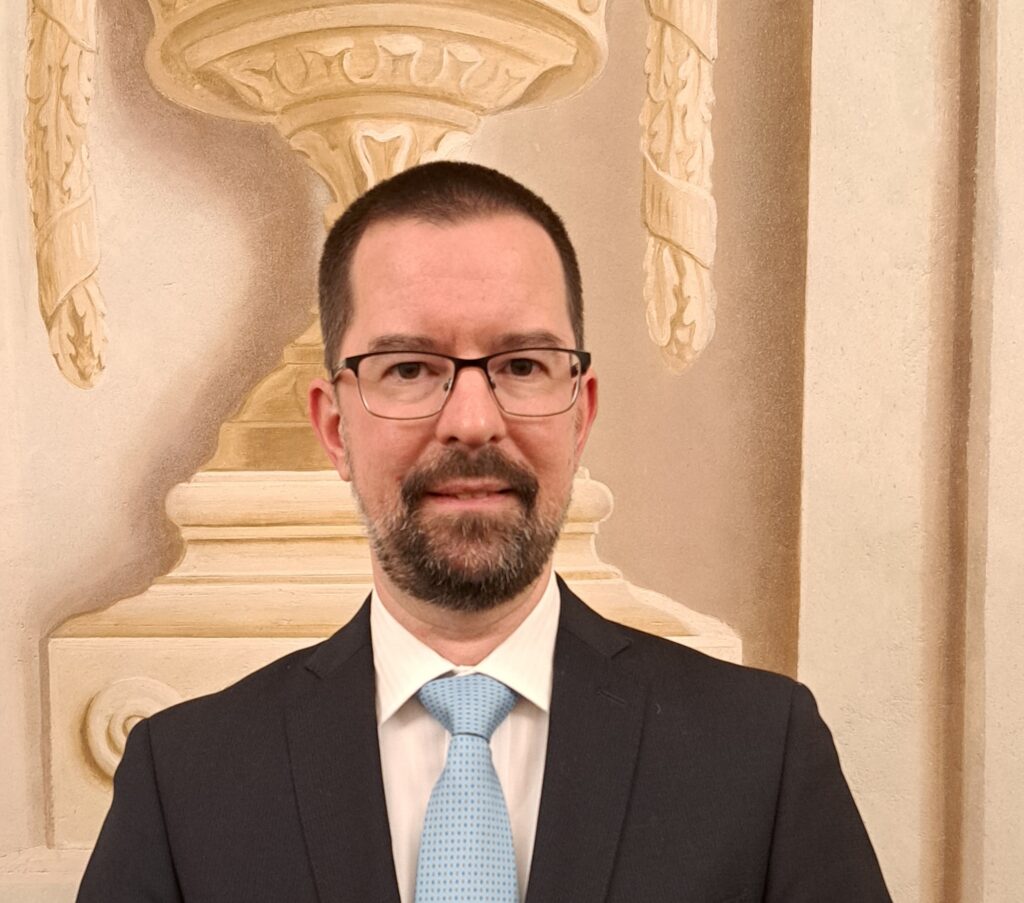
Márk Aurél Érszegi
Now, let’s move to our topic: how does the Vatican diplomacy work in general?
First of all, we are talking about Holy See diplomacy, or papal (pontifical) diplomacy, because the Vatican, as such, is a concept like the White House, the Kremlin, and so on.
And then there is the Vatican City state, which, however, does not really have international relations. The Holy See represents the State because the State is the property of the Holy See.
Vatican City only engages in international cooperation of a special technical nature. So the city-state is involved in international organizations of a specific technical nature: it is a member of financial, law enforcement agreements, international conventions against corruption, etc.
How active is Vatican City in bilateral cooperation?
Bilaterally, it is only in contact with Italy, also for technical reasons.
On the other hand, the Holy See is none other than the Roman Pontiff himself and his official apparatus, called Roman Curia, which governs the world church, that is, the Catholic Church. Since the 8th century, the Pope had been treated by other rulers as sovereign, and the Papal State had become a traditional part of international relations.
From this time on, can we say that the Pope represented the state in his person?
The pope does not represent a state; he is the sovereign himself. He himself participates in international relations mainly through representatives. This, like most of international law, is customary law, which, however, has obviously been codified by various agreements.
That is why we speak of the diplomacy of the Holy See or the Pope, which is one of the most ancient diplomatic service in the world. The reason for its formation is that the Pope was unable to be personally present at various church events around the world.
The Evolution of Apostolic Diplomacy
How has the papal diplomacy evolved over time?
At first, the world meant the Roman Empire, then the Eastern Roman Empire, and the various kingdoms of Europe. It was important to have a presence everywhere because, within the structure of the Catholic Church, the Pope has a prominent role; he holds the primatial authority, and his voice is decisive in many matters.
For example, the pope’s representation at the First Council of Nicaea, 1700 years ago – which had a special anniversary in 2025 – was also essential. This was the Council that actually represents the common denominator of the Christian faith.
Since then, this diplomatic function has existed, expanded by papal envoys coordinating questions and problems with the secular rulers. With this, the Holy See’s two-track diplomacy, i.e., the ecclesiastical and intergovernmental approach to diplomacy, was also born. This primarily means that the papal diplomacy’s mission is directed both to the local Church in a given country and to the Government of the same country as well.
Have these envoys become the predecessors of today’s nuncios to the Holy See?
In medieval diplomacy, when there were still ad hoc envoys, the Pope also sent the so-called legates to the various royal courts.
Then, during the 16th century, when the permanent ambassadors’ office began to develop, papal diplomacy also sent resident ambassadors, who were called apostolic (i.e., the pope is the successor of the Apostle Peter) or papal nuncios, and the embassy itself was called nunciature.
What changed with the advent of modern diplomacy in the 20th century?
The second half of the 20th century brought so many innovations that the Holy See became more active in international organizations as well. Although the Holy See participates in these organizations mostly as an observer, the popes feel it is important to be at the negotiating tables because they discuss topics relevant to the Catholic faith and Catholic life, as well as to humanity. Some exceptions include the OSCE and the International Atomic Energy Agency, where papal diplomacy participates as a full member.
All this means that the Catholic Church wanted to make her voice heard in international relations as “the voice of conscience for humanity,” as Pope Paul VI has said.
And this was also taken forward by John Paul II, who at least doubled the Holy See’s diplomatic relations, and he also had another area that is rarely highlighted. The articulation of the rights of peoples or nations.
The Papal Diplomacy in Practice: Presence in Almost Every Country
What does the diplomatic service of the Holy See look like in practice?
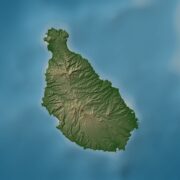
The Holy See has about 100 nunciatures or apostolic delegations around the world and has diplomatic relations with 184 states. We can say that the Holy See has one of the most extensive diplomatic networks.
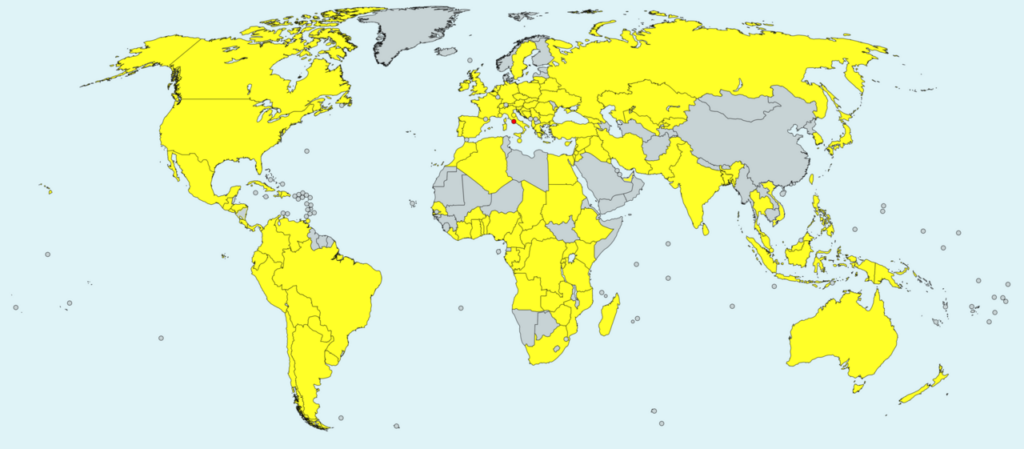
Diplomatic Missions of the Holy See Source: Wikimedia
What is the role of the nuncios, how their schedule look like?
The nuncios are ecclesiastical figures; their primary mission is addressed to the local Church, even where there are very few Catholics.
So the information is actually obtained not only from government sources, but also from civil society. For papal diplomats it is like they live the usual life of diplomats during most of the week, and participate in the life of the local church on weekends.
This gives them a lot of information, but it is also a very demanding service, as they hardly have any free time left.
In this sense, can the saying that the Vatican has the largest secret service in the world be true? Are there any Vatican spies?
Intelligence, as its name implies, is the job of obtaining news. Papal diplomacy conducts intelligence just like every diplomacy, and it does so with diplomatic tools, that is, with the means that are considered legitimate. However, it can obtain information from a much wider environment, on a wider scale. So basically, it doesn’t need any other kind of information gathering, but it’s also very discreet.
Speaking of discretion. Let us dispel an old misconception that priests can abuse the secrets of confession.
On the one hand, I think that what is said during the confession has relatively little diplomatic and international relevance. On the other hand, it cannot be used. This is a strict rule for which Catholic priests are ready to die, literally.
However, it is true that there is an environment of trust, people are happy to turn to priests and even representatives of the Holy See. So they tell them things voluntarily that they don’t necessarily tell others. Thus, the capacity of papal diplomacy to understand is much deeper.
How does the management of foreign affairs fit into the papal bureaucracy?
The nunciatures are the peripheral organization of papal diplomacy.
In the central government structure of the Holy See, the Roman Curia, there is the Secretariat of State, which is the Pope’s own secretariat. Its second section is called the Section for Relations with States and International Organizations.
It is, compared to the number of foreign representations the Vatican has, a terribly small organization (about 200 people), but very efficient. Its head is the aforementioned papal “foreign minister”, who has two deputies, Mons. Mihăiță Blaj and Mons. Daniel Pacho for the multilateral sector. This shows that the active role of the Holy See in international organizations is a progressively important issue.
How does the State Secretariat fit into the hierarchy of the Holy See?
They are located within the Secretariat of State, which has three departments, and the Secretary of State, Cardinal Pietro Parolin, is the head of the Papal Government. He is a papal official considered equal to the heads of government. Traditionally, the position of state secretary is filled by a cardinal – but not necessarily according to the new rules – and the “foreign minister” is an archbishop, presently Mons. Paul Richard Gallagher.
There is a third department of this State Secretariat, and that is the Section for Diplomatic Personnel of the Holy See. It was created during the time of Pope Francis. In fact, it is a large personnel department. Its task is to deal with the affairs of the entire diplomatic staff.
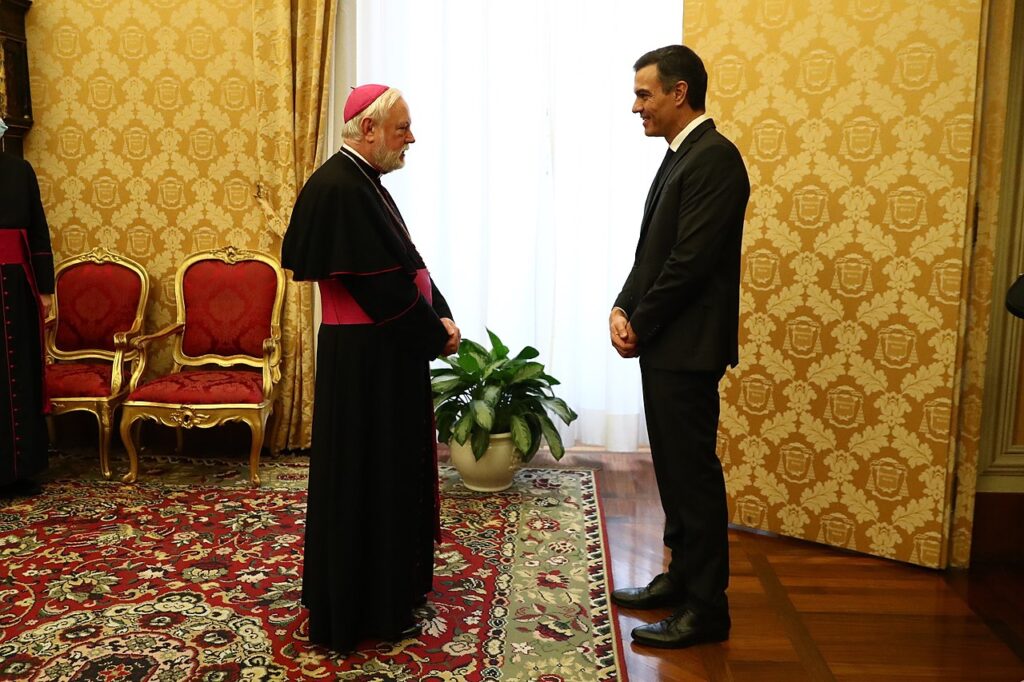
Pedro Sánchez, during the meeting held with the Secretary for Relations with States, Monsignor Paul Richard Gallagher Photo: Fernando Calvo/lamoncloa.gob.es
The Popes’ Relationship with the Concept of World Peace
How does papal diplomacy manifest itself towards the world?
Papal diplomacy has two characteristic means of expression. One of them is at the beginning of the year, usually in the days after the feast of Epiphany, when the Pope receives the diplomatic corps accredited by the Holy See. This is usually the case in every country, it is called “Circle”, where the monarch or head of state goes around and talks to everyone.
In the Holy See, this is called the Pope’s Audience with Members of the Diplomatic Corps accredited to the Holy See.
However, there is another very important statement by the Pope in international relations: the message for the World Day of Peace. The first of January is the World Day of Peace in the Catholic Church. It was established by Paul II in 1968, and the Pope addresses a message for it every year, which is presented before Christmas.
In his World Day of Peace address, the Pope summarizes the current priorities regarding peace, but in fact he links his priorities in international relations to the theme of peace. The text is then forwarded to all heads of state and government through diplomatic channels.
In his first such speech, Pope Leo XIV said: “Peace is more than just a goal; it is a presence and a journey. Even when it is endangered within us and around us, like a small flame threatened by a storm, we must protect it.”
Last spring, when Leo was elected, we wrote about whether Francis could be the heir to papal foreign policy. What do you think about this?
First of all, every pope is the successor of St. Peter, but obviously, there are subtle distinctions between the various popes, and there are moments on which to build. Pope Leo’s explicit goal is to build unity within the Church, but he can build on those represented during the time of Pope Francis in diplomacy and in many ways. With this, the diplomacy of the Holy See shows a high degree of continuity. I see one relevant difference between the diplomatic approach of Pope Francis and Pope Leo. For Pope Francis, the narrative of the state of the world was that there is a third world war fought in pieces.
Some call it the second Cold War.
Francis first used this term during his visit to the World War I cemetery at the Isonzo River in 2014:
“Even today, after the second failure of another world war, perhaps one can speak of a third war, one fought piecemeal, with crimes, massacres, destruction,” said pope Francis on the World War in pieces.
His theory in this regard is that the many injustices present in the world, which are climate exploitation, man-made climate change, migration, various wars, these are pieces, pieces of one great world war that is going on right now. And Francis derived the lack of this peace from social injustices. So he indicated the strengthening and creation of social justice as the way to achieve peace.
What is Pope Leo’s theory about the current world processes?
Pope Leo, on the other hand, says that peace comes from within. The title of the message of the World Day of Peace also states that
the goal is to achieve “unarmed and disarming peace”.
What comes from peace of heart, which requires peace within ourselves, the words we use, he repeatedly mentions that our words and our utterances must not be directed towards aggression, but towards peace. And if peace can be built from the heart of man, then social peace, international peace will more easily follow. So let’s say that Leo’s approach is a little different, but the goal is the same.
How can we translate the concept of peace into the context of the Russian-Ukrainian conflict? How do you relate to the Hungarian government’s stated desire for peace at all costs?
In general, unjust peace is not lasting. The end of World War I, for example, showed clearly what the consequences of an unjust post-war settlement were: it led to a new world conflagration.
Everyone has the right to self-defense, because you can give it up in your own name, but when you are responsible for those entrusted to you, you cannot give up.
Again, it depends on political considerations and wisdom what fits into a just peace. It is very important to know that peace is not the same as pacifism. It does not represent abstract ideas, but it is a very practical diplomacy that walks with both feet on the ground, but represents principles and ideas. So, one that sees the processes realistically, but also sees what needs to be done to move towards the ideas, towards the ideal state.
Pius XII’s motto was that the fruit of justice was peace, and Pope John XXIII, in the darkest time of the Cold War, in his encyclical Pacem in Terris (Peace on Earth), expressed how justice and peace belong together. This idea was expressed by Pope Paul VI, who even said, in the encyclical Populorum progressio, that development was the new name for peace.
Pope Francis has received Russian Metropolitan Anthony of Volokolamsk, head of the Moscow Patriarchate’s Department of Foreign Relations, on several occasions. What concrete steps has Francis taken to solve the Russian-Ukrainian conflict?
This is another dimension, which I think is also important from an institutional point of view, that the Holy See also maintains organized relations with religious denominations outside the Catholic Church. The term applied to his relations with various other Christian denominations is “ecumenical dialogue,” one of the ultimate goals of which is ecumenical unity, the unity of Christians.
Dialogue, on the other hand, can be an opportunity for joint action with the Russian Orthodox Church for peace if there is a willingness on their part, since there is certainly a willingness on the part of the Vatican.
Interreligious dialogue with non-Christian denominations and religions is another dimension, and there is also a Vatican dicastery dealing with that. Now, the latter is specifically aimed at finding the area of cooperation, the medium of cooperation, and the common voice with other religions, so that they can work together for the good of humanity.