 By
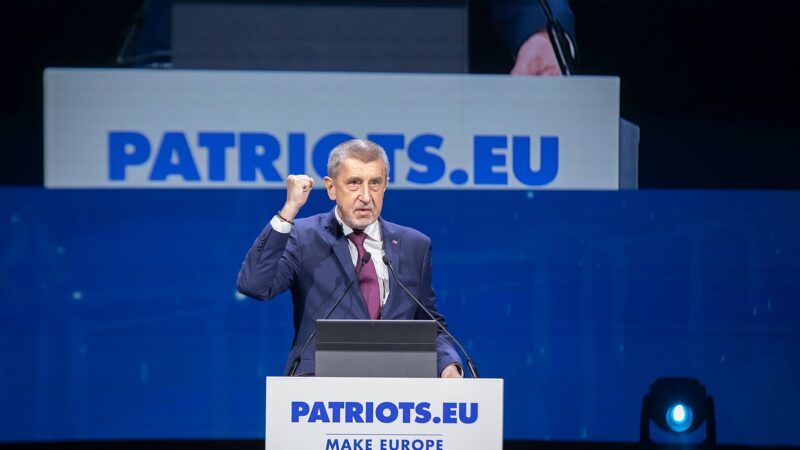
By Right-wing party ANO won Sunday’s parliamentary elections in Czechia and with it, controversial leader Andrej Babis could be back as prime minister of the Central European country. Conservative forces were quick to congratulate the veteran politician and billionaire, loudest among whom was Hungarian prime minister Viktor Orban who hailed ANO and Babis’ results as “justice has won.”

The Prime Minister. head of the Polish government met with the leaders of the Visegrad Group (V4) countries in Budapest in 2021 (Photo: Gov.pl)
Naturally it would be a quick and easy conclusion to draw that another state has turned itself over to the populist forces and that another ascent of the Babis–Fico–Orban triumvirate is coming but that is not entirely the case.
Here are four aspects that put the Czech elections in perspective.
Shade One: Government Shuffling
Babis and his ANO party’s victory was a slim one after a very high turnout: ANO landed 35 percent of the votes cast by 68.95 percent of those eligible to vote. On one hand it is a good-looking relative majority as the center-right SPOLU alliance only got 23.4 percent and lost a whopping 19 seats in the parliament.
Still, calling this the pinnacle of one’s political career – as Babis certainly did – is an exaggeration since the forming of government – should he get the go-ahead from President Petr Pavel – will take a long time. Maybe even long enough for the political climate to change either in Slovakia or Hungary.
Shade Two: The Question of Majority
Babis was elected by a much smaller margin than Hungarian Prime Minister Viktor Orban’s party and more or less by the same relative majority as Slovakian leader Robert Fico. He is in a very delicate situation and will have to seek alliance with the newcomer anti-Green Deal Motorists for Themselves, and the anti-immigrant Freedom and Direct Democracy (SPD) party.
Realizing this as leverage, these parties will have their own agenda and since Babis is much more of a realist politician in domestic affairs – especially when it is make or break for him – than his partners, which will result in concessions.
Babis has already said that in government, he intends to halt or decrease military aid for Ukraine. The latter would be rather off-brand for staunchly anti-miliary aid Fico and Orban to subscribe to.
Shade Three: Babis Himself
One of the bigger problems could be coming in the form of Babis’ business interests. The billionaire politician is the head of a company, Agrofert, which defrauded the European Union of two million euros in order to receive subsidies intended for small and medium-sized enterprises.
Babis is actually at trial right now and awaiting verdict of the Prague District Court.
Babis had previously been acquitted but the case is back at the district court after the Czech High Court said the lower court had not evaluated the evidence properly.

Headquarters of Agrofert in Chodov, Prague (Photo: ŠJů / Wikimedia Commons)
Babis’ immunity could be lifted by a parliamentary vote in the lower chamber which would prompt further skirmishes among political forces thus putting a swift forming of government in jeopardy.
Shade Four: The V4 is Obsolete
The return of Babis as prime minister could revamp institutions that were once sources for certain decisions in foreign policy, like the V4 formation. Fico and Orban could have been hoping to “put the band back together” but the intra-European political reality has changed a lot in recent years.
Not entirely without any agenda pointing in this direction, European Commission President Ursula von der Leyen much overreaching policy-making, along with other externalizations, like recent crises stemming from the war in Ukraine are also taking the political energy and focus away from such institutions.
New conservative alliances are not that easy to reheat this time and Babis’ considerations and grand promises to make Czechia the best country to live in in the EU – not “making it great” – are echoing signs that something different might be coming. It is to be seen what the second richest man of the country thinks would make a country the best to live in.