 By
By “Money was never a big motivation for me, except as a way to keep score. The real excitement is playing the game.” (Donald J. Trump, Trump: The Art of the Deal)
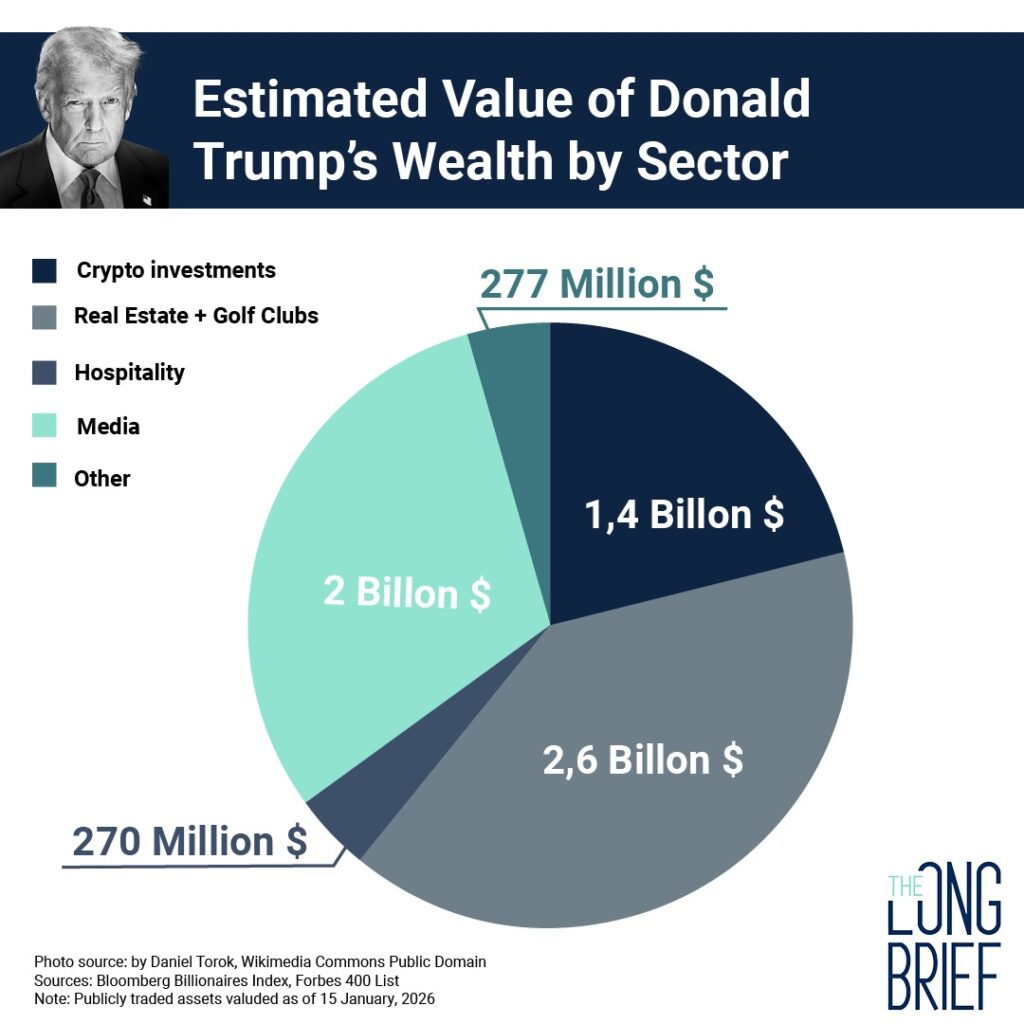
Just barely seven months after his return to power, in September 2025, Forbes included Donald Trump in its annual ‘Forbes 400’ list at No. 201 again. The magazine estimated his net worth at $7.3 billion. This meant he almost doubled his $4.3 billion wealth from the previous year. Not just Donald Trump himself, but also his wider family has benefited from his presidency.
As of early 2026, estimates of Donald Trump’s net worth vary by source. Forbes places it at around $6.5 billion, while other reports referencing 2025 cryptocurrency gains suggest higher amounts. The actual figure varies depending on the specific reporting period and valuation method.
It is worth mentioning that, of the total net worth reported for Trump, only about $1.1 billion is in liquid assets. Therefore, the $7.3 or $6.5 billion figures could fluctuate significantly within a week, depending on asset valuations.
Here are the four channels where the Trumps gained billions of dollars.*
Channel #1: Doing Business with Gulf Monarchies
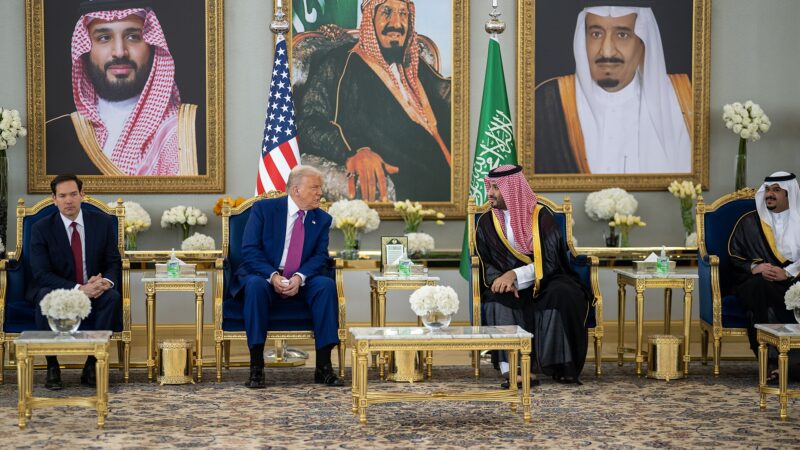
Though not the most lucrative, we ranked this first due to its global political impact. A few months into his second term, Donald Trump undertook an unprecedented trip to the Gulf States. Between May 13 and 16, he visited Saudi Arabia, Qatar, and the United Arab Emirates (UAE) over the course of four days. Trump reportedly secured over $2 trillion in investment commitments for the U.S. economy, according to the White House.
But the Trump family’s ties to Gulf monarchies go way back.
In 2022, Saudi Arabia’s Public Investment Fund (PIF) invested $2 billion in Affinity Partners, a private equity firm founded by Jared Kushner, Trump’s son-in-law, after he left the Trump administration.
A House committee opened an investigation into claims that Kushner leveraged his position in his father-in-law’s administration to land the $2 billion Saudi investment. In October, House Democrats requested that a special counsel be appointed to investigate whether Kushner was acting as an unregistered foreign agent.
Visualisation from The Long Brief
Days before departing on a diplomatic tour of the Middle East, news reports indicated that President Donald Trump planned to accept a Boeing 747-8 jet from Qatar to replace the aging Air Force One. According to the New York Times, a new Qatari jet would be valued at approximately $400 million.
Trump has provided significant geopolitical support to these benefactors. Their investments in his family’s businesses have drawn scrutiny over potential implications for American sovereignty.
When a Gulf developer or investment vehicle pays Trump—or licenses his brand—it has been regarded by critics as more than just a private commercial transaction. Some analysts view it as a political act where foreign entities seek to cultivate influence, dependence, and favor through financial relationships.
In 2022, Dar Global—the international arm of a Saudi developer that is described as having “close ties” to the royal family—contracted with the Trump Organization to manage a hotel and golf course in Oman. Two years later, the company unveiled a Trump Tower in Jeddah and followed with plans for a Trump Plaza in the city. The pattern was unmistakable.
The Saudis were licensing the Trump name for a series of lavish mega-projects in places such as Riyadh, Dubai, Doha, and the Maldives.
American foreign policy became increasingly pro-Saudi before Trump’s second term. Joe Biden entered office vowing to make Saudi Arabia a “pariah” after Khashoggi’s killing, but later sought a deal: Saudi normalization with Israel in exchange for movement toward a two-state solution.
Although this shift was driven by geopolitics, not personal gain. Biden aimed to keep Saudi Arabia from aligning with China.
Back in 2021, shortly after leaving office, Donald Trump expanded his influence in the golf industry through his involvement with LIV Golf. He reportedly earned substantial sums by hosting events.
Court filings indicate that Trump earned about $800,000 for hosting a tournament in 2022 and an additional $950,000 in 2023. Potential earnings could reach $6 million over four years.
This resurgence in prestige underscores the impact of LIV Golf, which is backed by the Saudi Arabian sovereign wealth fund and has attracted significant attention from both players and media.
Channel #2: Crypto Schemes
During Donald Trump’s post-election “interregnum” around 2023, his two eldest sons, Don Jr. and Eric, met at Mar-a-Lago with longtime family friend Zach Witkoff, the son of Steve Witkoff, President Trump’s all-purpose special envoy.
The trio agreed to establish a crypto venture, World Liberty Financial (WLF), which has rapidly outpaced the Trump family’s traditional cash flow, such as its real estate business.
Since its foundation, WLF has “doled out” at least $1.4 billion to the Trump and Witkoff families since Trump’s re-election. That includes a secret $500 million transaction selling 49 percent of the company to an Abu Dhabi royal and co-investors. Of that upfront installment, $187 million was directed to Trump family entities. Another $31 million was slated for Witkoff-affiliated entities.
Overall, the Trump family has received at least $1.2 billion in cash from WLF over 16 months, while the Witkoffs have earned at least $200 million.
The project is led by 32-year-old Zach Witkoff. Eric Trump is also the public face of a bitcoin company where he holds a $90 million stake, while his brother, Don Jr. and 19-year-old Barron join him as co-founders of World Liberty.
The youngest Trump offspring is a millionaire. According to Forbes, his fortune reached $150 million after selling cryptocurrencies last year. He reportedly holds nearly 2.3 billion WLFI tokens, potentially worth over $525 million if sold, though values are volatile.
Separately, Eric and Don Jr. launched American Bitcoin after each invested $1 million in Dominari Holdings, a Trump-tower-linked finance firm. American Bitcoin raised $220 million in June 2025—four months after forming—at a valuation above $1 billion. It went public in September, briefly pushing its market cap over $5 billion. Later, the stock reportedly fell to around $1.30, down more than 80 percent. Even so, Eric’s holdings still totaled roughly $90 million in paper gains at the time referenced.
Linking these ventures to Wall Street is Brandon Lutnick, the son of Commerce Secretary Howard Lutnick, who is said to run Cantor Fitzgerald and positioned it as a leading bank for crypto deals. Cantor is identified as the lead investment bank on an American Bitcoin share sale.
Despite repeated claims from the Trump administration and representatives of the Trump, Witkoff, and Lutnick families that the children’s companies operate independently, the narrative emphasizes how personal relationships – childhood ties, family proximity, and high-level connections – helped turn crypto into a multibillion-dollar pipeline of cash and influence.
Channel #3: Trump Media and Technology
In October 2021, Trump announced plans to launch his own social media platform, Truth Social. Therefore, he had formed a shell company for the platform and said that he had already agreed to a lucrative merger. His shell company was combined with Digital World Acquisition Corp. The combined company, now called Trump Media & Technology Group, then handed Trump a roughly sixty percent stake and named him its chairman. His share of the $293 million was equivalent to $175 million.
The company’s customer base is the MAGA movement. And Trump releases news-making presidential statements exclusively through Truth Social, exploiting his public position to draw attention to his private platform. But how much of that apparent $175 million Trump might pocket is a trickier question.
Trump Media’s market value has gyrated with its share price, ranging from $6 billion to $1.6 billion, and currently stands at $3.07 billion. This makes the President’s stake worth around 2 billion dollars.
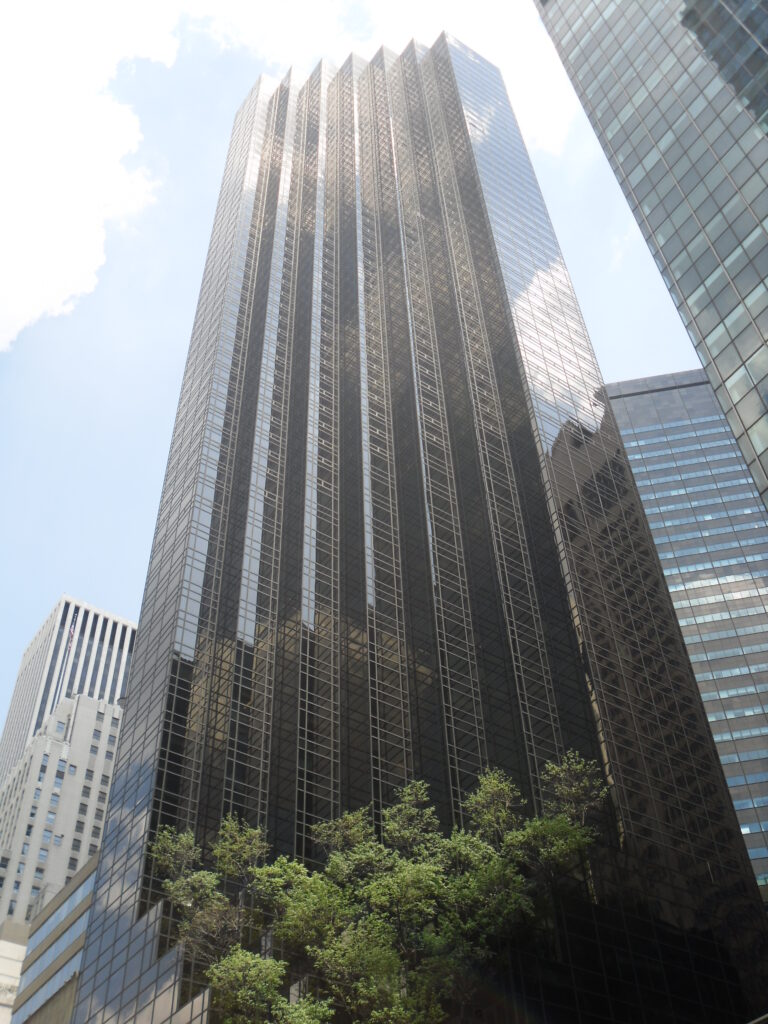
Trump Tower, New York Source: Wikipedia Commons
Channel #4: Hospitality, Real Estate, Royalties, and Licensing
Trump has long been branded a real estate mogul, but his business stalled out in the early 2000s. In 2024, Trump inked several foreign real estate investment deals, boosting revenue to $45 million, a 580 percent increase, according to Forbes. His golf courses and resorts also bounced back, boosting his net worth by another $325 million.
The Trump Organization, which currently runs just eight hotels, is responsible for building hotels and golf courses on both American soil and overseas.
The recent rush of Saudi investments in Trump-branded real estate in the Gulf, however, is not new. During the 2016 Republican primaries, Trump boasted of having sold condos to Saudis: “They buy apartments from me. They spend forty million, fifty million. Am I supposed to dislike them? I like them very much.
Capitalizing on his position as President of the United States, Trump launched several licensing deals in 2025 that helped boost his bottom line. According to a financial disclosure form reported by Time.com, he earned more than $10 million from the sale of Bibles, guitars, watches, sneakers and fragrances.
Quid Pro Quo?
The family isn’t just passively accepting the Saudi private-equity investments, the Persian Gulf licensing deals, and purchasing a billion dollars’ worth of digital tokens. They’ve sought those payments eagerly, and at a speed suggesting that they badly want—or need—the money. The family’s thirst for cash makes questions about conflicts of interest all the more pressing.
Gary Kalman, executive director of Transparency International US, said that Trump’s profiteering resembles that of an Arab monarch: he treats his public office as personal property, as an asset that is his to exploit as if he owned it. Kalman said,
One of the differences between a monarchy and a democracy is that the President should not start to view the Presidency as his personal fiefdom.
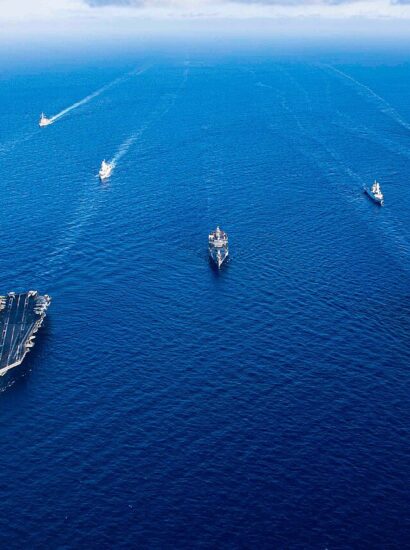
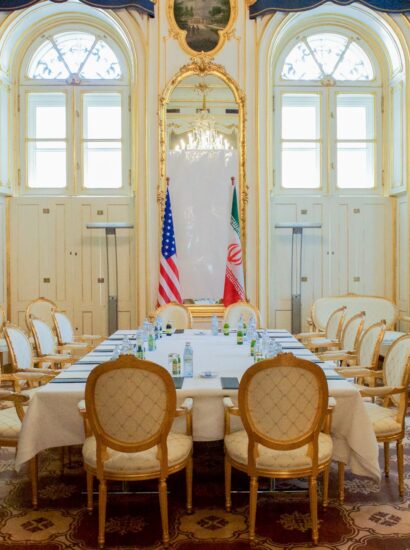
In June 2025, when Trump ordered airstrikes on Iran, the Arab monarchs surely cheered. Did payments from the Arab monarchs incline Trump toward airstrikes against their regional rival, the Islamic Republic?
Furthermore, it is also in question whether Qatar was gifted the airplane to protect itself from another blockade, not to mention the ethical and security issues associated with it. Lastly, did the U.A.E.’s two-billion-dollar stablecoin purchase give it access to sensitive American technology? It is hard to prove something like this, but maybe.
Furthermore, it is also in question whether Qatar was gifted the airplane to protect itself from another blockade, not to mention the ethical and security issues associated with it. Lastly, did the U.A.E.’s two-billion-dollar stablecoin purchase give it access to sensitive American technology? It is hard to prove something like this, but maybe.
*Some data are based on estimates and reports published in the previous year. The primary sources include Bloomberg and the Forbes Billionaires Index.