 By
By If 2025 was the year of lawlessness, this descent could continue into the new year. The current turbulence of global politics makes predictions increasingly more difficult – but even more necessary as our attention splinters across the globe.
For 2026, we delve into several regions of the world to comprehend the rapidly changing world. In our view the most pressing questions are:
- What ongoing regional crises could spiral or which ones could end?
- What countries are emerging regional or international powers? Which ones are declining?
- What regional trends support or undermine democracy?
- Name some key concepts that you believe will define international political discourse in the coming year.
András Szűts, author at The Long Brief , region of Asia Pacific – Australia and Southeast Asia
- The region will continue to be shaped by strategic rivalry between China and the United States. In the coming year, China is likely to pursue “smile diplomacy” to expand its influence amid growing concern among U.S. partners about Washington’s unpredictability. Beijing is expected to deepen trade and economic ties to encourage regional states to hedge more evenly between the two powers, reinforcing its long-term influence. Major shifts remain unlikely. Maritime frictions and airspace violations involving China, the Philippines, Vietnam, and Taiwan are expected to persist, but not exceed recent levels. In mainland Southeast Asia, Thailand’s February elections may briefly strain relations with Cambodia due to campaign dynamics, though tensions are likely to stabilise once the elections conclude.
- Despite facing economic challenges, China continues to assert its dominance as the primary regional power, demonstrating its growing military reach and diplomatic influence. Japan is undergoing a strategic re-emergence, evidenced by an expansion in defence spending and regional leadership. The Republic of Korea has emerged as a middle power, exhibiting significant influence in the global technology, arms export, and diplomatic arenas. Within the context of South-East Asia, Vietnam is distinguished by its economic growth, strategic positioning, and hedging diplomacy. Indonesia is an emerging international player, leveraging its size, resources, and non-aligned leadership. Despite the limitations imposed by its demographics, Australia has continued to rise as a security actor and a partner in the Indo-Pacific region.North Korea is a military power, yet it is economically stagnant and diplomatically isolated. Myanmar is experiencing a precipitous decline, precipitated by civil war and state collapse. Thailand has demonstrated a relative decline in economic performance, attributable to political instability and a deceleration in growth. Malaysia and the Philippines are stable yet constrained by domestic governance and institutional limits.
- Myanmar, Cambodia, and Laos have become major hubs for a multibillion-dollar online scam industry tied to transnational criminal networks in Southeast Asia. Operating from fortified compounds, these networks engage in online fraud, human trafficking, forced labor, and money laundering. Lawless border regions, especially along the Thai-Myanmar border, have seen scam operations more than double since Myanmar’s 2021 military coup. UN data estimates at least 120,000 people in Myanmar and 100,000 in Cambodia are forced to work in these centers. Victims from across the world are lured by fake job offers, then detained, abused, and forced to scam global targets. Thailand and Myanmar have begun crackdowns, including raids and cutting utilities. However, while states stand up against scam centers, these networks undermine democracies and destabilize societies by fostering corruption, weakening law enforcement, and eroding public trust in institutions.
- Balancing, preparation, mistrust.
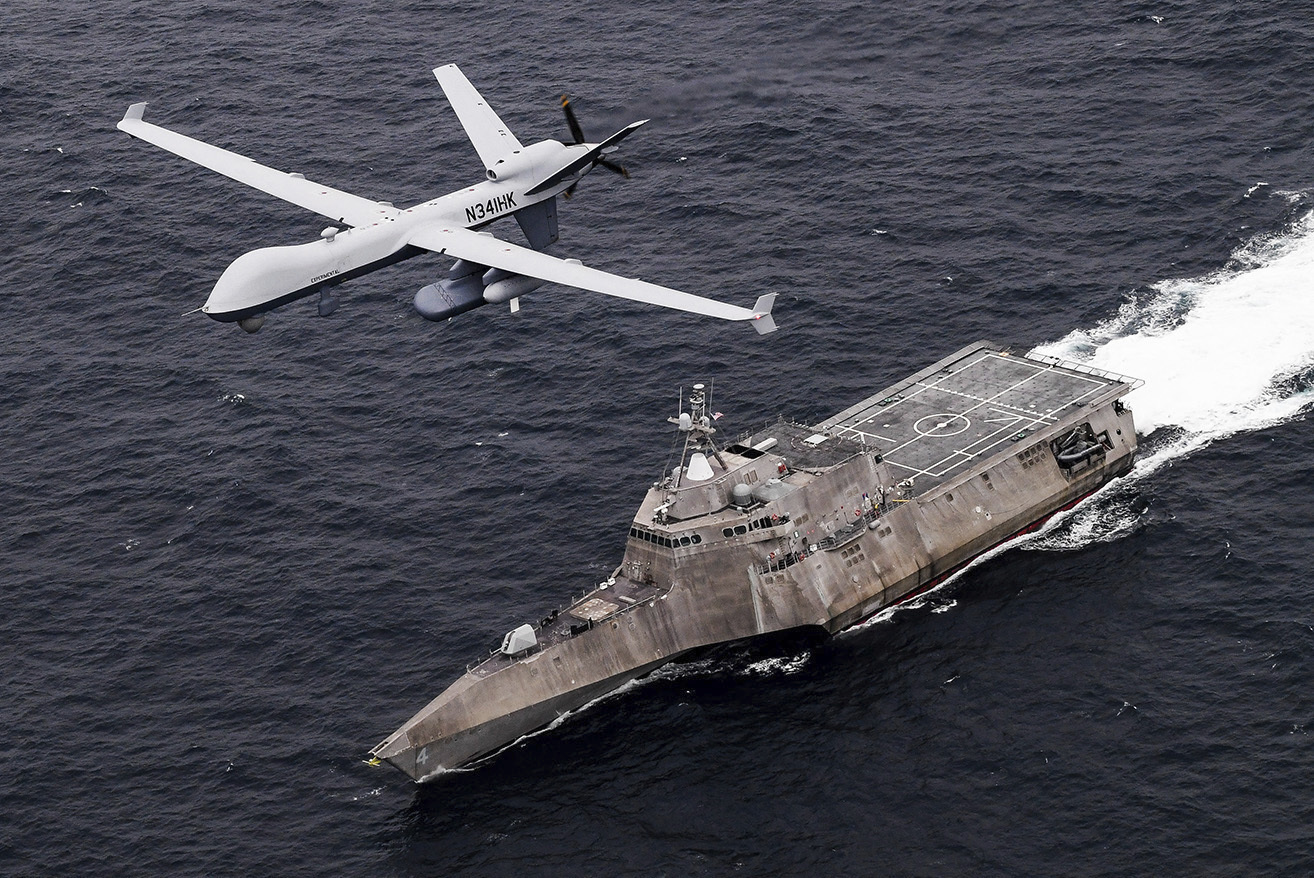
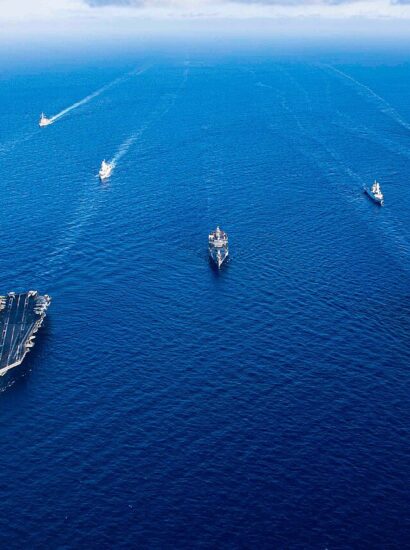
An MQ-9 Sea Guardian unmanned maritime surveillance drone flies over the USS Coronado in the Pacific Ocean during a drill April 21, 2021. (Photo: U.S. Navy/Chief Mass Communication Specialist Shannon Renfroe, via AP)
Tamás Árki, Founder and Editor-in-Chief of The Long Brief on the High North region
- It is best to be prepared for the worst and hope for the best. With that in mind, I do not think any regional crisis could end next year. Ironically enough, the Russo-Ukrainian war seems to be closest to its conclusion, only because it has turned into a war of attrition a long time ago.Otherwise, the international order has turned into international disorder and with certain resources becoming more and more scarce, competition for what’s left (and for where it is still available) will bring more and more tension.
- There will be countries affected by machinations and manoeuvres that so far have not experienced pressure and anomalies. Scandinavian countries have lived a prosperous and very peaceful century but what is coming with the opening-up of the High North as a strategic path that is always available, activities of the ’Russian black fleet’ and drone incursions will only be the start of something more serious. These countries need to be prepared which they do not seem to be right now.
- Novel ways of interactions between states (note the absence of the word ’diplomacy’) will put a lot of strain on international institutions founded only 30-50 years ago. Because of today’s changing international political landscape, that timespan now seems like three lifetimes ago. It is high time institutions that were born out of sheer optimism leave their naiveté behind because the following 10-20 years are going to be about stone-cold realism. That’s just how it is.
- I cannot state anything else other than what I have been saying for the last three years: Thomas Hobbes and Thucydides have already written down all the concepts and scenarios of what our age is turning into.
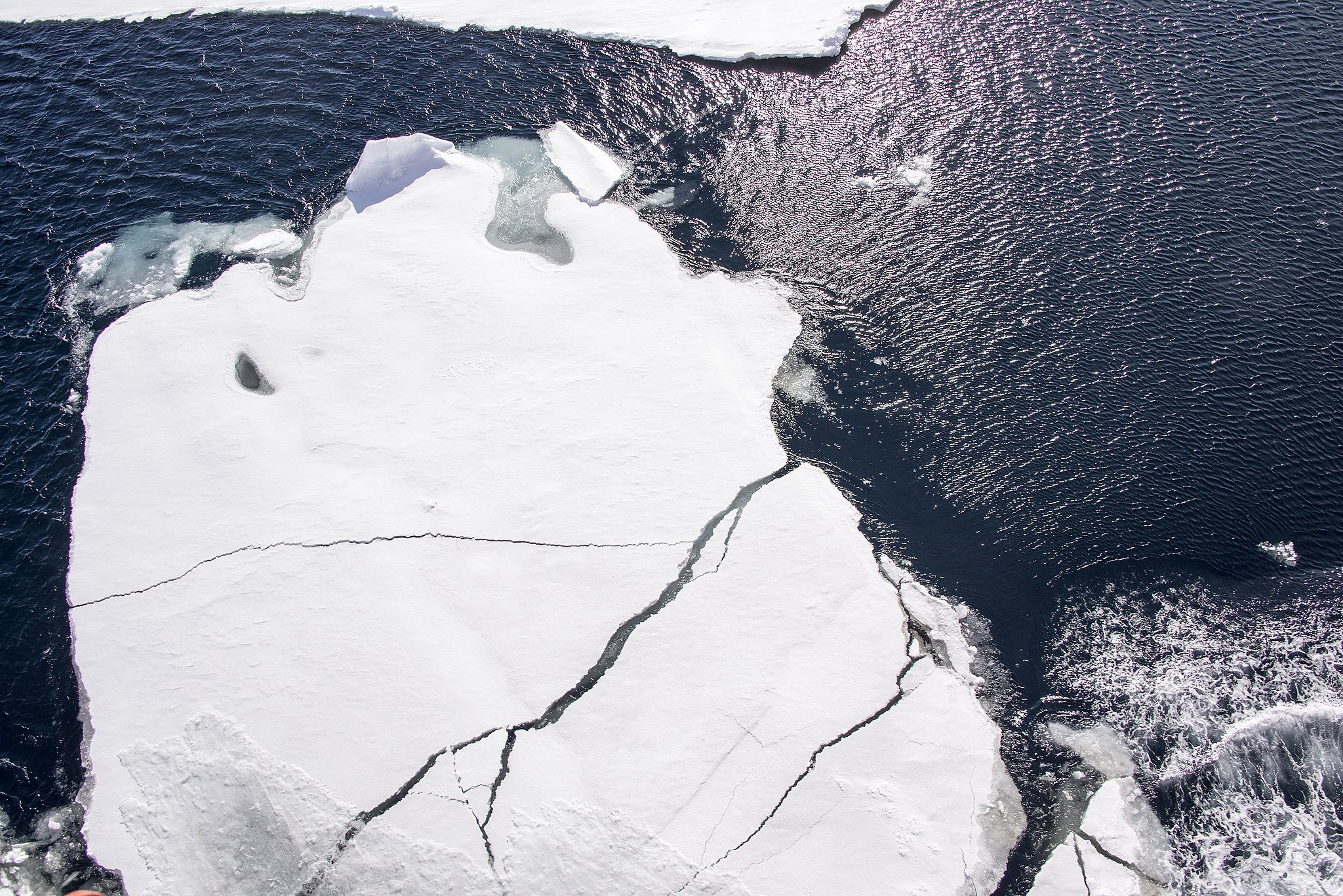
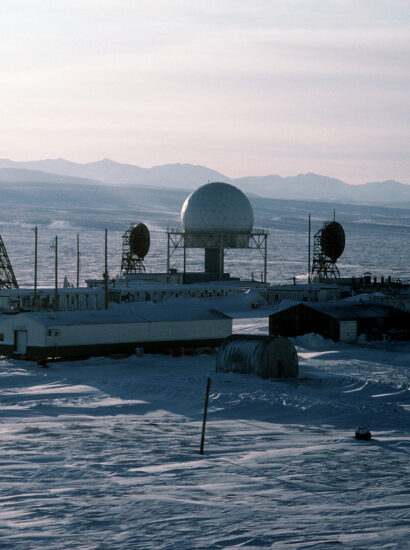
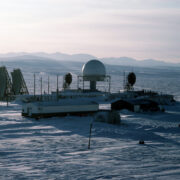
North Pole Keep (Photo by flickr.com / Wikimedia Commons / Christopher Michel)
István Vass, Managing Editor of The Long Brief on the region of the Americas
- The U.S. military takeover in Venezuela raises a huge amount of uncertainty. Growing armed group activity and political polarization in Colombia, compounded by recent threats by U.S. President Donald Trump, further lead to a possibility civil war. Violent clashes between armed groups and security forces escalate in Haiti, aggravated by political dysfunction and the failure of international stabilization efforts.More than two million people have left Central America’s so-called Northern Triangle—comprising El Salvador, Guatemala, and Honduras—since 2019, many of them fleeing chronic violence and insecurity, extreme poverty, environmental disasters, and other hardship.
- According to Standard and Poor’s Latin America BMI, the emerging markets in the Americas region include Brazil, Chile, Colombia, Mexico, and Peru. These nations are key players in global emerging markets, showing strong GDP growth: as of the end of May 2025, Chile, Brazil, and Mexico collectively represented approximately USD 568 billion, or 94 percent, of the MSCI’s (Morgan Stanley Capital International) Index of Emerging Markets of Latin America. Argentina is the region’s dark horse: we don’t know what the country’s extravagant President Milei will achieve in the second half of his term.El Salvador is often discussed as an “emerging” nation in the Americas, characterized by rapid security transformation under President Bukele. His unorthodox moves, like Bitcoin adoption, growing tourism, and efforts to diversify its dollarized economy, made some progress, but the country still faces challenges with low productivity, human capital, and fiscal stability while seeking to overcome past issues like high crime to achieve greater prosperity.On the negative side of the balance sheet are the US and its new strategy that breaks up with its natural allies, the Europeans. However, the forecast for the US economy is rather positive. But in the two areas that President Trump pledged to improve rapidly – jobs and prices – the results have so far been lackluster. Not to mention the social divide on issues such as immigration and freedom of speech.
- Numerous individuals contend that the United States no longer exemplifies the city upon a hill, serving as a model of a thriving democratic nation. Since 2016, Donald Trump’s first presidency, there has been a big clash between the New Right movement and the Progressive Left. The latter seems to be defeated by the second coming of Donald Trump back in January.The New Right movement – which draws together associates of the right-wing Claremont Institute, National Conservatives, Postliberals, and the Hard Right –advocates nationalist economics, tight borders, isolationism, and reactionary social values. But above all, it is determined to harness state power and use it in new, illiberal ways, from college campuses to the international scene—all driven by the fantasy of restoring a pure America.The conflict between the two extremisms is frequently referred to as the “second civil war” or a civilizational suicide. It primarily undermines the consensus, which is the foundation of democracy. And Trumpism becomes a global trend from Lebanon to recently Chile. Let us not forget that, if the US descends into internal crisis and ultimately collapses, as the Roman Empire did before it, we here on the edge of Europe will feel the effects.
- Trumpism, spillover effects, a world without order. But let us be a little positive with the words of Sun-Tzu: “In the midst of chaos, there is also opportunity.”
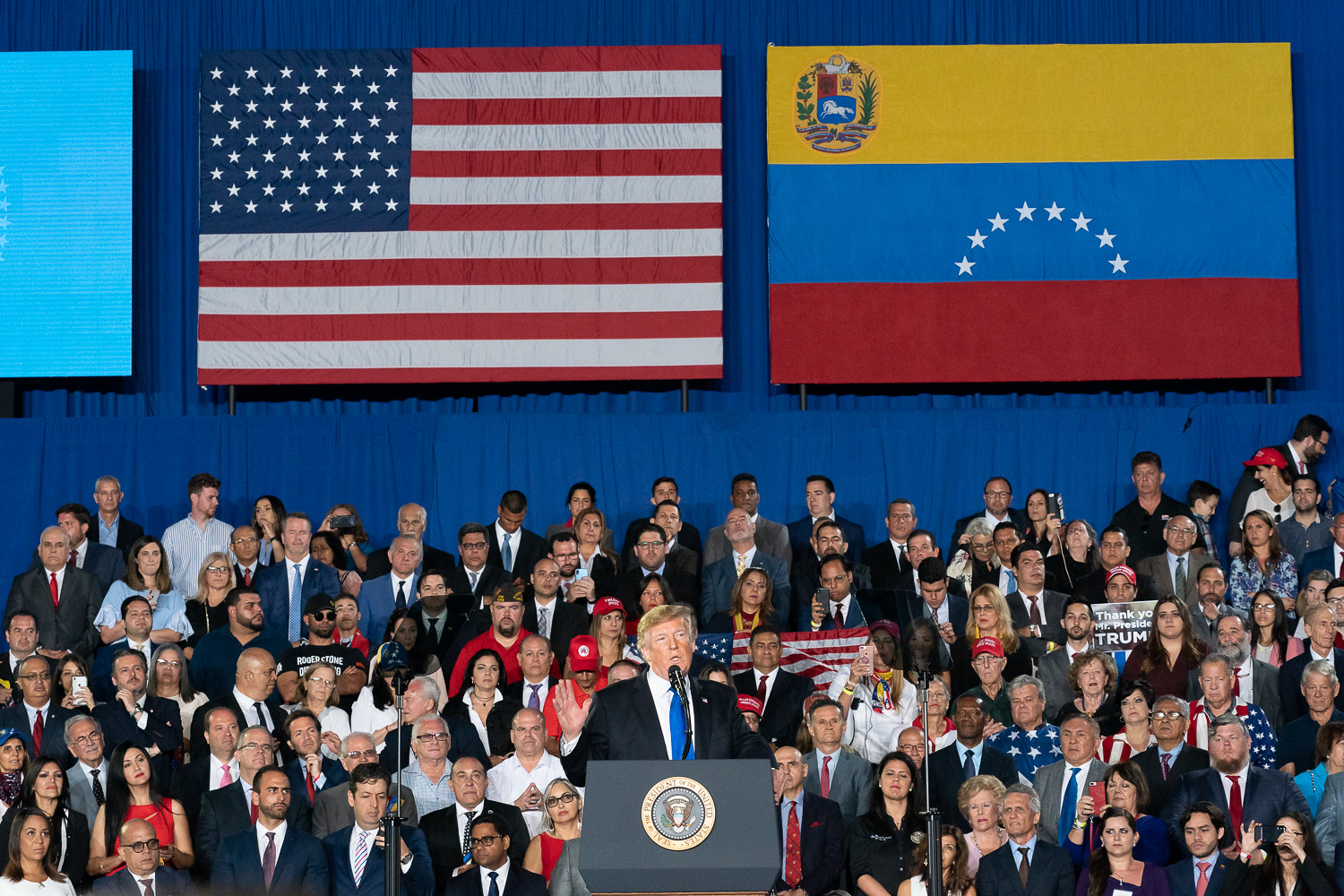
President Donald J. Trump delivers remarks to the Venezuelan American community at the Florida International University Ocean Bank Convocation Center Monday, Feb. 18, 2019 in Miami, Fla. (Official White House Photo by Andrea Hanks)
Tamara Beckl, Junior Editor at The Long Brief on the Western European region
- For the whole of Europe, the Ukraine crisis is undoubtedly the most pressing issue. While the US continues to interfere, Russia presses into the EU through new satellite methods, pushing the EU to delegate to qualified majority voting instead of allowing one veto to rule above all, as my colleagues predicted last year.But, pessimistically, I believe the Ukraine crisis will come to an unjust and worrying end this year, where Ukraine’s (and the EU’s) priorities will be ignored in favour of appeasing Russia. For the UK, though it has successfully detached itself from European politics, its leaders are now realising that this severance cannot be long-lasting thanks to geopolitics. Most importantly, the UK is being sidelined as its global influence is overshadowed by the EU’s collective power.This development will force any UK government’s hand: I believe there will be a small but loud movement demanding re-entry to the EU, which will be rejected by both UK and EU leaders. Instead, the UK will continue to find new ways to reconnect with the Union, through specialised treaties, which will make it a unique partner to the EU – but not its participating member.
- The power struggle among EU member states is a timely development. It will force the EU to expand its central leadership from the usual big trio, Germany, France, and the UK to other nations, like Chechia, Poland, and Ireland, emerging as new strengtheningeconomies. Germany and France losing their leading role within the EU also allows more room for those in looser unity, like Denmark.This, however, is a long process that will likely not end this coming year; but it is important that it continues in order for the EU to become its own power, separate from the unpredictability of the US. This is, in my view, an opportunity for the EU to become the collaboration of vastly different regions that can counterbalance the global powers: the US’s shifting tides as well as the growing authoritarian influence from Russia and China.
- Democratic backsliding is a major issue for Europe, though frequently forgotten as something state- and international-level politics cannot solve. Though it is true, in my view, that democratic decline is inherently connected to a general decline in citizen access and faith in politicians, there is also a mass depression at play, which makes people avoid discussing politics.This is only strengthening the rise of the far-right and radicalises the left as well. If such topics are discussed but not addressed, polarization will worsen in the coming year.With social media, ideas spread across the world in minutes, and tendencies quickly become realities. Just as Trump’s ideology swept across the world, I think the European flavour of neoconservativism is also going to become a unified movement, with foreign powers weighing in on European politics as best they can.AI will also aid the spread of mis- and disinformation, only worsening this tendency. Its regulation should become the top priority as it is the most disruptive presence to democracy – and not just in Europe.
- Multilateralism, far-right rising, migration, Russia, AI, misinformation. And of course, common European military development.

Keir Starmer on a campaign rally (Source: Twitter)
What Will 2026 Bring?
Across regions, polarisation and a general dissatisfaction have taken root. Whether our predictions prove true or not, our world order is in a slow but steady development that broadens the list of important actors. With each development, it seems for each conflict solved arises a new one.
Whether 2026 will be the year when these are addressed or spill over into armed confrontations, each power and region seems to be preparing for all possibilities.