 By
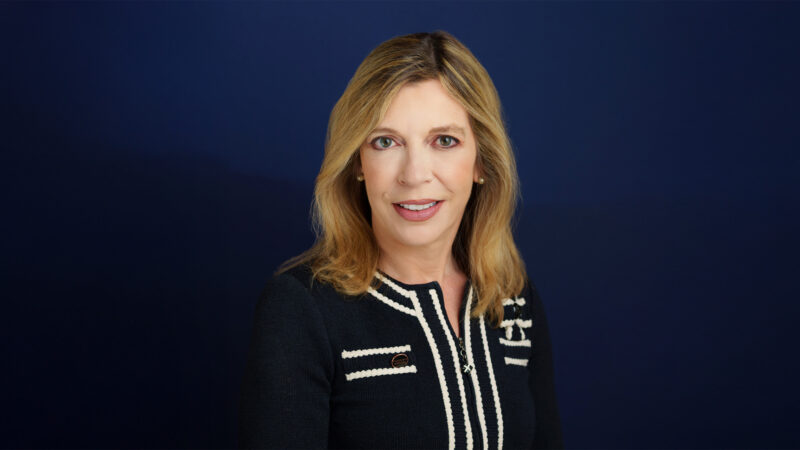
By “This current Trump administration is different from the previous one and any other presidential administration in that there’s a great deal of uncertainty,” says Evelyn N. Farkas, American foreign policy expert. She also emphasizes that the current reliance on the president for decision-making, and the lack of a clear, articulated national security strategy is alarming for the US interests. She also thinks Trump’s unpredictability sometimes leads to breakthroughs but requires follow-up and transparency.
Dr. Evelyn N. Farkas has three decades of experience working on national security and foreign policy in the U.S. executive, legislative branch, private sector, and for international organizations overseas. She is currently the executive director of the McCain Institute at Arizona State University. She served from 2012 to 2015 as deputy assistant secretary of defense for Russia/Ukraine/Eurasia, also covering the Balkans, Caucasus and conventional arms control. She was the senior advisor to the Supreme Allied Commander Europe. From 2001 to 2008, she served as a professional staff member of the Senate Armed Services Committee. From 1997 to 2001, Dr. Farkas taught international relations at the U.S. Marine Corps Command and Staff College. She served in Bosnia for OSCE in 1996/97. Dr. Farkas obtained her M.A. and Ph.D. from The Fletcher School of Law and Diplomacy at Tufts University. Dr. Farkas is a Hungarian American, the child of political refugees of the 1956 Revolution.
What can you share about your Hungarian ancestry?
Yes, I’m a Hungarian American. I’m the child of political refugees whose parents fled communist Hungary in 1956. They’re still alive. My father’s turning 100. He was born in 1925. He published a book called Vanished by the Danube. And then my mother, she’s a ‘spring chicken’, as we say in English, compared to him, she’s 87.
I wish them good health.
Thank you! I grew up and my first language was Hungarian. I didn’t learn English until I went to kindergarten. I lived in a bilingual home, after that then I went back to Hungary during communism as a child, as a teen and then a young adult. Next, after the Berlin Wall fell, I went quite a lot, especially the two years when I lived in Vienna.
Does your Hungarian background affect you when you choose your studies or your research topics?
Definitely! I grew up in a household where history was always present. My father had us read about World War I, World War II, what role his family played in both of them, or how their lives were impacted. I learned about the Holocaust and how it impacted people who were close to my parents and my grandparents in particular. And then I also learned, of course, about the gulags and communism and deportations that occurred on my mother’s side of the family as well.
I always understood that people had a tremendous ability to do harm to one another motivated by poor ideology. Therefore, I wanted to study ethnic conflicts so that I could prevent them.
Well, that’s why I went to graduate school at the Fletcher School, where I studied ethnic conflicts. Later on I worked in Bosnia in the first wave of civilians who returned to their home after the war. My dissertation also focused on US policy towards secessionist movements in the wake of conflict. I looked at Iraq, Ethiopia, and Bosnia. My Hungarian heritage had a tremendous impact on me as a scholar, as a thinker.
How do you end up in policymaking?
After I earned my Ph.D, I started off teaching Marines at the Command and Staff College, but I quickly moved into policy. There I realized I really was interested in using the American power – miitary, economic, political – to make the world a safer place, if you will. It’s been driving me my whole career.
Now, let’s move into the current US affairs. Can we differentiate the Trump 2 administration from Trump’s first presidency? If so, how do you evaluate the formation of the US National Security Defense Strategy?
I think that this current Trump administration is different from the previous one and any other presidential administration in that there’s a great deal of uncertainty because the administration is relying heavily on the president to make almost all decisions about national security strategy and on priorities.
Trump’s team has not articulated in writing or publicly a national security strategy, nor have they clearly outlined their priorities, although their priorities are being revealed by where they spend money and where they put their attention.
These interests are quite different from America post-World War II because the Republicans seem to be prioritizing fighting drugs and dealing with immigration and the Western Hemisphere regionally over addressing our global adversaries, which are China, Russia, North Korea, and Iran.
It raises a lot of questions about the implications because I don’t think that the strategic goals are correct. I also think there’s danger in relying on one person to make so many decisions, given the fact that the president himself brags about being unpredictable.
In diplomacy and in international affairs, unpredictability is not always a good thing. There are times when his unpredictability has led to breakthroughs. But then those breakthroughs require follow-up, and the follow-up does require predictability.
Can you give an example of it?
For example, unpredictably bombing the Iranian nuclear facilities, that actually brought Iran and Israel soberly to the table and opened the door for a resolution not just of Gaza, but of the Middle East security crisis.
The problem is that, to have real follow-through, you need transparency, consensus among all the interested parties, and a plan for achieving that.
So our president had the summit, and that was good because he had all these countries there, although neither the Palestinians nor the Israelis were there. All in all, it was a step in the right direction in at least getting everyone together and signaling what he wanted. But we don’t see publicly what the roadmap is.
Thank you for bringing up Trump’s unpredictability. Someone calls it the madman theory, which is a double meaning, I think, in the case of Trump. Do you think there really is a strategy behind it? I mean, we also learned that the current US president likes to follow his instinct, and that’s how he ends up with his special way of policymaking.
My sense is that this is how the president has operated as a businessman and as a politician, trusting his instincts. They have, generally speaking, served him well. But it also means that he’s not paying attention to the facts and the experts. And there’s always danger in that; right now, for example, bombing people in the high seas in the Pacific and the Caribbean is dangerous because it’s against international law. It’s against US law. Not listening to experts comes with some peril.
I think another example is when he mentioned that the US must start nuclear testing again; is that right?
Yes, because that was alarming for two reasons. One, it was alarming because it seemed that the president didn’t understand the distinction between testing nuclear-capable weapons, meaning a missile that could carry a nuclear bomb, versus testing a nuclear bomb by having an explosion underground. Those are two separate things, and the implications in terms of the international dynamics and the diplomacy are serious.
What are these consequences?
One results in a lot of destabilizing nuclear tests, and the other in a status quo. The other reason for concern was that the confusion was brought to the attention of the media and was discussed publicly; the president still didn’t seem to think there was a problem with exploding a nuclear weapon.
That is something that’s unnecessary and expensive. Again, it could set off a chain reaction globally in terms of other countries following suit.
Do these actions of the US president suggest a lack of confidence in US allies, and could they also weaken NATO?
Yes, so the other aspect of his foreign policy, or the president’s general approach to international affairs, is that he’s very transactional. He doesn’t believe in treaties or alliances or binding commitments that were reached without his involvement.
Even in the case of the trade agreement that he renegotiated between Mexico, the United States, and Canada, he said, “Well, I’m going to throw that out and renegotiate,” So he doesn’t believe in those commitments, which does make the international system less stable because allies and partners need to be able to trust the United States.
Frankly, the United States needs our allies and partners. These moves potentially weaken United States power and leverage by not relying on those alliances and agreements and by also challenging not only our adversaries, but our allies, whom we rely upon to help counter the adversaries.
Let’s move on to the Russo-Ukrainian war. A year ago, in one of your op-eds, you argued that a possible NATO invitation to Ukraine could help avoid WW III. Could you elaborate more? Because we heard nothing more, that would be the thin red line for Putin and Russians to start World War III if it happened. Could you clarify this matter?
Of course. First, we don’t want Ukraine to be part of the Russian Federation because we would then be essentially handing on a silver platter the most capable, lethal, battle-hardened, ready force in all of Europe and arguably beyond because the Ukrainians know how to fight the modern drone warfare that even Americans and Chinese don’t know how to fight.
We don’t want that military to fall into the hands of the Russians for sure. Beyond that, Putin is on a war footing, and he would like to maintain power in Russia, and there is a danger that even if we come up with some sort of agreement on Ukraine, Russia will still turn to threaten Europe. Europe really needs to build up its deterrence against Russia quickly.
But the other thing is that the Russian elites and the Russian people have to understand that this imperial foreign policy is only going to bring greater ruin upon them.
If we consider how many Russian soldiers were killed or wounded, the figure is more than 1 million.
I mean, it’s a tragedy how many Russian lives have been lost and what Putin has done to further destroy his society. It’s horrendous that over 1 million people died, or wounded, and they are still losing 1,000 a day for small towns like Pokrovsk. I mean, that’s a crime in and of itself. On top of all the other crimes he’s committed against the Ukrainians.
Suppose we put aside the question of Ukraine’s possible NATO membership for a moment. What are the other possible security guarantees for Kyiv?
So the other reason, of course, to include, as we wrote in the op-ed, to include Ukraine in NATO is to basically stop Russia from taking more of Ukraine’s territory because you basically say, all the territory where you don’t have a soldier is now NATO territory. If you put a foot in, then now you’re making war with NATO. That’s the idea there.
Now, if that’s not an alternative, there are bilateral options. If the United States could offer a security guarantee to Ukraine, it would have to be the same as the one the US gave the Japanese and the South Koreans because that’s an Article 5 commitment. An attack on them is an attack on the United States—we will treat it that way.
It’s not a political agreement. It’s a treaty that has been ratified by the United States Senate. Frankly, President Trump is the only president who could get something like that through our Senate now.
What do you think about the possible peace summit if we reach that stage? Could Budapest host it?
I think we’re so far from President Trump meeting with President Putin; they shouldn’t meet until we already have peace. Before that, the truce agreement needs to be negotiated at the level of the foreign ministers.
Once everything is ready for signatures and the Ukrainians are ready to sign, I think President Trump can take credit and hold a signing ceremony. But, frankly, the peace summit shouldn’t be in Hungary.
If Putin is going to sign it — and not someone else, such as Lavrov or his potential successor — he is wanted by the International Criminal Court, so for the sake of international law, I would not want Hungary, as a NATO ally, to be in the position of welcoming a war criminal. I’m also aware that the Hungarian Prime Minister announced that Hungary will withdraw from the ICC, but this hasn’t come into force yet.
And certainly, I, of course, did not like us welcoming the war criminal on our soil either. But the bottom line is, regardless of where it happens, it should happen after there’s an actual peace agreement, not as some sort of attempt to cajole Putin, which we know won’t work.
We have seen what’s happened after the two leaders’ Alaska summit.
The only way Putin will make peace is if he’s forced to, and that’s not by talking nice to him, but rather with the enforcement of sanctions and by providing munitions to Ukraine, so they can take out the Russian war machine.
So, can we give credit to Trump for his sanctions policy? Do you think it will work if the US forces it?
I think that if we enforce these sanctions and really clamp down and say, “China, India, you can’t buy the oil.” I know Trump gave a waiver to Hungary, which I think is a mistake. If we clamp down also on all the shadow fleets, that’s also part of it. But we also need to provide the weapons to Ukraine to achieve strategic wins. And that’s why I think the long-range weapons are important to take out the oil depots.
How do you evaluate Hungary’s national interest-based, balanced international relations? Within this framework, the Orban government seeks good relations with multiple global power centers. Viewing from the outside, it looks successful; the Hungarian PM can talk with the Chinese, the Russian, and the United States presidents at the same time.
There is no neutrality right now. Recently, I was in Austria. There, I went to dinners and read the newspapers. I learned that even the Austrians are considering walking away from neutrality because it’s not delivering them any safety and security.
All Hungary is doing is making it less interesting and less palatable to NATO allies to invoke Article 5 if Russia does something to violate Hungary’s sovereignty, which by the way, has already been violated because Moscow is exercising so much control over Hungary’s economy. The Chinese are the same thing, because they’re working together with the Russians.
I think it’s very dangerous to pretend that there’s not a side that has to be taken. NATO is being threatened not just economically and politically, but also militarily by Russia. There are savage operations, these drone incursions that have been going on for over a year, which we call all these pretty names. But if someone dies, it’s an attack.
That’s why it’s very dangerous to give people the idea that NATO might not unite and defend itself, even in the case of Hungary. What is Orban going to do if, for example, the Papa Air Base gets sabotaged? Is he going to say, “Oh, I didn’t see that?” That is not a responsible approach.
The rest of Europe finally decided to become independent from Russian oil because they want to have their own sovereign decision-making power. That’s what the Hungarian government also says his goal is. Hungarians have already made their decision when they voted to join NATO.