 By
By Romania has the greatest budget deficit in the EU, at 9 percent of its GDP, and has been spending over its means for five years, eating a large pizza while paying for a smaller one, according to President Nicușor Dan. Meanwhile, Romania’s new Prime Minister, Ilie Bolojan, is pushing through a dramatic package of austerity measures that they hope will boost economic growth.
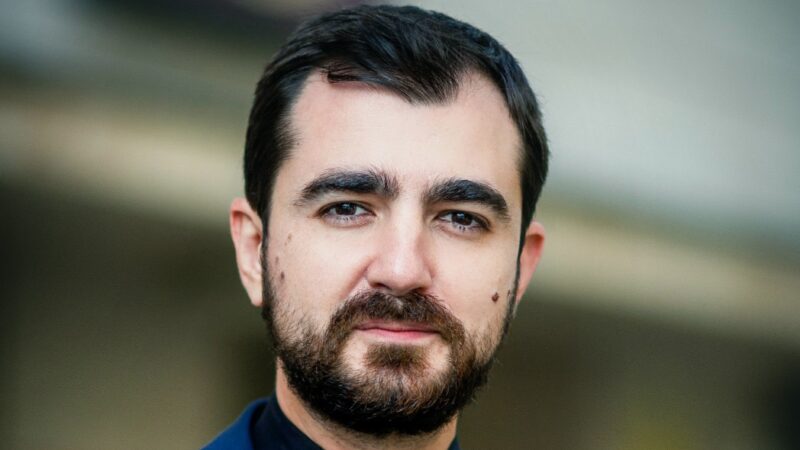
To gain a better understanding of Romania’s economic situation and political developments, we sat down with Claudiu Nasui, a Romanian economist and former Minister of the Economy. Nasui is currently a member of the Chamber of Deputies, the lower house of the Romanian parliament. He studied economics at Paris Dauphine University and Bocconi University in Milan. He is also the founder of Open Budget, an online platform for monitoring state budgets.
Romanian politics has been in an upheaval since December 2024. Can you summarize the latest development?
So, there are currently four political parties that make up a governing coalition. The former three ruling parties, the Social Democrats, the National Liberals, and the Hungarian minority party, the UDMR, continue to govern. My party, USR (Save Romania), has also decided to join the coalition. The AUR (Alliance for the Union of Romanians), the Eurosceptic party, remains in opposition.
It means nothing new under the sun in the Romanian political landscape. It is not people’s frustration that has led to the current uncertainty.
That is correct. So, if this governing coalition fails, AUR will be the one to gain from that. And I think that’s a very thin line to cross, since the new governing coalition has the same priorities and the same ways of doing things as the old coalition.
I’m a bit skeptical about the chances of this new coalition actually making the correct difference in Romanian society in order to have political success.
What are the main obstacles that the coalition cannot overcome?
The main problems come from the economic basis. Romania has a significant budgetary deficit, with a fiscal deficit of 9 percent of its GDP. It’s absolutely astonishing. And our goal, established with the European Union, is to decrease that deficit from 9 percent to 7 percent. Now, the way in which we decrease this deficit is our choice. We can either decrease it by cutting spending, which the Prime Minister has said he wants to do. However, in Romanian history, politicians decreased spending a little, but they increased taxes a lot.
In the last three years, Romania has seen four major tax increases. Right now, the new government wants to do a fifth one. So it’s going to be very, very bad.
Do you think people are reaching their limit of tolerance regarding tax increases?
Exactly, we should note that after Bulgaria, Romania has the second-highest poverty rate in the EU. Meanwhile, we had four tax increases, and you’re preparing the fifth one. It’s astonishing how people still resist this. And I’ve been a critic of that. This was the initial plan of the former governing coalition. Unfortunately, for the Romanians, this plan remains unchanged.
I understand that Romania has a huge deficit, but if you look at the other aspects of the economy, it’s not doing very badly. For instance, Romania had overtaken Hungary in terms of GDP per capita at purchasing power parity (PPP).
That’s what happens when you run huge deficits: you increase growth. The question is whether that is sustainable or not.
So, Romania has a 9 percent deficit, and we’re borrowing money. For every four lei the government spends, one is from debt.
It means that our growth is much, much overestimated. Romania is like a sportsman who takes drugs, and he’s overheating. What happens when you decrease that deficit is that you’re going to have lower growth as well, or even a decrease. And let’s look at the numbers: with a 9 percent deficit, you get a growth of almost 0 percent.
The economy is underperforming despite the fiscal push. In other words, we’re spending a lot and still not growing — and that says more about the quality of spending than the quantity.
Which means that without that 9 percent deficit, we would have a huge recession on our hands. And actually, this is my message towards the current government. If you increase taxes, you will only transform a budgetary crisis into an economic crisis. And from that point to get to a political crisis, it’s only one more step.
Do you see anyone in the government or the government circle who is able to resolve this problem, or at least take some action on it?
Unfortunately, no. Our prime minister, who, from a political image point of view, says the right things. He says he’s going to cut spending. But he also says, we’ll cut spending after we increase taxes. That’s because it’s easier to cut from someone else’s budget than it is to cut from your own budget. Because when it’s from your own, you have to make tough decisions. However, when taxes are increased, it is the rest of society that has to make tough decisions. It is the parents who have to feed their children and who may want to go on holiday or who may want to provide a better education; they have to make those tough choices. So this is the tragedy that faces us.
Russia’s Influence in Eastern Europe
Stepping away from Romanian domestic politics for a moment, but remaining in the region, how do you see the threat of Russia towards Eastern European countries? For instance, the Russian secret service might be involved in the infamous, later annulled, presidential race last December. What do you think about that?
I think Russia wages war on Europe. And it’s not yet a hot war, but it’s a cold war. We saw it in Romania; we are seeing it in the Baltic states, Hungary, and many other countries. We also see it on social media platforms. But I also think Europe is prepared, though. So I’m not scared of that. I believe the European Union’s new direction towards rearmament is a positive development. This is what Trump used to say: “peace through strength”. Strength is a very good deterrent. Imagine if Ukraine had nuclear weapons. If they had not given up their nuclear weapons in the 1990s, I think this war would not have started. Of course, in the 1990s, it would have been unthinkable for Russia to attack Ukraine. But 30 years later, look what happened.
Everything seems to change. Who would have thought that the Hungarian Prime Minister Viktor Orban would endorse a far-right Romanian presidential candidate, George Simion?
Well, so from what I understand, he initially endorsed Simion. But then I think what I think happened is that the Romanian Hungarian minority party consulted with the Hungarian PM. They said to him, “Look, you don’t know who this guy is, but we do”. Then Orban backed off his initial support.
However, if you examine the ideology and doctrine, Simeon is more aligned with Viktor Orbán than Orbán is with the Hungarian minority from Romania.
It appears that Orban and Simion share a common language and follow a similar agenda in their stance against the European Union. Can we say that they are natural allies?
I would say yes. The far-right parties in Europe usually share the same type of policies. They are anti-immigrants and anti-foreigners because it’s not just people who come to Hungary or Romania or whatever country.
The far-right parties are also against foreign goods: let’s produce inside, this “America First” type of economics. It’s a very socialistic and interventionist economic policy.
For instance, I’m aware that numerous price controls are in effect in Hungary.
How do you see populist politics gaining more ground in Western Europe as well?
So, what I think is that there’s a lot of resentment towards the political establishment if we look at French, German, and Italian politics.
A lot of that resentment is correct. The establishment has to do something. If you are committing the same faults in the economy, then you cannot beat the populists because they will prove to be right.
So, in order to beat them, it is to implement the right reforms, such as cutting spending, cutting taxes, allowing economies to grow, and enabling people to prosper.
Nobody votes for the extremist if they have a full stomach. People vote for them when they are hungry, when they are poor, and when they feel they have no other options.
Unfortunately, I don’t see that change in Romania. And I’m waiting to see that change somewhere in Europe right now.
Anti-corruption measures in Romania
You mentioned several aspects of why Romania’s economy is struggling. One major aspect that we haven’t discussed, which poses a serious threat not just to Romania but to the entire Central European economy, is the risk of state corruption.
I think corruption is a product of the big state. The state is not some fictional entity that comes from God. It’s made by people. And if you concentrate power in a few people and give them a lot of power, you cannot expect them not to be affected by corruption. Even if those people are angels, they will change, as they will be drawn to other people. It’s impossible not to have corruption if you concentrate power. Lord Acton used to say that “power corrupts, and absolute power corrupts absolutely”.
My goal is to decrease the size and the power of the state. When politicians don’t tell you what you’re allowed to do, you don’t need to bribe them. And that’s the type of society that I think we should live in, a freer society.
How successful have the Romanian anti-corruption measures been, which were introduced in recent years? It was heard that the DNA, the anti-corruption agency, was used as a political tool.
I hate to be the bearer of bad news, but our main corruption agency was completely overrun by corrupt politicians. The DNA was scaled back. I would say that there has not been a major anti-corruption fight in Romania for a few years. All of the major corruption cases were whitewashed.
Can you mention a major ongoing corruption case, like that?
Currently, there are no major corruption cases being handled by the DNA. So there are two possibilities. Either we have no more corruption in Romania, which is a possibility, but don’t think that’s true. Or they’re no longer doing their job, which I think is the case.
Could Nicusor Dan Unite the Divided Romanian Society?
Moving back to the presidential elections, Romanians elected a pro-European, pro-Western candidate, instead of a nationalist, pro-Russian candidate. It was a very tight race, at first it seemed that Simion would be the winner.
I think that’s the best news for Romania in quite some time, as it maintains our pro-EU and pro-NATO stance. It is rare in Romanian history that we have had to choose between two presidents who had radically different foreign policy visions. So I think we dodged the bullet. However, unfortunately, we dodged the bullet for foreign policy. We didn’t dodge it for internal policy.
What do you think of Nicusor Dan as a person? Can he be a new Klaus Johannis, who also had high hopes of uniting the highly polarized Romanians?
He’s a very focused person, but the problem is that the president doesn’t have a lot of power in Romania. The president’s biggest role is to propose a prime minister to parliament. And after that, the prime minister can do whatever he wants. The only institution that can stop the prime minister is parliament. In theory, the president can dissolve the parliament, but in practice, this does not work.
Actually, the parliament has to agree to be dissolved in order to be dissolved, which is unlikely to happen.
Open Budget Platform
Let’s speak about your special interest in the open budget. Can you introduce how the Open Budget Platform works?
I’ve been working on this program since 2012. Two years later, with my colleagues, we launched the Open Budget platform.
We wanted to show every Romanian in an easy way what is going on with their money. Where does the money come from that the government spends?
So if a politician tells you his priority is healthcare, then you see that the healthcare spending is decreasing and that everything is going wrong in healthcare. How much of a priority really is it? I think it’s important for us to know the numbers. And I also believe that’s why we created this platform —to increase transparency and enable people to make better political decisions.
Is it your personal goal to raise awareness about the budget?
And also to show where we can cut spending. Because it’s important that if politicians raise taxes because they say we can’t cut spending, it’s important for us to show exactly where we can cut spending.
For instance, I recently presented a list of 178 research and development institutions that the Romanian state maintains. So, we have the second-highest poverty rate, and we have 178 research and development institutions that are researching and developing almost nothing. Apart from that, they pay themselves huge salaries, we don’t know anything about what’s going on.
What are the measures that you can use to convince the decision makers?
I can put a lot of pressure on them. I write about it, I talk about it, and I tell them, “You’re lying when you say you can only increase taxes. No, you can also decrease spending.”
I look at other countries a lot, and I think the only country that’s doing what’s right right now is Argentina.
The Argentine Example
Do you think Javier Milei successfully kept his promises about the big spending cuts?
It’s the only country in the world where the government actually did what was right. And it’s working. So, they applied classical liberalism, or libertarian economics, and it works wonders.
Milei managed to create a virtual economic miracle in Argentina, which was in a worse position than both Romania and Hungary combined. However, it’s not miraculous; they did the right things.
Which were politically hard or perhaps even impossible, but they have done it. I think this is what many European countries should do.
When Javier Milei took the stage in 2023 to enter the presidential election, he was also known for his extravagant, or some argued, harsh rhetoric about how he would cut through red tape and other issues. Do you think that kind of communication helped him to win the presidency?
If a politician says harsh words that are true, I think this is a good thing. If you really want to save your country, I think you have to say harsh things at one point. Instead, what we have in Romania, or in Europe, is that the politicians try to sugarcoat the problems. On the other hand, Millei successfully reduced the deficit in Argentina by cutting spending by 6 percent of GDP, which is huge. It was done in just one year.
This has also led to several strikes among the people who used to receive state subsidies, but no longer do.
Of course, people whose revenues were cut became angry. But the question is whether society as a whole benefits, or not? And if you look at one of the most important indicators, which is the scale of poverty, it is decreasing in Argentina right now. In a few weeks, the poverty statistics for the first semester of 2025 will be published; we will see how things develop from there.
As you speak of Mile’s reform, I suppose you would support the implementation of such a policy in Romania, is that right?
Of course, imagine that Milei transformed a huge deficit (5.4 percent of GDP) into a surplus (0.4 percent). He achieved this without any tax increases, only by cutting spending. In Romania, politicians aim to reduce the deficit from 9 to 7 percent, but they are unsure of how to achieve this without increasing taxes, which is a very unfortunate outcome for the people.