 By
By The meeting in Alaska between Donald Trump, President of the United States, and Vladimir Putin, President of Russia, did not go as expected.
The American president’s gestures were a clear sign that the meeting had not gone as planned, at least not as the Trump administration had hoped.
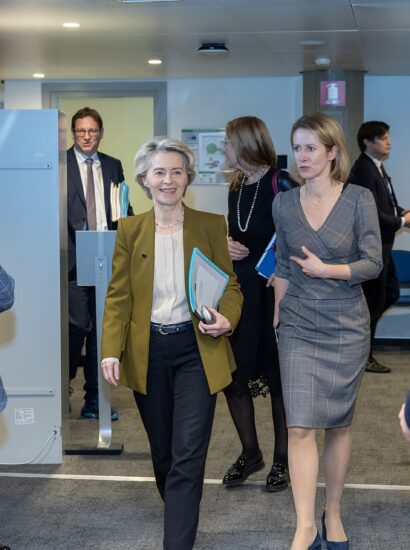
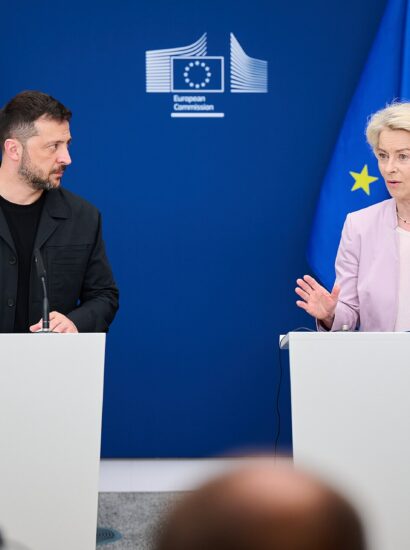
On the Monday following that meeting, in less than 36 hours and with a prior call on the plane on his way back from the meeting with the Russian leader, Trump spoke with Volodymyr Zelensky, President of Ukraine, and with several European leaders, such as Ursula von der Leyen, President of the European Commission. Subsequently, that call became a reality and they discussed many things, the most interesting of which was surely the possibility of offering security guarantees to Ukraine reminiscent of Article 5 of NATO. In that organization this establishes the principle of collective defense, stating that an armed attack against one member country will be considered an attack against all others.
At the moment, it seems like Trump is trying everything he can to achieve peace between Russia and Ukraine, but it is more difficult than one might think.
Firstly, because Russia does not have a Western mindset; it does not act like the West does. That is why Trump is struggling, because he thought he understood them, but that is not the case.
Secondly, because Ukraine does not want to make any territorial concessions either, which greatly complicates the negotiations, as the Russians will definitely want something in return.
Thirdly, because there must be real and genuine security guarantees so that Ukraine does not consider itself under threat and Europe sees that Russia cannot attack again, something that is complicated because Russia does not want Ukraine to rearm, neither does it want Ukraine to prosper militarily, either because it will want more Ukrainian territory in the future, or because it fears that Ukraine may recover its territory if it is finally given to it.
The Big and Hopeful Question: What Comes in the Brave New World?
Let’s assume that peace is achieved, although we still don’t know under what conditions or how.
The aim of this article is to consider what could happen to both Ukraine and Russia, and what their international, economic, and geopolitical relations would be like.
Russia’s Side: Easing of Sanctions, Return to International Trade with the West, and Expansion of Influence in Africa
The first thing Russia would seek would be for the economic sanctions that are still in place to be gradually lifted, making some gesture of goodwill, such as helping with the reconstruction of Ukraine.
Second, after those sanctions were gradually lifted, perhaps with US assistance, it would be to return to international trade with the West. This could be easier with some countries, such as those that have been neutral, like Switzerland. It would be more difficult with the European Union, but countries such as Hungary and Slovakia would be quite easy, since although they approved all the sanctions, they were not particularly supportive of them and would have no problem resuming business. The same could happen with Austria and even Germany, due to their dependence on cheap energy sources. Although Merz has been quite critical of Russia, he knows that cheap Russian gas would greatly benefit German businesses and industry, as well as lowering costs for ordinary families, something he could sell as a victory in the next elections and which could work in his favor to take votes away from the AfD, which has proposed a return to normal trade relations with Russia. Countries such as Spain, Portugal, Italy, and others, although they have supported Ukraine, would not find it strange to return to business with Russia. However, Russia’s problem would come with the Baltic states and Poland, which have been Ukraine’s main allies and have promoted sanctions from day one, providing financial and military aid to Ukraine, and in fact have increased their military capacity and spending since Russia’s invasion of Ukraine. These countries have repeatedly stated that they would not easily resume business with Russia. In fact, they have cut off and not renewed their agreements with Russian state-owned companies.
Third, they will seek the legitimization and normalization of their country in international forums and events. In fact, a possible return to the G7 (formerly the G8 when Russia was a member) could be a possibility, although it will remain a difficult step. However, a better relationship with Donald Trump could help the Russian Federation return to the international body.
Fourthly, Russia would seek to gradually improve its military arsenal. Much has been spent in Ukraine, and it has been seen that old-fashioned wars involving tanks and helicopters are not the most effective in the modern world, where drones have been a key factor in warfare and, for that very reason, Ukraine is becoming a major power in that sector.
Fourth and finally, one thing that Russia has already done, but could continue to do if it achieved peace, is to exert its influence in Africa, as it has already done in Burkina Faso. This could become a trend, as the French presence may gradually disappear, and Russia could take advantage of this, although the Chinese are also working on this.
Ukraine: Costly Reconstruction, Open Economy, Military Consolidation and EU Accession
After an excrutiatingly expensive phase of reconstruction, Ukraine would seek to strengthen its army and maintain its drone industry, as well as forming strategic military alliances with other countries, if it were ultimately unable to join NATO. This would be essential to deter Russia from another possible attack in the future, as Ukraine would have suffered a crushing defeat in February 2022 if the West had not come to its aid.
Ukraine’s accession into the European Union would also be more than likely.
In recent years, the EU itself has been the main voice behind the idea that Ukraine should join.
However, there are some argue that other candidate countries have had to complete all the paperwork and reforms, and have still not been given the opportunity to become members. Since voting about an accession is unanimous in its inherent system, there objective hurdles, too. Prime Minister Viktor Orban’s Hungary has said from the outset that they would not let Ukraine into the EU for various reasons.
Already in reconstruction, they would seek to open up to the international market in order to try to enable the country to grow economically and, depending on how the peace negotiations would go, it could even seek to become a country that attracts freelancers and various entrepreneurs with low taxes, something very characteristic of the Baltic countries.
Conclusion
The United States could also seek a path with Russia. We have already heard Trump say that he is interested in Russian businesses returning to the United States because he knows that the economy and doing business with a country that is just emerging from war can be very profitable and would be eventually beneficial for the election campaign of his possible successor and endorsee as a future Republican Presidential candidate, JD Vance.
Another thing to criticize is that with the sanctions against Russia, it has been pushed directly into China’s arms, giving China the opportunity to trade and obtain energy at ridiculously cheap prices Beijing would never have been able to get otherwise.
If Russia were to return to international trade with the West, this could cause it to separate from China, which is what the Trump administration is trying to do, as it sees China as its main “opponent.” However, despite the arguments in favor of this, it must also be noted that China has helped Russia during the war and that the bond between the two countries and the BRICS could be strong enough to prevent this from happening.