
 By
By The expansion of cocaine trafficking across the Atlantic has become a major security challenge for Europe.
Cocaine produced primarily in South America travels through increasingly complex maritime networks before reaching European markets. Although direct routes for cocaine traffikcing between Latin America and major European ports remain important, criminal organizations have diversified their operations by using West Africa as a transit, storage, redistribution, and logistical hub.
European criminal organizations, particularly Western Balkan networks, increasingly operate internationally, developing relationships with South American suppliers and establishing logistical networks in West Africa.
West Africa, a Supply Chain for European Cocaine Trafficking
Cocaine first washed ashore in West Africa in the late 1990s, when Colombian cartels began routing Europe-bound products through a region of weak states, porous borders and — crucially — no significant law-enforcement presence.
Guinea-Bissau’s archipelago of 88 islands, its linguistic ties to Brazil, and its chronically unstable politics made it the archetype: by the mid-2000s the press had dubbed it “Africa’s first narco-state”, a label reportedly drawn from UNODC’s own assessments. At the height of that era, US investigators estimated that 800–1,000 kg of cocaine were flown into the country nightly.
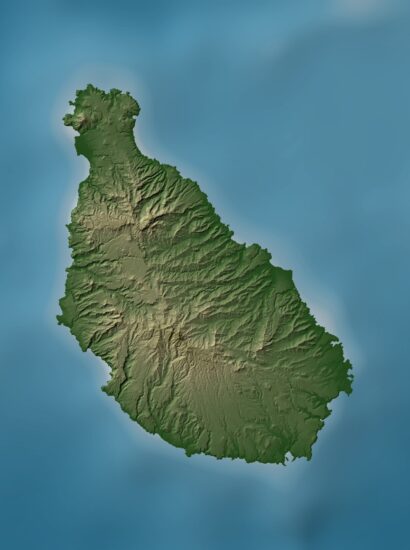
Cape Verde’s 2019 seizure of 9.5 tonnes of cocaine from a South American cargo ship bound for Tangier remains one of the largest single interdictions in African history, and the Atlantic archipelago continues to anchor the western edge of the trafficking map.
Geographically, the region provides an intermediate zone between South American cocaine-producing countries and European markets. However, describing West Africa simply as a “transit region” underestimates its role.
The GI-TOC report Under the Radar: Western Balkans’ Cocaine Operations in West Africa demonstrates how parts of West Africa have developed into logistical environments in which cocaine can be received, stored, divided, repackaged and prepared for onward transportation to the Balkans and then to Europe.
At least 30 percent of the cocaine consumed in Western Europe now transits through West Africa between 2025 and 2026.
Countries including Senegal, Gambia, Guinea-Bissau, Guinea, Sierra Leone, Liberia and Cabo Verde have appeared within trafficking routes connecting South America and Europe. Cocaine arriving from across the Atlantic can be transferred to other vessels, stored on land, or incorporated into commercial shipping before continuing north toward European destinations. Strengthening controls at European ports encourages trafficking networks to diversify their operations. West African routes give criminal groups additional flexibility by allowing them to separate the transatlantic journey into several stages.
Corruption, limited law enforcement resources, gaps in maritime surveillance and weaknesses in international intelligence cooperation also provide opportunities for trafficking networks.
Between 2012 and 2018 less than two tonnes of cocaine a year was seized across West Africa. Roughly ten times that quantity was intercepted annually between 2019 and 2025, reaching a record of around 30 metric tonnes in 2025 alone.
During the period indicated above, the West Africa smuggling route was supercharged by three converging forces: record coca production in Latin America; surging cocaine demand in Europe, whose seizures in 2023 exceeded those of North America for the fifth consecutive year; and intensified European pressure on direct Latin America–Europe routes, which pushed traffickers to seek less-policed paths.
Mapping the Western Balkan Criminal Contributors in Cocaine Smuggling
According to GI-TOC’s report, since 2019, criminal groups originating from the Western Balkans have increasingly turned to West Africa as a key transit route for cocaine trafficking. The report reveals that Slavic- and Albanian-speaking groups are traditionally located at key points of this cocaine supply chain.
Members of Slavic-speaking groups, often mislabelled by law enforcement and the media as “the Balkan cartel”, are from Serbia, Montenegro, Croatia, Slovenia and Bosnia and Herzegovina.
These groups are engaged predominantly in drug trafficking and have prominent operating nodes in Belgium, Colombia, Brazil, Croatia, France, Germany, the Netherlands and the Western Balkans. The two main Slavic-speaking groups are the Kavac and their rival, the Skaljari clans.
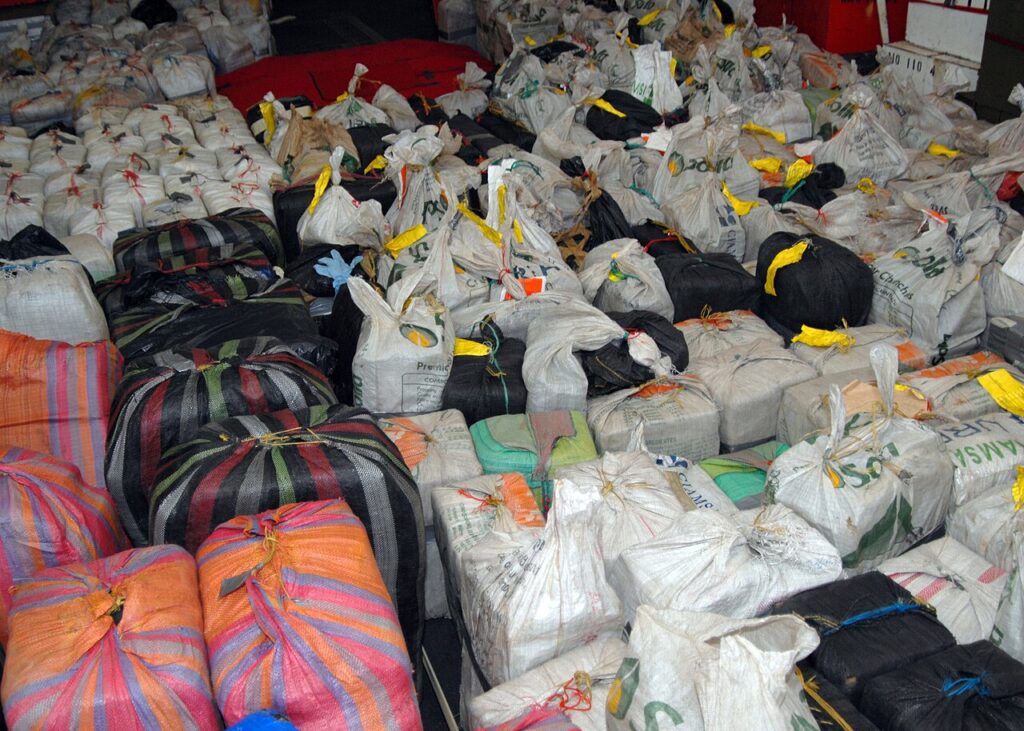
Drugs seized by the U.S. Navy and U.S. Coast Guard are in the hanger bay of the guided-missile frigate USS Samuel B. Roberts U.S. Navy photo by Mass Communication Specialist 1st Class Leah Stiles
These Montenegro-based groups maintain extensive ties with groups in Serbia and other Western Balkan states. While the Kavac clan has established network elements in West Africa, the Skaljari clan operates mainly through associates from Bosnia and Herzegovina and Albania, highlighting the group’s larger multinational structure.
Albanian-speaking groups consist of individuals from Albania, Kosovo, North Macedonia and Montenegro, together with collaborators of various nationalities. Largely involved in cocaine and cannabis trafficking, their operations have been well documented across EU member states, Norway, Switzerland, the UK, Brazil, Colombia and Ecuador. In the latter, they have built close connections with local gangs and gained access to the country’s ports.
Europol considers Albanians to be among the top five nationalities involved in cocaine trafficking destined for the EU.
Furthermore, since 2017, the UK law enforcement agencies have regarded the Albanian mafia as “exerting considerable control over the UK drug market, with significant impact on the cocaine trade.”
The real power behind cocaine operations is not just the criminal groups, but also the middlemen. They have important connections throughout West Africa and are linked, directly or indirectly, to protection networks in the region.
The report named Mario Krezic, nicknamed ‘Franky’, one of the key middlemen who is running illicit drug trade operations in the region. Krezic was born in Bosnia and Herzegovina and holds Croatian and Dutch citizenship. Croatian police believe he is a senior member of different Western Balkan groups. Law enforcement sources believe Krezic operated out of Freetown, Sierra Leone, coordinating logistics across the Atlantic.
He is accused of organizing ship-to-ship transfers, overseeing imports in coastal areas, managing the storage and loading of drugs into containers, and organizing shipments to European ports, particularly Antwerp.
Another key figure in international drug trafficking is Edin Gacanin, a Bosnia and Herzegovina native with Dutch citizenship. Available data indicates that Gacanin operated across several countries in Africa, particularly South Africa. Gacanin has been convicted in absentia of trafficking large quantities of narcotics into Europe from Colombia, Peru and Ecuador. In 2023, the US government sanctioned him, labeling him as the leader of the Tito and Dino cartel.
The Tito and Dino organization was believed to be part of a wider super cartel comprising groups such as Ireland’s Kinahan organization, the Dutch Mocro Mafia and Italy’s Camorra.
The Western Balkan crime groups’ cooperation with Brazilian criminal organizations, including Primeiro Comando da Capital (PCC), further illustrates how groups from different continents can cooperate when their economic interests overlap.

DEA wanted poster offering $5 million for the “financial disruption” of the Kinahan criminal organization or the arrest and conviction of the person depicted (cropped by The Long Brief) Source: Wikipedia Commons
However, the traditional concept of a geographically restricted “cartel” therefore becomes less useful. A contemporary cocaine shipment may involve South American producers, Brazilian intermediaries, West African facilitators, maritime specialists and Western Balkan brokers before eventually reaching European distributors.
How the Cocaine Arrives from the Caribbean Toward Europe
Historically, Caribbean cocaine trafficking has often been associated primarily with routes toward North America. However, the 2026 study Criminal Networks and Routes from the Caribbean to Europe demonstrates the increasing importance of connections between Caribbean trafficking networks and European markets.
A study from InSight Crime highlights how the commercial and political connections between Caribbean and European states can also create transportation links and an indispensable hub for the transatlantic cocaine trade. It also reveals that the traffickers have built a highly adaptable criminal ecosystem.
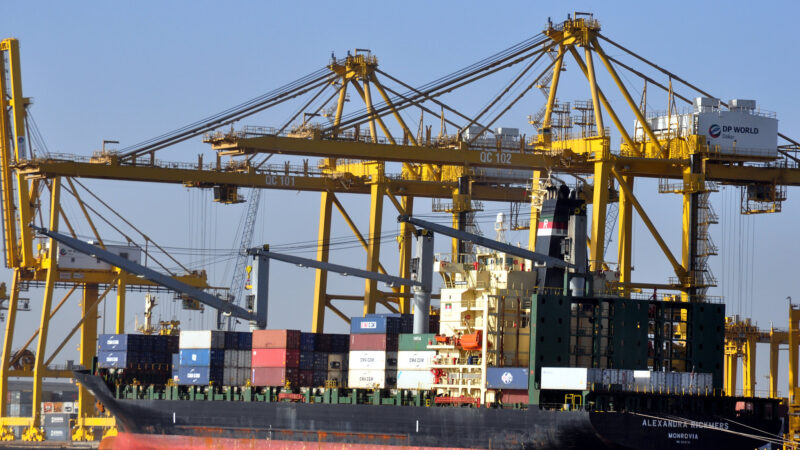
According to a Norwegian provider of marine and energy insurance, Gard’s analysis, the major European ports, including Antwerp, Rotterdam and Algeciras, have become particularly significant entry points because they handle enormous volumes of international cargo.
Containers are especially useful for criminal organizations because authorities cannot physically inspect every container arriving at European ports. Cocaine can be hidden inside legitimate cargo, concealed within container structures, or inserted into containers without the legitimate exporter necessarily being involved.
One method is commonly known as “rip-on/rip-off”: criminal actors place cocaine inside legitimate containers during the journey and arrange for collaborators to retrieve the drugs at or near the destination.
With this method of contemporary trafficking, criminal organizations do not necessarily need to control an entire shipping company or port. Access to a small number of strategically positioned individuals can be sufficient.
Breaking the Atlantic “Cocaine Highway”
A major European response to the supercharged drug trafficking was the coordinated maritime operation announced by Europol in early 2026 against what authorities described as an Atlantic “Cocaine Highway.”
The operation focused on maritime trafficking between Latin America and Europe, including activity in the eastern Atlantic between the Canary Islands and the Azores.
Between 13 and 26 April 2026, the joint Italian-Portuguese-Spanish-British operation targeted criminal networks moving cocaine from Latin America to Europe through complex at-sea transfers designed to avoid major ports and traditional detection methods.
Rather than treating individual vessels as unrelated incidents, participating authorities coordinated intelligence and maritime enforcement against the broader trafficking network.
The coordinated action resulted in the seizure of 11 tonnes of cocaine and 8.5 tonnes of hashish; 54 people and 8 vessels were intercepted during the operation as well.
Toward a European Response to Counter the Narco-Trade
The changing Atlantic cocaine route requires Europe to adopt a multilayered response. First, European ports need stronger security. Container screening, intelligence-led inspections and measures against corruption and insider participation are essential. However, inspecting every container is unrealistic given the enormous volume of international commerce.
Second, European authorities need to target the financial and organizational structures behind trafficking. Arresting couriers or seizing individual shipments can disrupt operations temporarily, but investigations into brokers, money laundering, corruption and financial flows can target the networks that organize repeated shipments.
Third, cooperation with West African and Caribbean authorities is essential. Intelligence collected in these regions can help European agencies identify shipments before they approach European ports.
Fourth, European authorities must strengthen maritime intelligence. The Atlantic “Cocaine Highway” operation demonstrates the potential effectiveness of coordinated surveillance and information sharing across jurisdictions.
Finally, law-enforcement strategies must recognize the flexibility of criminal networks. If enforcement focuses exclusively on one route, traffickers may move elsewhere.
Counter-narcotics policy must therefore target the network behind the route, rather than simply the geographical route itself.
Ultimately, the Atlantic cocaine route illustrates the central challenge facing European counter-narcotics policy: criminal networks operate globally, and European security responses must therefore operate internationally as well.