 By
By “Ukraine may be the East Asia of tomorrow.” Probably these were the most memorable words from the G7 Hiroshima Summit in 2023. The quote is from former Prime Minister Fumio Kishida who defined Japan’s increasingly intense foreign policy from late 2021 until last year.
Japan’s foreign policy over the past two years has been marked by consistency, but also by faster action. The country has strengthened its military, deepened its alliances, and worked on “economic security” to reduce dependence on China while keeping trade open.
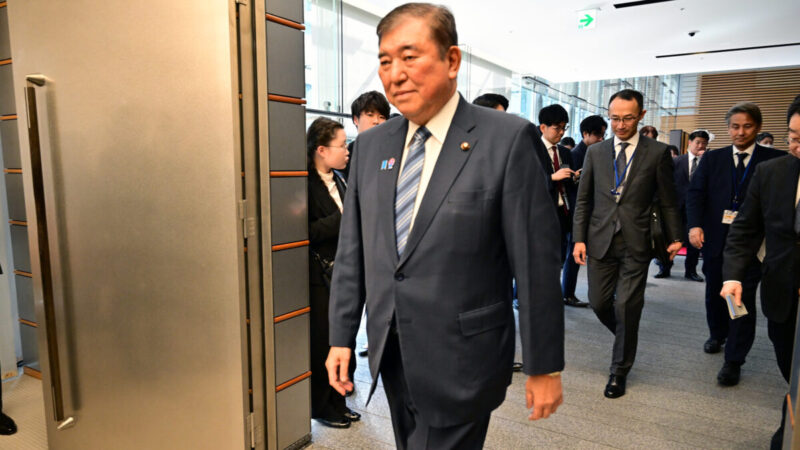
Under Prime Minister Fumio Kishida and now Prime Minister Shigeru Ishiba, Japan has moved more quickly than before on buying new weapons, building supply chains, and supporting partners in Asia. The return of Donald Trump to the U.S. presidency in 2025 brought new uncertainty on trade, though the military alliance stayed firm. Japan’s most recent election reshaped domestic politics, but it did not change these key priorities.
Trilateral Cooperation with the U.S. and South Korea
The center of Japanese foreign policy remains the U.S.–Japan alliance. Since Japan’s 2022 National Security Strategy, Tokyo has been implementing a multi-year defense buildup to reach 2 percent of GDP by 2027 and acquire “counterstrike” options.
In the last year, the Defense Ministry moved faster still, bringing forward deployments of the upgraded Type-12 long-range anti-ship missile and budgeting record sums for 2026, including unmanned systems to offset personnel shortfalls. This is not a rhetorical shift but a procurement calendar with concrete milestones and money attached.
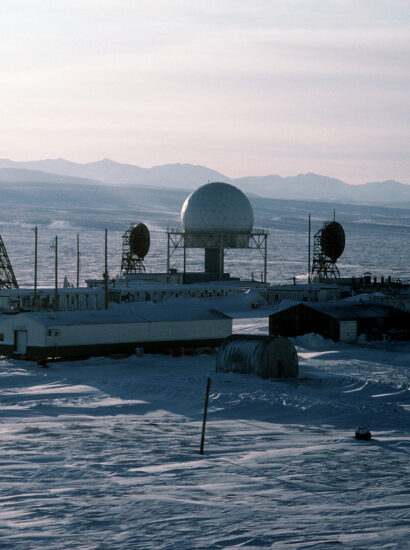
The acceleration reflects rising threat perceptions from China’s naval pressure, North Korean missiles, and Russia’s militarization in the Far East.
It also reflects alliance planning decisions already taken with Washington in late 2023–2024 to modernize command-and-control and strengthen posture in Japan’s southwest island chain.
The trilateralism with the United States and South Korea, which was once fragile, has been locked in since the August 2023 Camp David summit. That meeting created standing leader-level summits, crisis hotlines, and a framework for deeper defense, economic, and technology coordination—turning ad-hoc cooperation into a rhythm.
One year on, analysts judged that process to have measurably stabilized Northeast Asian deterrence and information-sharing, even as historical grievances persist. The architecture matters because it lowers the transaction costs of collective response to North Korean testing and Chinese coercion around the Taiwan Strait.
At the same time, Tokyo has widened its “outer ring” of security partnerships. In Southeast Asia, Japan created the Official Security Assistance (OSA) program to transfer non-lethal equipment that boosts maritime domain awareness and patrol capacity.
The Philippines—at the sharp end of gray-zone pressure in the South China Sea—has been first among recipients, receiving coastal radars and additional air-surveillance equipment. OSA is paired with deeper operational activity: Japan has joined visible at-sea cooperation alongside U.S. and Philippine forces and issued joint statements with Australia and others affirming freedom of navigation. The legal backbone is strengthening too. On July 8, 2024, Tokyo and Manila signed a Reciprocal Access Agreement (RAA) to enable exercises and logistics; that agreement enters into force on September 11, 2025, giving both militaries a practical status-of-forces–style framework.
Beyond Southeast Asia, Japan has deepened industrial-security ties with Europe. The Global Combat Air Programme (GCAP) with the UK and Italy has moved from declaration to industrial architecture, with partner governments and companies forming a joint venture (“Edgewing”) to design a sixth-generation fighter for the mid-2030s. This means Japan is no longer a buyer alone but a co-developer at the forefront of combat air systems, with export policy adaptations to match.
More Attention to the Economic Security
One notable policy evolution has been the increase in defence exports to support allies and partners. In December 2023, Japan relaxed its long-standing transfer rules to permit the licensed export of Patriot missiles to the United States. The aim was indirect: by restocking U.S. supplies, Washington could provide air defence support to Ukraine without breaching Tokyo’s prohibition on sending lethal equipment to active war zones. This move highlights Japan’s commitment to managing alliances in the context of global stability, setting a precedent for future co-development exports under tightened guidelines.
At the same time, Japan has been paying much more attention to “economic security.” A key part of this has been strengthening its ability to produce advanced technologies at home, especially semiconductors, which are essential for everything from smartphones and cars to military systems. After passing the Economic Security Promotion Act in 2022, the government began investing heavily in this sector.
One of the largest projects is a new factory in Kumamoto, which opened in February 2024. It is run by the Japan Advanced Semiconductor Manufacturing (JASM), a joint venture led by Taiwan Semiconductor Manufacturing Company (TSMC)—the world’s biggest and most advanced chip producer.
This plant has become a central piece of Japan’s plan to secure more reliable supply chains.
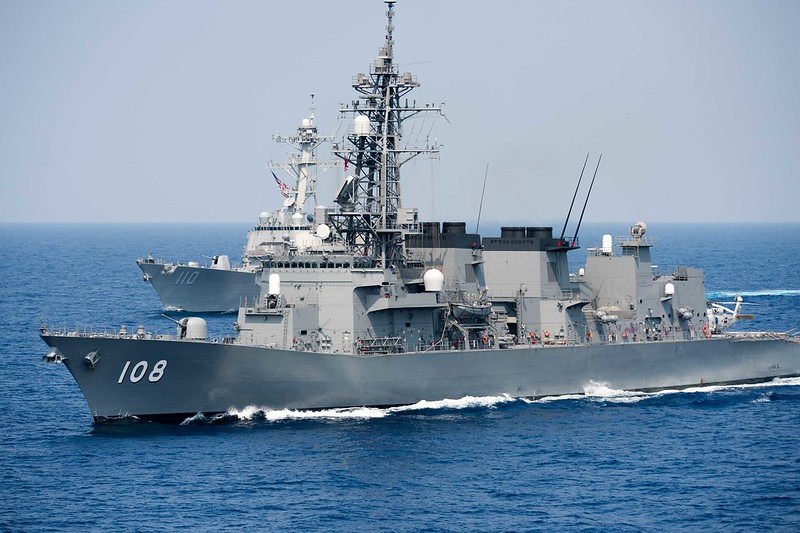
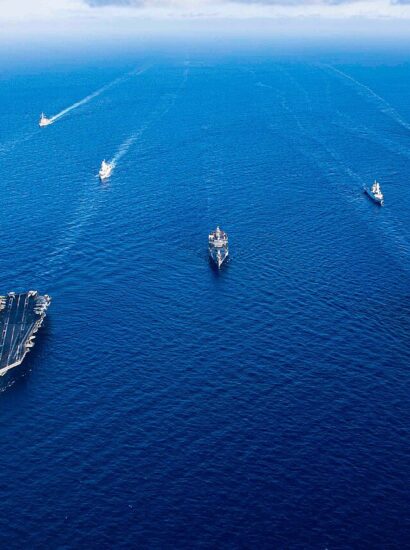
Japanese Maritime Self-Defense Force ship JS Akebono (DD 108) (U.S. Navy photo by Mass Communication Andre T. Richard/ Flickr.com)
On the international side, Japan has coordinated closely with the United States and the Netherlands to tighten controls on sensitive technology. Companies must now apply for licenses to export 23 categories of advanced chipmaking equipment, and restrictions have been toughened as China looks for ways around them. The purpose is not to cut off trade with China completely, but to lower the risks of overdependence—making sure Japan can protect critical technologies while keeping economic ties with China stable where possible.
Between Friends and Foes
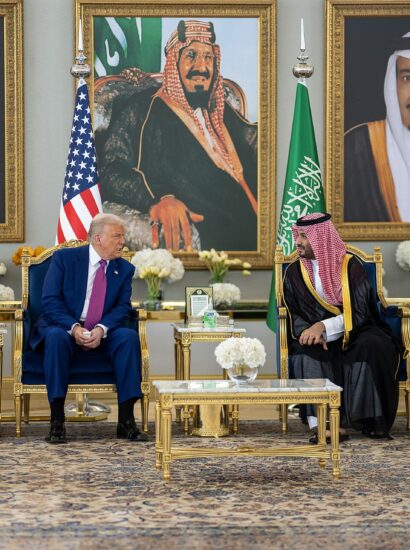
After Donald Trump’s return to the White House in 2025, Japan quickly worked to keep the alliance steady. In early meetings, Trump and Prime Minister Ishiba agreed to continue joint defense plans and told their ministers to hold “2+2” talks on security and economic coordination. Analysts saw this as a practical reset—maintaining strong deterrence, moving ahead with military upgrades, and handling disagreements through formal channels.
The bigger friction has come on trade. New U.S. tariffs in 2025, along with legal battles over them, hurt Japanese exporters and disrupted supply chains just as Tokyo was trying to boost growth through high-tech investment.
To soften the impact, Japan began talks with Washington on a special trade and investment deal and launched a domestic stimulus to ease rising costs. The result so far: defense cooperation has remained stable, but trade relations have become more uncertain and transactional.
Relations with India illustrate how Japan is hedging uncertainty by thickening partnerships beyond the United States and Europe.
Between 29 and 30 August 2025, Ishiba and Prime Minister Narendra Modi issued a forward-leaning ten-year visionacross clean energy, technology, and defense, reiterating the Quad’s role and setting an investment target of 10 trillion yen in Japan-to-India flows. This builds atop regularized high-end naval cooperation under the Malabar exercises and broader Indo-Pacific consultations.
The message is that Japan’s networked strategy—U.S. alliance at the core, minilateral and bilateral ties at the edge—will carry on regardless of partisan control at home or in Washington.
China remains Japan’s biggest strategic challenge. Japan has tightened export controls and reshored key supply chains, while training more with regional partners near contested waters.
At the same time, Tokyo has avoided unnecessary confrontation, keeping trade and communication channels open. Japan sees the main risk not as a single crisis, but as ongoing “gray-zone” pressures and supply-chain threats, where denying advantage is as important as alliance statements.
This is why Japan has deployed radars in the Philippines and rapidly fielded longer-range missiles. Another key step was the above-mentioned Reciprocal Access Agreement (RAA) with the Philippines, which allows Japanese and Philippine forces to train, exercise, and operate on each other’s territory. This strengthens cooperation while avoiding legal or diplomatic misunderstandings.
Even in mid-2025, some discussions briefly considered extreme measures like nuclear options, but the long-standing consensus remains that Japan’s security is strongest when it relies on, rather than replaces, U.S. extended deterrence.
Implications of the Latest General Election for Japan’s Foreign Policy
The domestic political question is whether Japan’s latest election would divert or dilute these external priorities. The 20 July, 2025, upper-house election deprived the ruling LDP–Komeito coalition of its majority, compounding a prior lower-house setback and putting Ishiba on the defensive. Yet the immediate foreign policy implications are limited.
Firstly, cross-party consensus on the alliance, deterrence, and economic security has hardened over the last two years; opposition parties criticize execution – procurement mix, industrial policy costs –not the strategic frame. Second, the bureaucracy and budget processes anchoring defense and OSA programs remain in motion and, in several cases, are already contractually committed. Third, Ishiba’s cabinet has responded to the political signal with a focus on household relief and tariff mitigation, not with any rollback of security commitments. The election therefore raised the odds of cabinet reshuffles or an early leadership contest, but not of a strategic U-turn.
In sum, Japan’s foreign policy over the last two years has focused on strengthening its defense and modernizing the U.S. alliance; building trilateral and minilateral security frameworks with South Korea, the Philippines, and others; pushing economic security, especially in semiconductors; and balancing firmness toward China with a desire to keep trade stable.
The Trump administration has not disrupted the alliance, but tariffs have created new strains on trade. Although the July 2025 election weakened Ishiba politically, Japan’s foreign policy strategy has become a broad consensus that is likely to hold.