
 By
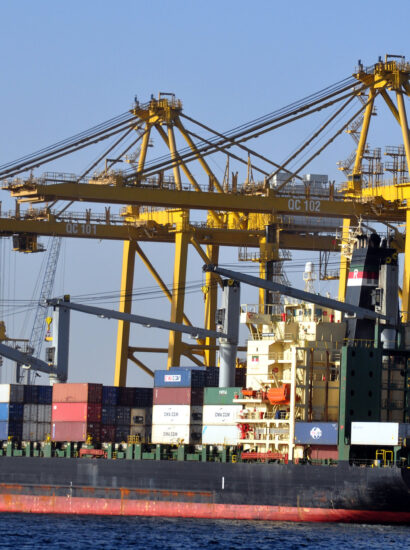
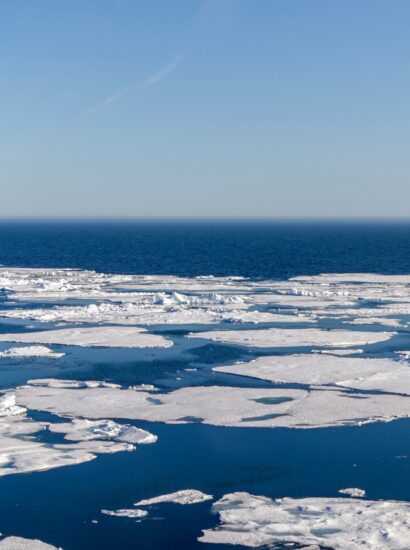
By A region once made inaccessible by ice is rapidly becoming one of the most contested spaces in global politics. As Arctic ice disappears, routes are becoming more navigable, creating shorter distances for transoceanic shipments than current ones using the Suez or Panama canals. Melting ice also provides access to previously unexploited natural resources: the region is home to vast mineral and rare-earth deposits, as well as oil reserves estimated to hold 20% of the world’s remaining fossil fuels.
These changes give the region strategic significance, demonstrated by renewed Russian military activity along its northern coast or US President Donald Trump’s heightened interest in Greenland. For those with Arctic borders, this new reality makes defense planning urgent and central to national security.
A Delicate Balance
Arctic governance in the Cold War era was characterized by multilateral engagement and institutionalized dialogue. This framework has weakened significantly. Ongoing Russian aggression in Ukraine, alongside growing uncertainty about the reliability of the North Atlantic alliance under Trump, has eroded the foundations of Arctic cooperation, increasing the risk of direct military tension in the region. Climate change is increasingly seen as a driver of competitive rivalry and insecurity, magnifying existing geopolitical tensions and challenging stability in the region. As Canadian Prime Minister Mark Carney highlighted in his speech at the Davos conference, security and economic development in the Arctic are tied together; you cannot pursue economic sovereignty without securing it first.
Increased activity in the area has also blurred the line between the development of economic infrastructure and defense reinforcement. Dual-use equipment is increasingly employed, with ports, airfields, pipelines, power systems, and LNG carrier ships serving both commercial and military purposes. Russia’s Yamal projects, for example, transformed the Northern Sea Route into a key export corridor supporting Russia’s energy industry and, at the same time, enhancing its ability to project influence. The Government of Canada is also expanding projects of civilian infrastructure that can be leveraged quickly for defense purposes.
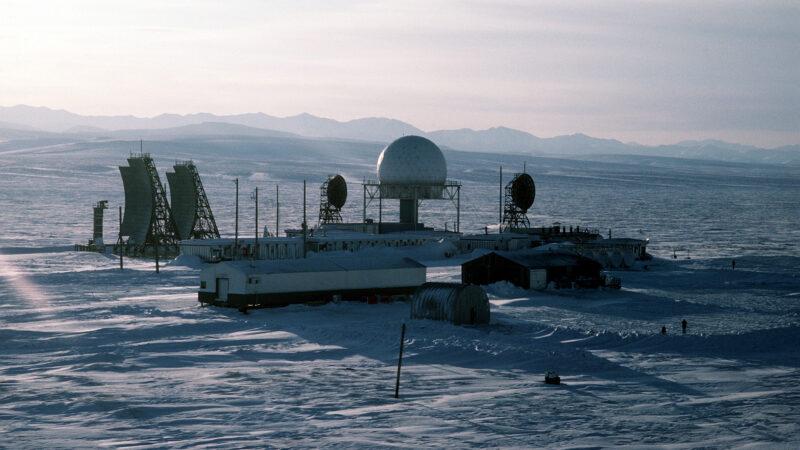
Kaja Kallas, the European Union’s High Representative for Foreign Affairs described the High North as entering a period of heightened strain. She pointed to Russia’s Arctic militarization, which predates the war in Ukraine but has accelerated in its aftermath as evidenced by the recent reactivation and modernization of Soviet-era military bases.
Nordic states are faced with a dilemma: allowing Moscow’s activities to proceed without a coordinated alliance response, or increasing military presence in the region and risking further escalation. Military balance has already shifted with the accession of Finland (2023) and Sweden (2024) to NATO, bringing the number of Nordic member states with standing armed forces to four. The Operation Arctic Sentry (OAS), launched on February 11, was created as an umbrella framework coordinating the expansion of military presence at Nordic bases.
Further complicating the matter is the expiration of New START, the last remaining nuclear treaty between the US and Russia. Free from the limits imposed by the agreement, they may now decide to reengage in nuclear competition. Already, Washington is considering increasing the number of its nuclear warheads, a step Moscow would certainly not leave without response.
This implies specific risks for the Arctic, which houses a substantial portion of Russia’s nuclear arsenal on the Kola Peninsula near Norway. As a response, there have even been calls for a “Nordic nuke,” the development of Nordic nuclear capability. Political leaders, such as Sweden’s Prime Minister Ulf Kristersson, argued that democratic countries should also consider deterrence if dangerous countries possess nuclear weapons.
Options Without the US
With all signs pointing to a US foreign policy that leaves European nations to assume responsibility for their own defense, they cannot avoid discussion about non-US nuclear deterrence options. Continuing to assume that the US umbrella will automatically protect Nordic states may risk exposing them to strategic vulnerability. The objective would be to work with European powers to establish a democratically governed framework that retains enough deterrent credibility to prevent potential Russian escalation.
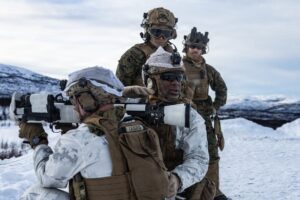
U.S. Marines with 2nd Battalion, 6th Marine Regiment, 2nd Marine Division, conduct dry-fire drills with the M3A1 Multi-Role Anti-Armor Anti-Personnel Weapon System during exercise Cold Response 26 in Setermoen, Norway, Feb. 16, 2026. Photo: Cpl. Judith Ann Lazaro / US Marine Corps / Wikimedia Commons, US Government Work, Public Domain.
It is possible that European counterparts will be willing and able to protect them against Russia; at the moment, however, there remain capability gaps in European nuclear deterrence. Compared with Russia’s large stockpile of tactical nuclear weapons, the British and French have much smaller nuclear arsenals. Political uncertainties also have the potential to undermine the alliance. French presidential frontrunner Marine Le Pen has made it clear that the current French deterrence system will not be shared with any other state if she were to assume office. In the UK, Nigel Farage now leads the polls – whose party has close ties to Russia.
Denmark, Finland, Iceland, Norway, and Sweden might need to reassess how their nuclear protection is ensured then. Former Danish Foreign Minister Jeppe Kofod has suggested that a Nordic nuclear deterrent deserves serious consideration, while Sweden announced early discussions with France and the United Kingdom about possible nuclear weapons cooperation. The Chairman of the Defense Committee of the Danish Parliament, Rasmus Jarlov, has called for Nordic countries to enhance their defence capabilities, specifically by developing their own nuclear weapons. Similar discussions have taken place in Finland as well.
An initiative to develop a Nordic nuke would likely create significant turbulence. NATO members would likely express concerns regarding alliance cohesion and the precedent this would set for other democracies. Such a proposal would also clash with the longstanding commitment to arms control and non-proliferation norms, all five states being parties to the Treaty on the Non-Proliferation of Nuclear Weapons.
Under the convention signed in 1970, Nordic countries are classified as non-nuclear states; the initiative would therefore require their withdrawal. This is legally possible under Article X of the treaty; however, it would be politically explosive.
The political culture in Nordic states may also constrain initiatives. Historically, resistance to nuclear weapons was framed as a moral stance consistent with Nordic identity. A shifting security environment, however, creates a tradeoff between ethical integrity and strategic vulnerability.
That said, a Nordic nuclear arrangement would not necessarily be incompatible with established frameworks of alliance. It could, in theory, be integrated into the NATO military umbrella, and it could even serve to strengthen European cohesion, particularly if European defense cooperation deepens.
A collective Nordic approach could also carry a degree of international legitimacy, as they are widely seen as stable democracies without expansionist ambitions. As such, they are unlikely to set a dangerous precedent; a deterrent emerging from this context might be viewed as exceptional and security-driven.
A New Era of Nuclear Armament?
Similar debates are unfolding across democratic states. The expiration of the New START and Russia’s conduct have prompted several European governments to revisit long-standing arms control commitments. Discussions about the need for nuclear weapons are also taking place in South Korea, Japan, and Poland. In Australia, the conversation shows more caution, but it is present. These developments leave little doubt about the direction of the broader strategic conversation.
Yet the conclusion that Nordic states will inevitably acquire nuclear weapons is premature.
There are also strong counterarguments and constraints that make an actual Nordic nuclear weapons programme highly unlikely in the near term, and many experts consider the idea not seriously actionable. Some argue that a move toward nuclearization would further destabilize security in the Arctic region, while others contend that the financial cost of developing a Nordic nuclear weapon makes the project currently unfeasible.
Developing a nuclear weapon and an accompanying delivery system could cost roughly 2–3% of the combined GDP of Denmark, Finland, Norway, and Sweden, spread across multiple years. At the same time, Finland is already running a 4.5% deficit and nearing 90% debt-to-GDP, while Sweden is in the midst of debt-financing a major defense expansion and Denmark is facing domestic pushback for prioritizing defense over welfare spending.
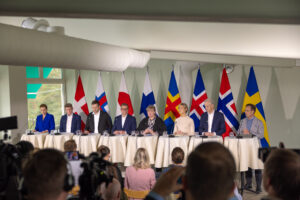
Nordic Prime Ministers’ Summer Meeting 26 May 2025, Paimio and Turku, Finland. Photo: Finnish Government / Flickr, CC BY 2.0
The programme would also be technically demanding. It would require the building of a new reactor that would be internationally visible and would trigger diplomatic consequences. In the event of the successful launch of a nuclear weapon, Russia’s nuclear doctrine would almost certainly also adapt. A Nordic nuclear programme could thus even contribute to the already alarming global arms race.
At the same time, the Arctic is far from strategically undefended – and not just by dog sled patrols. The strengthening of conventional deterrence is underway. The establishment of Joint Force Command Norfolk and the integration of the Nordic region into its operational area have strengthened coordination across the North Atlantic and the Arctic. Arctic Sentry, a multi-domain military activity strengthening NATO’s posture in the Arctic, was launched in February 2026.
NATO has also expanded its Forward Land Forces presence in Finland, opened a Combined Air Operations Centre in Bodø to oversee Arctic airspace, and increased investment in surveillance, satellite capabilities, maritime assets, and cold-weather readiness. Large-scale exercises, such as Cold Response, reinforce interoperability and preparedness. Taken together, these developments suggest that the Alliance is prioritizing strengthened conventional deterrence in the High North rather than moving toward new nuclear arrangements.
Will There Be a Nordic Nuke?
Discussion of Nordic nuclear capability reflects anxiety about shifting guarantees and power balances in the Arctic. Such concerns are understandable given the region’s increasing significance, coupled with the expiration of the New START Treaty.
Yet significant legal, economic, and political constraints make the prospects of an independent Nordic nuclear deterrence unlikely in the short-term. The debate reflects less a move toward nuclear weapons and more a wider reconsideration of deterrence, alliance reliability, and strategic independence in a more contested Arctic.