
 By
By In April, in an interview with The Telegraph, US President Donald Trump said he is strongly considering pulling out of NATO and called his allies cowards. On his social media platform Truth Social, he criticized European allies for refusing to support America’s Operation Epic Fury, saying: “NATO WASN’T THERE WHEN WE NEEDED THEM”. He described French reluctance as “VERY UNHELPFUL,” and accused Italian Prime Minister Georgia Meloni, one of his closes allies, of lacking courage.
Eight weeks after the start of the US-Israeli war with Iran, the US President is expressing frustration over the inaction of European governments and escalates pressure on his allies to provide support for the reopening of the Strait of Hormuz, which is under Iranian blockade. He argues that the responsibility of keeping the strait open lies with all the countries who rely on it.
The Spectrum of European Responses
Trump’s fury demonstrates a lack of understanding of how NATO and Article 5 of the North Atlantic Treaty work. Members are committed to collective defense and regard an attack against one member an attack against all, but invoking this requires consensus, and the 1949 treaty only refers to conflicts in Europe and North America.
An American offensive operation in the Middle East falls outside its scope entirely.
In the case of the Iranian war, European allies have generally refrained from joining, citing lack of prior consultation, unclear objectives, and inconsistent messages from the Trump administration. As EU chief diplomat and former Estonian Prime Minister Kaja Kallas put it: “This is not Europe’s war.”
Norwegian Minister of Foreign Affairs Espen Barth Eide says “NATO countries are doing something, but it’s not as a party to a conflict”. He argues, that while securing global trade routes is an essential interest and responsibility of Europe that it strives to honor, the alliance itself should not become involved in the war.
Reactions, however, are far from uniform, ranging from open resistance to limited cooperation.
The most confrontational stance has been taken by Spain, which closed its airspace entirely from American military airplanes and restricted access to naval and air bases. “Spain should not do anything that could escalate”, said Foreign Minister José Manuel Albares.
Even traditional allies have drawn firm lines: British Prime Minister Keir Starmer, after initially banning US military from British bases, reiterated and now allows limited access for defense purposes, but asserted that the UK will not be involved in enforcing American blockade of Iranian ports. Meanwhile, Italian Prime Minister Georgia Meloni has also denied American access to Italian airbases in Sicily.
The French approach has been more cautious. While critical of the lack of seriousness and coherence of the American operations, Paris has authorized some operations over its airspace, deployed fighter jets to intercept drones, and sent an aircraft carrier to defend Cyprus.
Germany’s stance remains less clear: although in March the defense minister Boris Pistorius has also declined Trump’s request to join in, a recent report floated the idea of sending German mine-hunting ships to secure the strait or using the German base in Djibouti for maritime reconnaissance once a stable ceasefire has been secured. A few days ago, however, German Chancellor Friedrich Merz described the negotiation process as a humiliation for the US and suggested that the Trump administration was being outwitted by Iran, undermining the US President’s effort to to frame the negotiation favorably and deepening the rift between the allies.
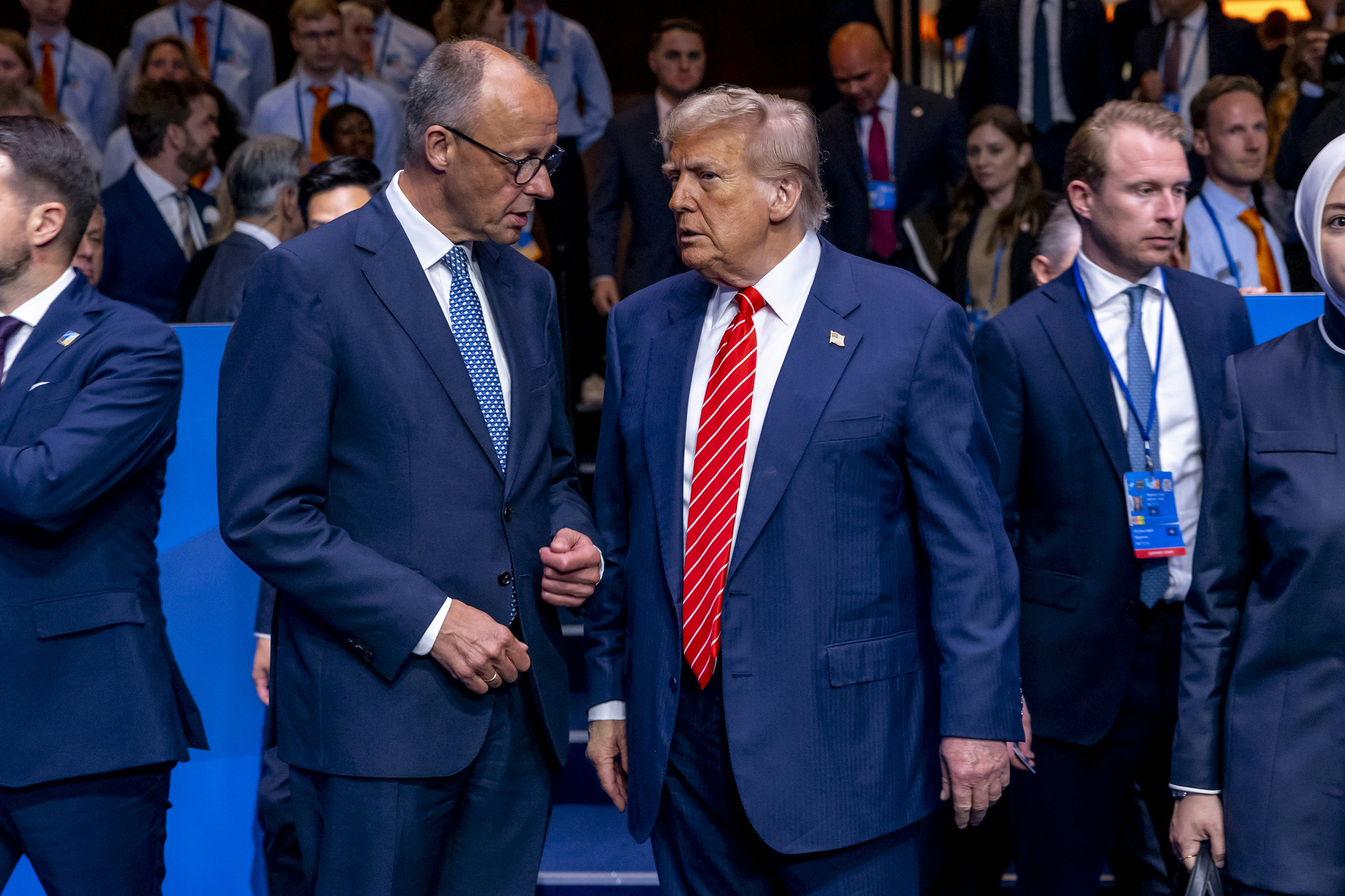
Meeting of the North Atlantic Council at the level of Heads of State and Government – 2025 NATO Summit in The Hague (Photo by NATO North Atlantic Treaty Organization)
The most pro-alliance voices come from Eastern Europe, who have expressed deep concerns over US disengagement in Europe. Lithuanian President Gitanas Nausedia and Latvian President Edgars Rinkevics have said that the US attack was “understandable,” while Estonian Prime Minister Kristen Michal reinforced the country’s support for reducing the threat of the Iranian regime. Even so, they have been careful to frame their solidarity in terms of the importance of the unity of NATO and a focus on practical cooperation. Several have also warned about the conflict drawing resources away from supporting Ukraine.
So How Serious Is the Damage Done to the Alliance?
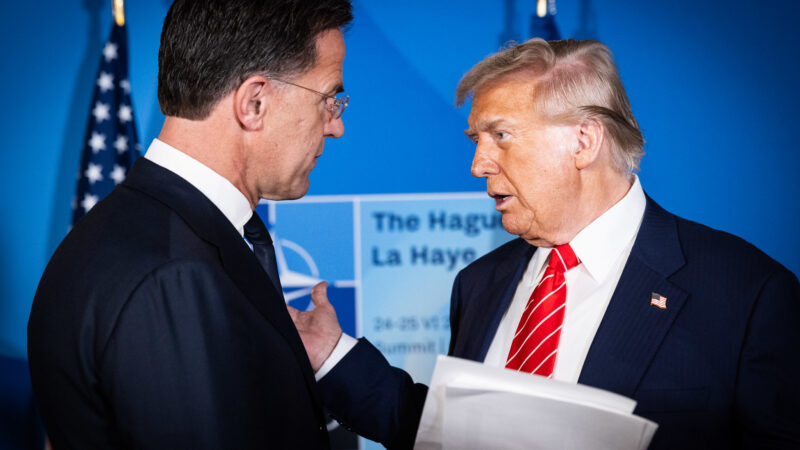
After threats to pull out of the alliance, NATO Secretary General Mark Rutte seemed to have successfully brought Trump back from the brink. The former Dutch Prime Minister, nicknamed the “Trump whisperer” for having the ability to communicate effectively with the American President, met him for a bilateral meeting in March, which he described as “very frank.” According to a White House spokesperson, Trump was planning to discuss the possibility of leaving NATO before the meeting with Rutte, but the President’s later post did not mention withdrawal and simply repeated earlier complaints.
Rutte commented: “President Trump is clearly disappointed with some NATO members,” but he remains assured of continued American nuclear protection of Europe. “The American nuclear umbrella is the ultimate guarantor of security here in Europe. And I am convinced that it will remain so.”
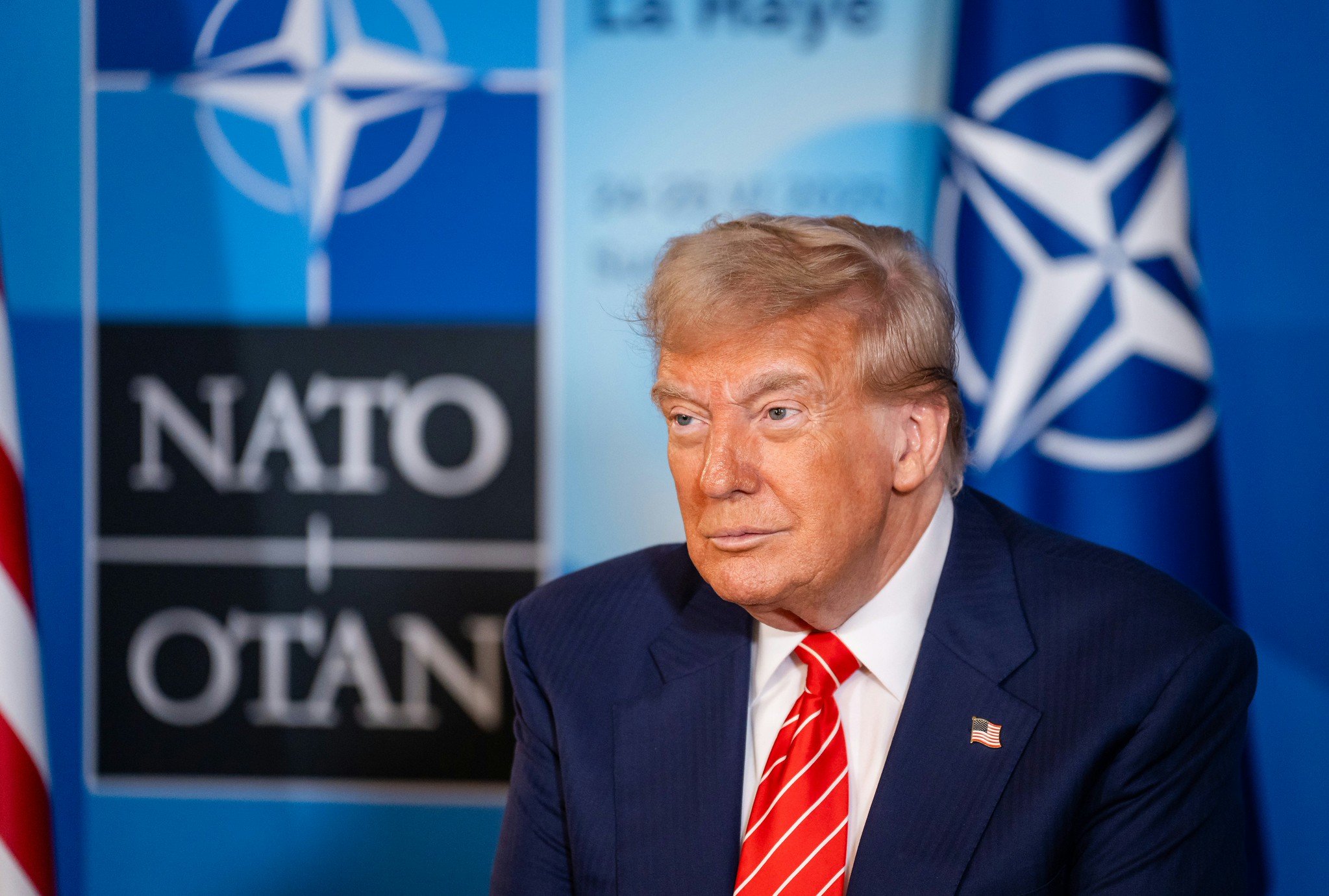
Remarks by the NATO Secretary General and the President of the United States – 2025 NATO Summit in The Hague (Photo: Martijn Beekman / NATO / Flickr.com)
Ivo Daalder, a former American ambassador to NATO, takes a more concerned position, claiming that “the last three months have done more damage to NATO than any other three months in the history of the alliance.”
This is supported by a recent statement by US Secretary of State Marco Rubio, where he expressed disapproval of European allies’ inactivity and stressed the necessity to reexamine NATO and the benefits it provides for America.
He added that “If NATO is just about us defending Europe if they’re attacked, but them denying us basing rights when we need them, that’s not a very good arrangement. That’s a hard one to stay engaged in.” His comments reflect a growing opinion that the alliance, in its current form, is no longer self-evidently in America’s interest. European inaction has weakened the position of pro-NATO Americans who argued that Europe serves as a strategic platform for strengthening American projection of power globally. That argument is now harder to make.
An internal email, leaked on April 24, outlines options to penalize uncooperative alliance members, including suspending Spanish membership and withdrawing US support for British sovereignty of the Falkland Islands near Argentina.
This shows that Trump can hollow out the alliance without abandoning it formally. Although the Congress has the power to block any unilateral attempt at leaving NATO, Trump could undermine the alliance by acting against its members or withdrawing American support from Europe altogether.
This Has Happened Before
Since its creation, NATO has been repeatedly strained by internal conflicts, typically triggered by disagreements over wars outside Europe or a delicate balance between alliance and national sovereignty.
During the Suez crisis, the US openly opposed and undermined the actions of Britain and France. In the 1960s, French President Charles de Gaulle withdrew France from NATO’s integrated military command to preserve national independence, threatening the unity of the alliance. Domestic resistance and balancing strategic autonomy were also key in the crisis sparked by the Euromissile crisis in the 1980s, when mass protests across Europe opposed US missile deployments.
The Iraq war in 2003, caused one of the deepest political rifts between the allies, with France and Germany opposing the US-led invasion and Turkey refusing logistical support.
Across these conflicts, a pattern emerges: NATO members are hesitant to support member states’ unilateral military adventures, and the alliance has rarely served as a platform to advance these operations. Historical precedents indicate that the conflict with Iran would typically not be a joint operation for NATO as an alliance, even if individual members chose to take part.
A Strategic Divergence
The problem here is not a conflict of interest, but disagreement over priorities. For most European governments, the question is unambiguous: Russia’s war with Ukraine remains the defining security interest. European allies also disapprove of Trump’s temporary lifting of sanctions on Russian oil export, which finances its war in Ukraine and undermines the continents efforts towards achieving energy independence from Russia.
In the Middle East, Europe and the US have increasingly divergent ideas on what stability in the region should look like.
A majority of EU countries now recognize an independent Palestinian state. The EU has organized a Palestinian peace conference, positioning itself as an independent actor in the region. Most European states also refusedmembership on the Board of Peace, Trump’s organization for the reconstruction of Gaza, which had its first meeting in January.
Meanwhile, Spanish Prime Minister Pedro Sánchez has pushed for the full suspension of the EU’s longstanding Association Agreement with Israel, a move that is opposed by some European governments, but that received widespread support across the continent, propelling a EU citizens’ initiative to the one million signatures required to trigger a formal European Commission response. While the US remains strictly aligned with Israel, these moves signal a different EU positioning.
Mirroring the Coalition of the Willing, the European operation for peace in Ukraine, Britain and France are coordinating efforts to bring together a coalition to secure the Strait of Hormuz after the de-escalation of the conflict. The first meeting on April 17 welcoming over 50 countries to the Parisian Élysée Palace, was a European attempt at taking a common stance and having a say in the conflict. Europe is not following US leadership in the region but is trying to create an alternative approach.
These actions do not directly contradict NATO, but they establish Europe as capable of organizing independent action outside of American leadership, creating tensions in an alliance already under strain by Trump’s accusations.
Europe’s Own Iran Problem
Whether or not it supports the military campaign, Europe is not a bystander: it has both stakes in the outcome and leverage in negotiation. Iran is not only a concern to the US, but a central issue for Europe as well, due to its geographical proximity and strategic role in key trade routes. Europe has been more impacted by rising energy prices, as a result of greater dependence flows through the Strait of Hormuz.
European security is also at stake here. Iranian missiles, some indicating a range of around 4,000 kilometers, are capable of reaching Berlin or Rome. Meanwhile, Iranian drone activity already targets NATO member countries, including Turkey and Cyprus. Terrorist activity is also of great concern on the continent, especially as Iranian terrorist organizations have been linked to over 100 attacks in Europe since 1979, with over half of them taking place since 2021.
Europe’s position is stronger than its reluctance suggests. Its military infrastructure, together with Ukraine’s drone capabilities, makes the continent an indispensable partner in US operations, which could be leveraged by taking greater role in negotiations.
The question is whether European leaders will use their strategic position to safeguard their interests and limit the conflict’s impact on NATO and the war in Ukraine.
Yet there is a reason for hesitancy to take a greater role. Western European governments have strong domestic backing for distancing themselves from the conflict in Iran. Across the continent, public opinion trends are against the US-Israeli campaign and negative perceptions of Trump also reinforce this opposition. Bridging the gap across the Atlantic alliance requires addressing Europe’s primary security priority: Russia and the war in Ukraine.
For European governments to move closer to the US on Iran would require a greater American commitment to the alliance and Ukraine.
A strong signal would be the reversal of the temporary lifting of sanctions on Russian oil, a move that represented a clear divergence between American and European priorities. Continued weapons shipment to Ukraine and the authorization to use US-sourced missiles to carry out long-range strikes would reinforce that signal.
Strained but Standing
NATO leaders will meet in Ankara in July at a crucial moment for Euro-Atlantic security. European governments are expected to focus on strengthening the alliance’s European pillar, which could signal to Trump that European allies are prepared to take on more of the burden. At the same time, such efforts can serve to prepare them for assuming greater responsibilities in their own defense, should the US step back further.
NATO has overcome deep political crises before, and the European governments commitment to accept Trump’s wishes and increase their defense budgets shows that the alliance still matters. The relationship may be strained and increasingly transactional, but it remains difficult to replace.