
 By
By The inside is more or less known while the outside is unknown, different, exciting. This is a very basic observance but this keeps many things in motion for the modern person: this is why we read (now that I am here, report) international news, watch foreign movies or travel to other countries or states on holidays or vacation. Getting to know what is „outside” is interesting, exciting, edfying, enlightening.
Getting to know ”the outside” is however more complex than ever before, especially when it is done under the auspices of and in the interest of a supranational or international organization.
Many have heard former U.S. State Secretary Henry Kissinger’s remarks ”Who do I call if I want to call Europe?” That was a friendly nudge and quite literally, a benevolent wake-up call for Brussels to do something about its foreign policy communication. And the champion of red tape just happened to have the answer after around 40 years: the High Representative for EU Foreign Policy and their very own European External Action Service. The EU and its tendency to create an institution for every single issue is widely known and criticized but it may not be too much of an exaggeration to state that the EEAS and the High Representative were the two biggest, non-military advances the EU had made ever since the introduction of the Single Market. Coordination got better, policy-making smoother, Europe happened to have a voice to communicate its standpoint and interests… and, well, there were people on the EU’s side to be contacted when, say, a war broke out in Ukraine.
In the end however, every single creation is deemed unequivocally ’good’ and ’useful’ as long as it serves its creators.
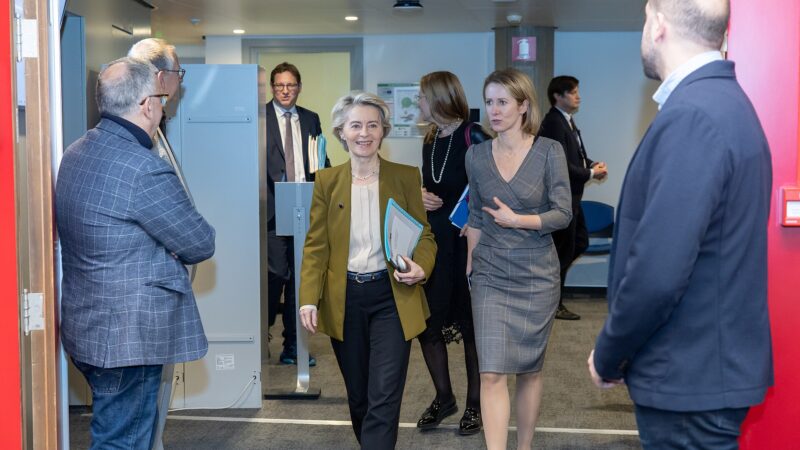
For France and Germany it seems that this has ended vis-á-vis the EEAS as the two member states have pushed for an institutional reform that was to downgrade the External Action Service to a centre coordinating the peacekeeping missions the EU is currently running and would have taken all other capacities to Ursula von der Leyen’s European Commission.
While the EU’s top diplomat Kaja Kallas has fought back successfully, the alleged Franco-German plan is at the end no real surprise since von der Leyen has been known for rallying power so much that I personally would not be suprised if she had a ”European President” plaque stashed away somewhere.
It is also rather trivial to observe that anything pointing towards fragmentation hardly supports something that has ”Union” in its name.
Although the EEAS is safe, September 6 saw another piece of news involving Kaja Kallas: she was forced to cancelthe launch of a new high-level group made up of former political and military leaders following pressure from the likes of Germany, allegedly stating that this was not the right path to pursue at this moment,”
If an ongoing war right next to the EU and an ongoing pressure alongside an increasing number of probes on the Russia in different disciplines of hybrid disruptions is not a right time to instate a forum for common foreign policy and exchange of military know-how, then I do not know what is.
Such may be the karma of present time’s Europe: Union in name, division in the field.


[…] Finland recently for a summit focused on reaffirming the importance of the Arctic region to European security. The meeting, which took place in the city of Rovaniemi, came a month before the EU is expected to […]