
 By
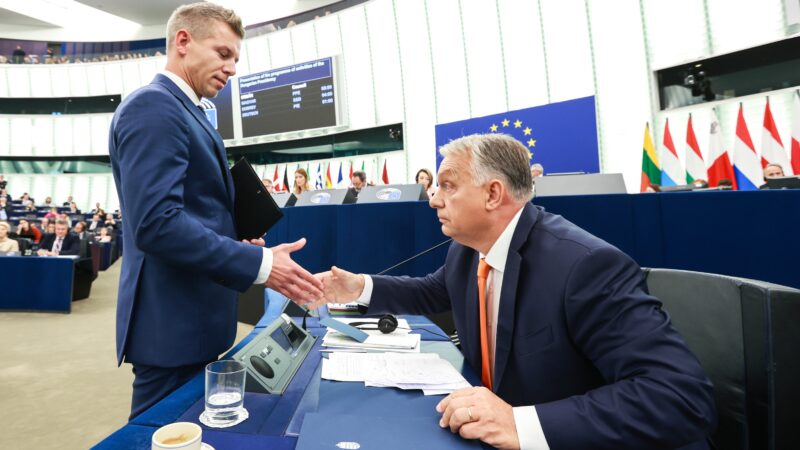
By In April 2022, just two days after the elections, the European Commission announced that it would apply the so-called rule of law conditions to Viktor Orban’s Hungary. The incoming Prime Minister, Peter Magyar, campaigned on the promise that he was the one who could bring those funds back. Now, after a landslide victory on Sunday, he will have the opportunity to fulfill this promise.
Negotiations must begin before the government is formed, for two reasons. First, there is a huge amount of EU funding allocated to Hungary that must be claimed this year; otherwise, it will be lost forever.
Addressing the EU’s rule-of-law concerns won’t be easy. Magyar has very little time to undo 16 years of Orban cementing his party’s rule – or, at the very least, to convince the Commission he is ready to do so. Magyar needs the Commission to unblock the funds by the end of August, or Hungary could lose the money.
How Much Money Are We Really Talking About?
Magyar vowed to claw back the €17 billion from the EU, equivalent to roughly 10 percent of the country’s annual gross domestic product.
In order to secure the funds, it has promised to introduce anti-corruption measures, restore academic independence, and join the European Public Prosecutor’s Office.
The total value of Hungary’s Recovery and Resilience Plan approved by the European Commission is €10 430 million as of late 2023, comprising €6.51 billion in grants and €3.92 billion in loans.
“Tisza will bring the EU funds home. To unlock them, we will have a completed RRP (a plan that governs payments under the EU’s post-Covid recovery fund) by the end of August. We will discuss with EU partners how best to deliver it, also in light of the election results and what we find after Fidesz, once in government,” said Marton Hajdu, Tisza’s EU affairs chief, to Politico Europe, days before the elections.
The remaining frozen €7 billion is linked to separate EU payouts made to poorer regions (EU Cohesion Funds), governed by different rules. Magyar has more time to claim those funds, as they expire after 2028.
During 2023, by maintaining the appearance of negotiations with the Commission, the Orban government was able to secure the confidence of financial markets.
“However, they also deliberately sought to exploit Hungary’s position in other EU processes to soften these financial requirements. This is why Hungary’s veto policy was well known: we would remain a thorn in the side until we managed to wriggle out of the situation, as there would always be another member state with a similar problem. This approach might have worked for a while, but it was clear that more and more member states were becoming increasingly frustrated.”
By 2022, the various measures against Hungary had materialised, including Article 7, the blocking of funds, and the Cohesion Funds and RRF,” recalled Zoltan Vigh, a European affairs expert and former Brussels correspondent.
If it believes that a country is not meeting these conditions, the Commission will propose suspending payments. This decision is made by the Council, which is composed of ministers from the Member States, and the funds will only be released once the shortcomings are remedied.
Passing new laws is not enough to access the funds.
Brussels must also be convinced that real change has taken place and that the reforms are working effectively – from ensuring the independence of the courts to improving the transparency of public procurement and rewriting the rules governing public interest foundations.
As part of this process, funds amounting to billions have been frozen, as have programmes that directly affect students and researchers, such as Erasmus+ and Horizon Europe grants.
The deadlines vary, but time is running out. If Hungary fails to meet the milestones it has set itself or falls behind, we may lose permanent access to certain funds.
The Polish Example
For advice, Magyar can turn to Polish PM Donald Tusk, as his first official visit will be to Warsaw.
Following Tusk’s victory in Poland’s election in 2023, the European Commission released more than €100 billion that had been held back due to rule-of-law concerns after Tusk submitted a judicial reform plan and took initial steps to rebuild trust.
In the Polish case, however, President Karol Nawrocki ultimately blocked the reforms promised by Tusk, leading to complaints that Warsaw had won its funding by merely promising change.
Peter Magyar’s Great Bargain for the EU Money, or the Sober Morning After the Party
Under the current rules, the Hungarian government has to fulfill 27 EU-mandated conditions – officially known as “super milestones” – that will reform the country’s public procurement rules, and increase judicial independence and academic freedom as a precondition to claim any funding.
A judicial reform by Orban in 2023 also led the Commission to unlock €10 billion that had previously been frozen.
“[The 27 milestones] can be achieved very quickly if there is political will,” an unnamed Commission official also told Politico. According to sources in the Commission, Hungary could take advantage of two potential legal loopholes to extend the deadline: it could transfer the funds to its national development bank or combine them with EU regional grants.
“The new government will also have to review what has been left unfinished and what needs to be done,” said Zoltan Vigh.
“My guess is that the Hungarian government doesn’t want to risk that precisely because inadequate programmes were launched and they failed to finance them from national sources, meaning they cannot secure follow-up funding. The fundamental loss here is that if this money were to flow in, it would stabilise Hungary’s public finances. This EU funding would therefore relieve the burden on Hungarian resources once the project is implemented”, he added.
During his first press conference, Magyar outlined how he could make this grand bargain. The incoming prime minister signaled he was ready to lift the veto on the EU loan for Ukraine – a move that two EU diplomats said would be received as a crucial gesture of goodwill by the Commission and European capitals.
Thus, the Tisza party chief called European Commission President Ursula von der Leyen to spell out exactly what steps he will take to bring Hungary in line with EU law, as he looks for ways to get EU funds flowing to money-strapped Budapest.
According to the latest information, obtained by Hungarian conservative outlet Valasz Online, on Tuesday, Peter Magyar spoke via phone with the Commission’s chief for the second time within two days. The discussion was about money, of course. The outlet’s sources said the consultation went well.
So much so that a high-level Brussels delegation is expected to arrive in Budapest on Thursday to negotiate with Tisza’s people.
The same team is arriving that has tried in vain to make progress with Janos Boka, the minister for EU affairs, in recent years.
All in all, in a dreadful international environment and with an empty treasury, Peter Magyar’s team needs to do the best they can to bring back the funds that the country is entitled to.





[…] thinks Magyar handled himself really well in terms of what he said about his agenda and the consequences for […]