

 By
By A growing number of researchers believe that today’s various global events, such as pandemics, wars, climate-related crises, and even national elections, are becoming increasingly interconnected.
Ukraine’s prospects in the war against Russia increasingly depend on its growing military self-sufficiency and technological innovation, according to Dr. Evelyn N. Farkas, executive director of the McCain Institute.
How Can Ukraine Win the War Against Russia?
Farkas also links Ukraine’s success to broader global stability, suggesting that a weakened Russia would reduce the influence of authoritarian powers worldwide. At the same time, she views recent political developments in Hungary as potentially helpful in the crackdown against the global rise of the far-right.
Ukraine’s path to victory rests on self-reliance, innovation, and Russia’s gradual weakening, combined with favorable political shifts in the West.
As Evelyn Farkas explains, Ukraine is increasingly independent in its war effort:
“Ukrainians are making more weapons themselves and continuing to innovate,” so that they are “not relying on the United States anymore or poised to rely on the Europeans as well.”
At the same time, Russia and its economy are deteriorating.
Farkas notes that “the Russians are losing so many people every day, their economy is suffering tremendously,” and adds that domestically, “this war is not popular, and people are recognizing that it’s not going well.”

Evelyn N. Farkas
Evelyn Farkas also told of her positive experience that she gathered at the Kyiv Security Forum:
“I came away (from Kyiv) optimistic because the Ukrainians seemed more positive. They felt like they’d come through a really difficult winter, the hardest winter, you know, in recent memory.”
Looking ahead, she ties victory to political timing, especially the probable shift in US domestic politics.
I think in 2027 we’ll see Ukraine prevail, but first we need to get past the U.S. midterm elections. That will change the dynamic in terms of political will and boost the morale of the Ukrainians.
Overall, as the director of the McCain Institute suggests, if Ukraine were to prevail, we would have an easier time also in the Middle East and elsewhere. According to her: “we need we need Russia to be defeated, to be significantly weakened to the point where they’re nobody’s good partner.”
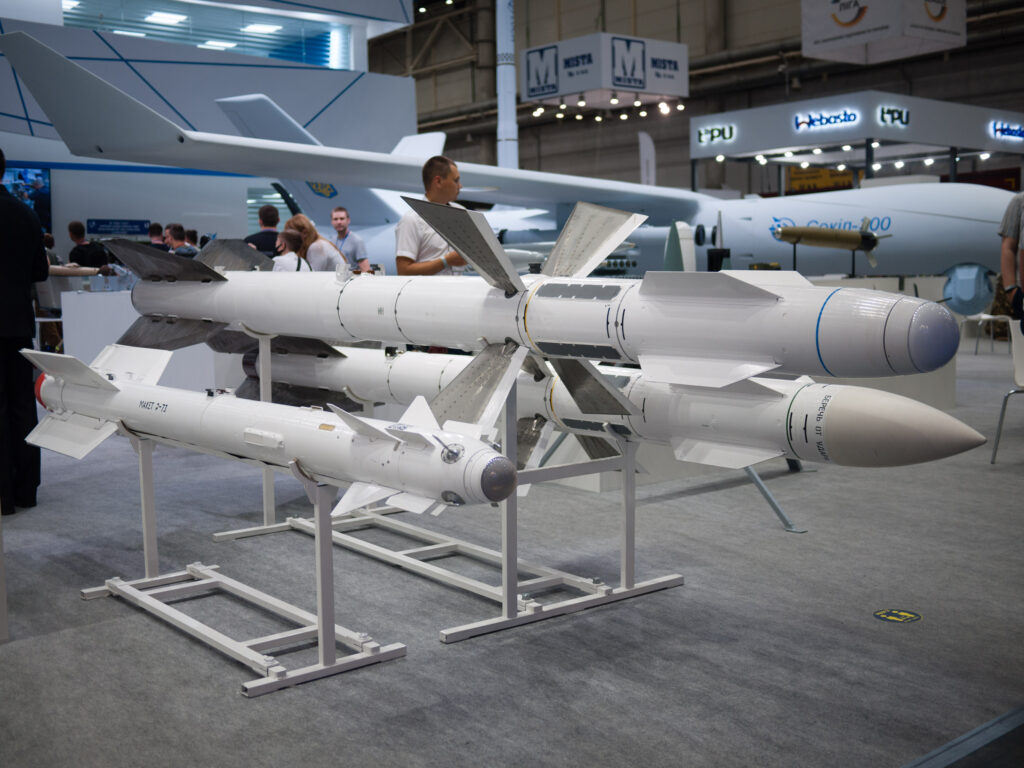
AA missiles Zbroya ta Bezpeka military fair, Kyiv, Ukraine, 2021. Source: Wikipedia Commons
How are the Iran and Ukraine Conflicts Connected?
Farkas believes that the two recent conflicts are connected through global strategic dynamics and Ukraine’s growing geopolitical role.
Farkas emphasizes that “Ukraine is taking advantage of the Iran war by selling its weapons their anti-drone equipment, to the Gulf states, the US, and probably some European states.”
Kyiv is taking advantage of the Iran war by selling its weapons.
This enhances Kyiv’s international standing: “They’ve demonstrated that they can be a partner of these richer countries in the Gulf region. This gives Ukraine some leverage and a leg up vis-à-vis Russia, certainly, and China. So, I think they’ve bought themselves, you know, some allies.”
In essence, as Farkas indicates, Ukraine’s success shapes global stability, while the Iran conflict creates opportunities for Ukraine to expand influence and partnerships.
Were There Foreign Interventions in the Hungarian Elections?
Besides the current geopolitical events, we asked the foreign policy analyst about the Hungarian elections. Which turned out to be significant and has many implications even in the U.S.
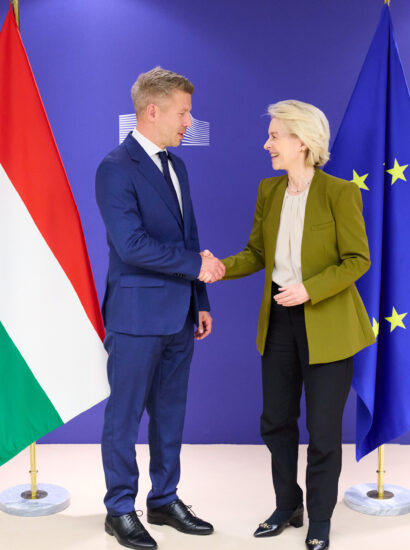
According to Evelyn Farkas, the landslide win of Peter Magyar’s Tisza party was not something that she expected.
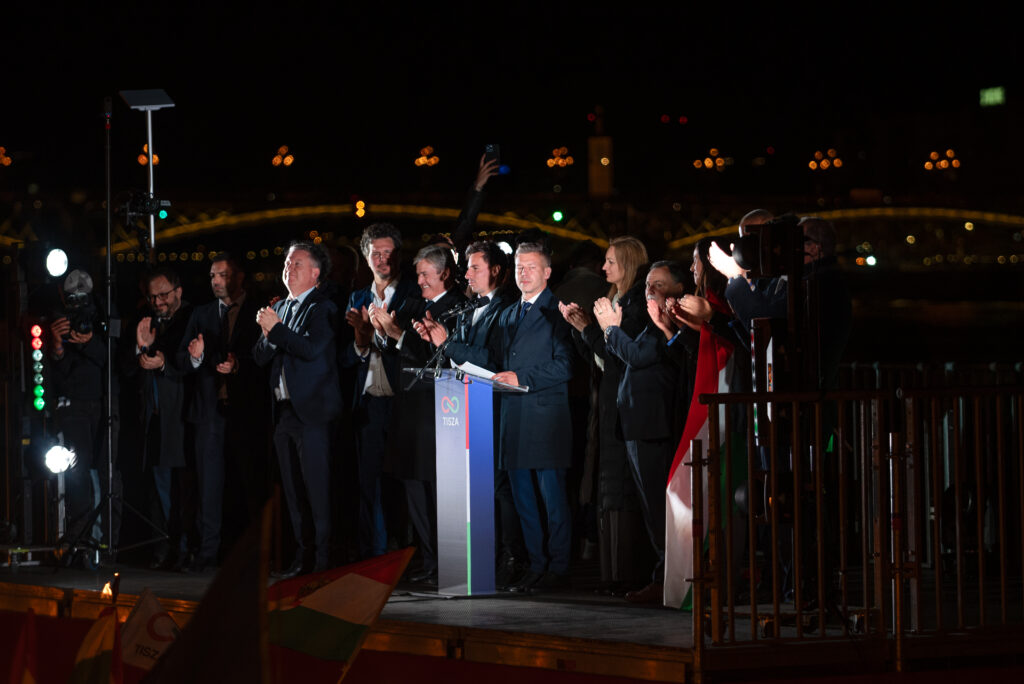
Photo: Gréta Jecsnii
“Based on what I was reading about the polls, I did expect Magyar to win. But I didn’t expect it to be such a decisive win, which I think led to Orban admitting defeat.”
She thinks Magyar handled himself really well in terms of what he said about his agenda and the consequences for members of the Orban government who were likely corrupt.
“I feel it’s a fantastic opportunity for Hungary. I also think it’s important for the European Union and Ukraine,” she added.
Regarding the accusation of foreign interference in the elections, such as the leaked transcripts of the Szijjártó-Lavrov conversations, which may have contributed to Magyar’s victory, she said the following: “It probably helped Magyar, but maybe it made it more of a decisive win; that’s very hard to tell.”
However, she also distinguishes between types of interference: “But certainly that kind of interference, giving the Hungarian people a look at the secret communications of their government, is very different from having a foreign government, you know, fly its vice president over to Budapest and tell the Magyar people they should vote for, you know, Orban,” Farkas referred to JD Vance’s last-minute endorsement.
“Nobody likes the United States telling them how to vote,” she highlighted.
When asked about the outgoing Hungarian prime minister’s approval among the Republicans, she said that Orban’s support in the United States appears limited and conditional, largely confined to fringe political groups.
As Farkas explains, “it’s just like the very far-right kind of MAGA fringe that was pro-Orban.”
After his defeat, even that support faded: “Even his supporters were quiet; I didn’t see Tucker Carlson or the vice president say anything.”
In analyzing the international outreach of the Trump-led “Make America Great Again” movement,
Farkas portrays the U.S. president’s approach to his political allies as opportunistic, ideologically driven, and strategically risky.
She notes that Trump’s support tends to depend on success, as we observed in the recent Hungarian events: “Orban’s support really was predicated upon him being a winner,” indicating a willingness to abandon losing allies.
More broadly, she situates this within a global movement:
“The MAGA folks want to be part of a global movement and want to see the success of their kind in other countries.”
However, the strategic vision behind this is criticized. As Farkas puts it,
“The far right wants a world where you go back to spheres of influence and wants the U.S. to be more isolationist, to be against the European Union and against alliances,” which “only serves the interests of Russia and China.”
In sum, as articulated by Evelny Farkas, Trump’s strategy is short-term and ideologically aligned but potentially undermines traditional alliances and strengthens geopolitical rivals.