
 By
By The ongoing Iran conflict has reached a critical diplomatic impasse under a fragile ceasefire, as U.S. President Donald Trump rejected Iran’s latest counter-proposal, and Israeli Prime Minister Benjamin Netanyahu vowed the war would not end until Iran’s nuclear facilities are fully dismantled.
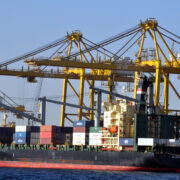
While a formal truce brokered in April technically remains in place, maritime provocations persist in the Persian Gulf, and the vital Strait of Hormuz remains closed by Iranian forces under a U.S. naval blockade.
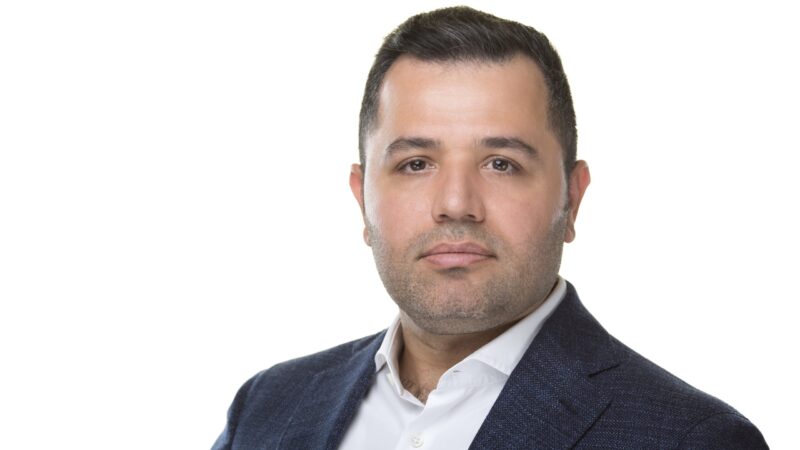
We sat down with Muhanad Seloon, Assistant Professor at the Doha Institute for Graduate Studies, non-resident senior fellow at the Middle East Council on Global Affairs, to help us understand how the U.S. will eventually prevail in the conflict. Muhanad also talked about who the other key players are and what the consequences would be if the Islamic Republic collapses.
Muhanad Seloom is fluent in Arabic and Kurdish. He frequently contributes his analysis to Foreign Policy and to Al Jazeera, among other publications.
First, please tell us a little about yourself.
I am originally from Iraq. I was born and raised in Baghdad, then moved to the UK to study and later became a British citizen. Since 2019, I have been based in Doha as an Assistant Professor of International Politics and Security at the Doha Institute for Graduate Studies. I am also non-resident senior fellow at the Middle East Council on Global Affairs. I work in Arabic, English, and Kurdish.
My research focuses on intelligence and national security, and on how states authorise power through intelligence and technology. I did my PhD on government security policies. I chose intelligence because, unlike in Russia, the UK, or the US, very few academics in this region work on it seriously. I now teach one of the first postgraduate intelligence courses at any academic institution in the Gulf.
How the US can Prevail in the Iranian Conflict?
Back in March, you wrote in a column that the U.S. could prevail in the recent conflict. How do you view the situation now, a month and a half later?
Iran built its regional strategy around three pillars: nuclear capability; conventional military power, especially ballistic missiles and drones; and proxy groups across the region. The U.S. strategy was designed to damage all three.
The Americans wanted, first, to prevent Iran from reaching nuclear weapons capability. Second, to weaken its conventional military infrastructure. Third, to dismantle or degrade its proxy network.
In all three areas, Iran has suffered serious damage.
So you still believe the U.S. is prevailing in this confrontation?
Yes. If you look at it academically and remove the political noise, the U.S. clearly has the upper hand. This confrontation did not begin with Trump. It goes back decades to the 1953 overthrow of Mossadegh and everything that followed.
Bush, Obama and Biden each tried in different ways to avoid direct conflict, but the situation eventually reached the deadlock we are in now.
The intelligence gathered by the U.S. and its allies showed and Iranians, as well admit it, that Iran is aiming for a nuclear bomb.
Civilian research purposes typically require enrichment of uranium up to 20 percent. Iran reached 60 percent, well above any civilian requirement and a short technical step from weapons-grade. That matters because it defines what the U.S. strategy is built on. The objective is to make sure Iran does not acquire nuclear weapons capability.
What happened to Iran’s military capabilities since the conflict broke out?
Iran invested heavily in ballistic missiles and drones because it knew it could never compete directly with U.S. air power. But much of that infrastructure has now been destroyed.
More than ninety percent of the Iranian navy is gone. Missile launchers have been heavily damaged. The facilities needed to weaponize enriched uranium have been damaged badly. And many Iranian nuclear scientists have been assassinated over the years.
Iran still has some capabilities left underground, but it no longer has the capacity to sustain a long conflict.
What do we know of the Iranian leadership after the death of Ayatollah Khamenei and the takeover of his son Mojtaba?
Mojtaba Khamenei may have political support from the Revolutionary Guard, but he does not have the religious authority his father had. In Iran’s system, the Supreme Leader must also be a highly respected religious scholar. Mojtaba lacks those credentials. That matters because only someone with that authority can issue a religious decree, a fatwa, on major issues like nuclear weapons.
All these things considered, could Iran still threaten the Gulf countries? And what do you think of the current situation of the Strait of Hormuz, the region’s critical international trade chokepoint?
Iran remains dangerous. It still has drones, missile capabilities and naval threats in the Gulf. But it no longer has the infrastructure or stockpiles to sustain a long war.
Closing the Strait of Hormuz also hurts Iran itself, because the country depends on oil exports. And that is what has effectively happened in reverse: Trump has turned the wider region into a chokepoint, severely limiting Iranian exports.
My understanding is that Iran may soon face the problem of having oil it cannot properly export.
How are Gulf countries reacting?
Countries like Saudi Arabia and the UAE are investing heavily in defence and regional partnerships. President Volodymyr Zelenskyy’s visits to the Gulf show that GCC members are serious about learning from Ukraine’s wartime experience, especially in drone warfare and air defence.
At the same time, Gulf countries still depend heavily on the United States. When the missiles and drones came, it was mostly American systems that intercepted them.
Did Gulf states ask Donald Trump to stop the war?
No, I do not think so. They did not want a war, but once it started, they understood that a weakened Iran could benefit them strategically.
Iran believed Gulf countries were the weakest link and that pressuring them would force them to push Washington to halt the conflict. Gulf states deliberately avoided doing that, because they did not want Iran to think intimidation works.
Iran discovered, painfully, that the GCC countries weren’t the weak point it had assumed.
Iran’s foreign minister tried to visit Gulf countries. What happened?
His requests were largely rejected. Saudi Arabia declined, Qatar was not interested, and only Oman welcomed him. That tells you a lot about how relations have changed. Now, Gulf states want guarantees that Iran will never threaten them again, a very difficult demand for Tehran to meet.
The UAE is quitting the OPEC and OPEC+ groups after nearly 60 years of membership. They said the decision would help meet growing global energy demand in the long term, after recent investments to boost production capacity. What do you make of it?
The official Emirati rationale, meeting global demand, expanding capacity, is essentially the cover story. It recycles the 2023 quota-dispute narrative to frame what is fundamentally a geopolitical decision as an oil-policy one.
The real driver of the UAE’s quitting of OPEC is the war. Iran targeted Emirati territory directly during this conflict, Fujairah, Jebel Ali, and smoke over Dubai, citing Abu Dhabi’s strategic alignment with Washington.
The UAE absorbed those strikes largely alone. On the eve of the OPEC announcement, the Emirati presidential adviser Anwar Gargash said publicly that the GCC’s military and political response had been “the weakest historically.” That was not a complaint about oil policy. That was an indictment of the entire collective Gulf security architecture.
The Emirati energy minister also made a point of saying the UAE did not consult Saudi Arabia before announcing. That detail is the message: you didn’t consult us when we were under fire, we don’t consult you now.
Structurally, this is the second Gulf OPEC exit in seven years: Qatar in 2019, the UAE in 2026. Both followed political fractures with Saudi-led arrangements. The bigger pattern is that the war is dissolving the GCC’s compacts in sequence: the security compact failed under Iranian fire, the economic compact is now decoupling, and the political compact is wobbling.
OPEC loses its signalling value as a coordinated Gulf bloc. What we are watching, in my view, is not just a blow to a cartel. It is the first concrete sign that Gulf economic multilateralism is fragmenting under wartime stress.
Other Players in the Conflict
How does Israel benefit from this situation?
Strategically, significantly. Iran is now at its weakest point since 1979. Its economy is damaged, its military command structures are struggling, and its regional relationships are deteriorating.
Hamas has been devastated, Hezbollah weakened, Iraqi militias are less willing to fight, and even the Houthis appear under pressure. From Israel’s perspective, this is a major strategic victory.
What about Iran’s main allies, Russia and China? They seemingly left Iran “by the roadside.”
That is one of the biggest surprises. Iran has effectively discovered it has no real allies. Russia and China issued political statements, but neither provided meaningful military support.
Iran still lacks serious air defence systems, which is remarkable for a country preparing for confrontation with the U.S. and Israel. Even at key moments at the UN Security Council, neither Moscow nor Beijing intervened decisively on Iran’s behalf.
China especially looks weaker in the region, because Beijing had presented itself as a rising global power and a guarantor of regional stability. When Iran came under serious pressure, China did not step in.
That has reinforced the perception that, despite all the talk of multipolarity, the U.S. remains the dominant power in the region.
A few years ago, China helped restore Saudi-Iran relations and supposedly guaranteed Iran would not threaten Saudi Arabia again. What happened?
Yes. When the Chinese president visited Riyadh, Beijing presented itself as a guarantor between Saudi Arabia and Iran. The idea was that Iran would not attack or threaten Saudi Arabia again.
Today, those guarantees do not look reliable. We are seeing tensions and instability return. The same pattern applies elsewhere, look at Russia and Ukraine. International guarantees are not working the way people expected.
Future of the Islamic Republic
Who would become the major power in the region if Iran were to become much weaker?
Saudi Arabia is positioning itself very strongly. Israel as well, obviously. Turkey also has major ambitions and real capacity.
It is a large country with military and political weight, and it wants to project power beyond its borders. Qatar plays an important role financially and diplomatically, but money alone cannot replace strategic weight.
We have talked about how poorly Iran is performing. Do you think the country could eventually collapse?
Nobody has a crystal ball, but if you read the situation carefully, Iran is clearly under enormous pressure. The economy is weak, the regime has been damaged politically and strategically, and the population is frustrated.
The important thing is to understand how dictatorships survive. I grew up under Saddam Hussein in Iraq, so I know how these systems work. Dictatorships build a narrative, which becomes a kind of social contract.. They tell their people: accept hardship now, and later you will become stronger, safer, richer, or more respected.
Has Iran been using the same strategy?
Very much so. The Iranian regime told its people: tolerate sanctions, isolation, and economic suffering, because eventually Iran will become the dominant power in the region.
The promise was that once Iran was strong enough, through its nuclear programme and regional influence, the United States and others would have to respect it. The regime also pointed to its proxies and influence in Iraq, Syria and Lebanon as proof the strategy was working.
And now?
Now that narrative is collapsing. The economy is weak. The proxies are weaker. The nuclear project is uncertain. People are asking: why did we suffer for forty years?
That is extremely dangerous for the regime, because it no longer has a convincing story to tell its population. If the leadership now suddenly compromises with the United States, many Iranians will ask what all the sacrifices were for.
Could that lead to protests, or even regime change?
If the war does not restart, I expect demonstrations in Tehran again. People are tired. They need salaries, food and stability. Nationalist slogans are not enough anymore. The problem is that there is no clear opposition leader right now. The regime is weak, but the alternative leadership is also unclear.
There was a very symbolic military strike during the conflict last year at a prison in Tehran. Can you tell us more about it?
On the final day of what is now being called the “12-day war,” the last missile strike reportedly hit Evin Prison in Tehran, specifically destroying its gate.
Evin is famous for holding political prisoners. Many people read that strike as a message: one day these prisoners could be released and become part of a new political future for Iran. It was symbolic, not just military.
Finally, do you think the United States will eventually leave the Middle East?
No, I do not think that is realistic.
The region remains strategically important for Washington. It sits between Asia, Europe and Africa, and it borders China’s sphere of influence. The U.S. has too many interests here to walk away.
Iran, meanwhile, is entering a very dangerous phase. The regime’s old survival narrative is fading, the economy is struggling, and public frustration is growing. Whether the regime collapses or survives, the region is clearly moving into a new era of uncertainty and competition for power.
Disclaimer: The interview was conducted on the 4th of May.